Research
Market cycles, trading notes, and deep dives.
198 articles found

Why Long-Term Investors Track Commodities Closely
Long-term investors closely monitor commodities because they provide diversification benefits that traditional asset classes often cannot. Unlike equities or bonds, commodities are driven by physical demand, production cycles, and real-world consumption. This makes their behavior fundamentally different from financial assets that are influenced mainly by earnings, interest rates, or monetary policy. By including commodities in portfolio analysis, investors gain exposure to assets that tend to react differently during various economic phases. When equity markets face pressure due to slowing growth or policy uncertainty, commodities may follow an independent path based on supply-demand dynamics. This non-linear relationship helps investors reduce overall portfolio concentration risk and improves long-term stability. From a strategic perspective, commodities act as real-economy indicators. Tracking them allows investors to better understand where capital is flowing and how global consumption patterns are evolving. This insight helps long-term investors make more informed allocation decisions rather than reacting to short-term market noise.
Read more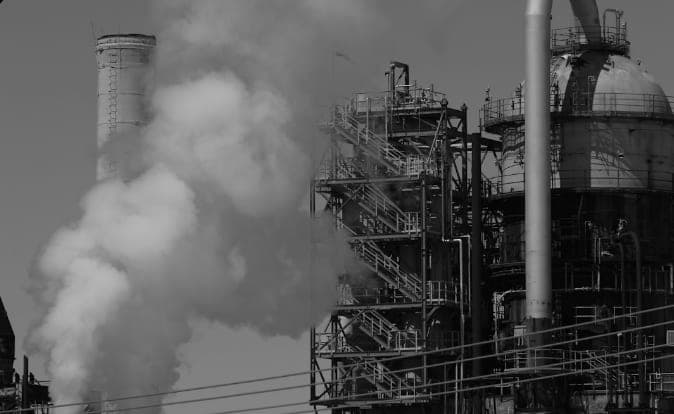
Crude Oil Outlook
rude oil is one of the most headline-sensitive markets because it sits at the intersection of real-world supply, demand expectations, and global risk perception. Unlike assets that can drift quietly, oil often reacts quickly when traders sense a change in growth momentum, inventory comfort, geopolitical tension, or policy direction. That is why oil can switch from calm to volatile in a short span, even when the broader market feels stable. A useful crude oil prediction, therefore, is less about calling one perfect direction and more about recognising the behaviour that usually precedes the next phase. At this stage, crude oil typically trades in “waves” where strong moves are followed by fast pullbacks, and then renewed attempts to establish direction. These pullbacks are not automatically bearish; they can be part of the market’s process of balancing short-term speculation with real demand and supply narratives. The key is to watch whether oil absorbs selling pressure and stabilises, or whether weakness persists and rallies start failing. When oil’s rebounds look confident and dips get bought, the market is signalling support. When rebounds look weak and every bounce meets selling, the market is signalling caution. This behavioural lens keeps the outlook practical and helps avoid decisions driven by one news cycle.
Read more
Copper Outlook
Copper is often described as a mirror of economic confidence because it responds closely to expectations around growth, infrastructure activity, and industrial demand. Unlike assets that move mainly on sentiment, copper tends to reflect how participants perceive the health and direction of real economic activity. This makes copper especially sensitive to changes in outlook, even before those changes become visible in headlines. As a result, copper rarely moves in a smooth line. It advances in phases, pauses to reassess, and sometimes pulls back sharply when expectations run ahead of reality. At present, copper’s behaviour suggests an environment where interest remains active, but caution has not disappeared. Short-term fluctuations are part of this process, as the market continuously adjusts to evolving assumptions about demand and supply balance. These pauses do not automatically signal weakness; more often, they represent moments where the market tests conviction and evaluates whether optimism is sustainable. Viewing copper through this behavioural lens helps avoid overreaction. Instead of focusing on every short-term move, it becomes easier to judge whether the broader tone remains supportive or whether confidence is beginning to fade.
Read more
Gold Prediction
Gold continues to reflect shifts in confidence rather than reacting to one single trigger. Its movement often mirrors how comfortable or uncomfortable participants feel about the broader environment, which is why it can stay active even when other assets appear calm. Instead of moving in straight lines, gold usually progresses in waves, combining advances with pauses that allow sentiment to reset. This behaviour is important because it reminds investors that short-term fluctuations are a natural part of gold’s structure and not necessarily a warning signal. At this stage, gold appears to be operating within a constructive phase where interest remains present beneath the surface. Temporary pullbacks may emerge, but these often act as periods of digestion rather than signs of exhaustion. As long as buying interest returns after such pauses, the overall tone remains supportive and confidence in the broader trend stays intact. A balanced outlook helps avoid emotional reactions. Viewing gold through the lens of behaviour rather than excitement allows participants to stay aligned with the underlying rhythm of the market instead of reacting impulsively to every move.
Read more
Natural Gas Market Analysis: Understanding Demand Cycles and Energy Dynamics
Natural Gas plays a critical role in the global energy ecosystem and has become one of the most closely watched commodities in modern financial markets. It is widely used for power generation, industrial manufacturing, residential heating, and as an energy input for multiple downstream industries. Due to its relatively lower environmental impact compared to coal, Natural Gas is often positioned as a transitional energy source in the global shift toward cleaner alternatives. From an economic perspective, Natural Gas is not just an energy commodity but a strategic asset. Its demand patterns reflect broader trends in industrial growth, infrastructure development, and energy security policies. Many economies rely on Natural Gas to maintain stable energy supplies during periods of high consumption or renewable energy shortfalls, making it a vital component of national energy planning. For market participants, Natural Gas provides insights into broader macroeconomic conditions. Changes in its demand or supply often signal shifts in industrial activity, seasonal consumption behavior, or structural changes within the energy sector. As a result, Natural Gas is frequently used as a reference indicator for understanding energy-linked market movements.
Read more
From Defensive Wealth to Intentional Wealth
For several years, much of the global investing mindset has been dominated by one posture: defence. Defence against volatility. Defence against policy shocks. Defence against unexpected headlines. Defence against feeling blindsided—again. It was an understandable posture. But it came at a cost. When wealth is managed mainly as something to defend, it loses some of its deeper meaning. It becomes a shield, not a tool. The emotional environment of 2026 is opening a path out of that posture. Not into recklessness, and not into euphoria—but into intention. Wealth is still protected. But now, more investors are asking what it is protected for. The Emotional Weight of Always Being On Guard Living in permanent defence mode is heavy. It shapes not only portfolio choices, but the energy behind them. When the dominant question is “How do I avoid being hurt?” there is little space left for “What am I actually trying to build?” In markets, this shows up as hyper-short time horizons, chronic second-guessing, and portfolios that feel more like fortresses than frameworks. For a while, that posture felt necessary. In 2026, it feels less necessary—and more exhausting. Investors are beginning to notice that their capital has been carrying the imprint of survival for too long. That recognition doesn’t require any view on where markets go next. It only requires mid-cycle honesty. The Annual Letter 2026 goes into detail on how this transition from defensive wealth to intentional wealth interacts with real sectors, asset mixes and risk frameworks. At the emotional level, though, the shift is simple: investors are tired of only protecting. They want to express something again. Wealth as Expression, Not Just Protection Money can be many things: security, status, optionality, responsibility, legacy. In defensive years, it collapses into one dimension: do not lose. But that is not the full truth of why people accumulate and manage wealth. They also want alignment. They want their capital to express some version of who they are and what they believe the world is becoming. In 2026, this desire for expression is resurfacing. Investors are asking quietly: Does my wealth structure reflect what I value, or just what I fear? If I stripped away old anxieties, would I still hold the same things, in the same ways? If my capital could speak, would it sound like me—or like a committee of old crises? Those questions do not lead immediately to drastic changes. They lead first to reflection. And reflection is the start of intention. The Soft Shift From “Don’t Break” to “Make Sense” Defensive wealth management is dominated by the thought: whatever happens, don’t break. Intentional wealth is guided by a different question: does this make sense for the person I am now? That word—sense—has many layers. Financial sense. Emotional sense. Ethical or philosophical sense. In 2026, more investors are giving themselves permission to consider all of those layers, not just the fear-based one. That doesn’t mean abandoning prudence. It means upgrading prudence from pure protection to thoughtful design. This is where intention lives: not in reckless bets, but in coherent structures. The Letter for 2026 explores how different long-term motifs and cross-asset scaffolds can support that design. But even without those details, the underlying emotional movement is clear: wealth is slowly being reclaimed from pure defence. The Relief of Owning What You Actually Believe In There is a specific relief that comes from owning assets, structures, or strategies that match your actual worldview. Volatility may still occur, but it no longer feels like an assault on your identity. It feels like part of the normal rhythm of something you chose with intention. In that sense, 2026 is less about “chasing opportunity” and more about “repairing the relationship” between investors and their own capital. That relationship has been strained by years of crisis-coloured thinking. Now it has a chance to soften. Wealth stops being merely something to guard. It becomes something to shape. Toward a Quieter Confidence Intentional wealth does not shout. It doesn’t need to. Its confidence is quieter. It comes from knowing that even if the path is not perfectly clear, the underlying choices are not random. This doesn’t offer guarantees. It doesn’t remove uncertainty. It simply ensures that when the future does unfold, the investor can say: whatever happens, at least I was honest about what I was trying to do. That kind of quiet confidence is extremely rare in markets dominated by fear. In 2026, it becomes more accessible—not because conditions are ideal, but because the emotional climate finally allows for something beyond defence. The Annual Letter 2026 builds on this foundation, showing how intention can be translated into concrete structures. But at its heart, the shift is human: from guarding wealth out of habit to guiding wealth with purpose.
Read more
When Market Noise Finally Turns Into Meaningful Silence
There are years when the market feels like it’s shouting. Every headline feels urgent. Every move feels decisive. Every whisper becomes a narrative. These periods condition investors to stay alert, to defend, to interpret the smallest signal as a turning point. It becomes exhausting, not just financially but psychologically. Then there are years like 2026 — years that don’t shout back. Years that offer a meaningful silence. This silence doesn’t mean the world has become simple. It doesn’t mean risk has vanished. It doesn’t mean investors suddenly agree on what comes next. Instead, it means the emotional volume has lowered enough for people to actually hear themselves think again. This quiet matters more than many realise. It is the space where clarity begins, and clarity is often the first ingredient of long-term success. Silence Is Not Emptiness — It Is a Reset Many investors misinterpret market quietness as paralysis or stagnation. They worry when narratives aren’t loud. They assume something is wrong when volatility isn’t dictating the mood. But silence is not emptiness. Silence is the market letting people reorganise internally. For years, investors were forced to react to rapid change — policy swings, global tensions, supply chain shocks, technological upheavals. But an emotional system cannot remain overloaded forever. When pressure finally stabilises, silence enters the system. This silence gives investors permission to slow down. To revise. To evaluate. To breathe. And sometimes, breathing is the most important strategy of all. The deeper structural consequences of this emotional quiet — and how to express them in long-horizon portfolios — are covered exclusively inside the Annual Letter 2026, where the full architecture can be explored responsibly. The Power of Lower Emotional Volume When the emotional volume drops, investors begin to notice patterns they previously overlooked. Without panic clouding perception, they recognise which ideas still resonate. They see which stories were merely reactions to stress. They understand which exposures were built from conviction and which were built from fear. This is the phase where investors quietly recalibrate: Not by making dramatic shifts. Not by calling the next cycle. Not by predicting anything. But by gently aligning their portfolios with their own internal logic rather than external noise. 2026 provides this environment. It is not euphoric. It is not depressed. It is simply spacious. Why Spaciousness Matters in Finance Investing is not just about choosing assets. It is about choosing perspective. And perspective cannot be formed in a crowd shouting contradictory instructions. It can only be formed in space. This is why 2026 feels emotionally significant. It creates space for investors to transition from reactionary thinking to responsive thinking. In reactionary thinking, the world decides for you. In responsive thinking, you decide how to interpret the world. That difference is subtle but transformative. Planetary symbolism for the year often mirrors this theme — not by predicting outcomes but by illustrating emotional patterns: integration, internal grounding, and quiet rebuilding. Whether interpreted symbolically or culturally, the message is similar: when the world softens, the mind can strengthen. Relearning How to Listen to Market Tone Tone matters. Markets have tone just as conversations do. Some years the tone is frantic. Some years the tone is confused. Some years the tone is defensive. But 2026 has an unusually introspective tone — a tone that invites listening rather than reacting. Investors who pay attention to tone rather than noise begin to notice where stability is settling, where uncertainty is easing, and where emotional fatigue is finally lifting. None of this predicts direction. It simply reveals the psychological climate in which decisions will be made. And decisions made in the right climate age better. Silence as Preparation The quiet of 2026 is not an ending. It is preparation. Preparation for renewed vision. Preparation for clearer frameworks. Preparation for portfolios that reflect identity, not instinct. Most importantly, silence gives investors the emotional bandwidth to participate with intention instead of fear. And intention is one of the strongest signals of maturity in any financial journey. The complete strategic implications of this emotional reset are outlined in the Annual Letter 2026, where depth and detail have room to unfold. For now, the takeaway is simple: The market isn’t asking for reaction. It’s offering room for reflection. Image Prompts for Canva Soft, minimalistic financial landscape with muted colors, representing calm silence after years of noise and emotional overload. Gentle abstract waves over a quiet horizon, symbolizing introspection, clarity, and the emotional reset of 2026. ARTICLE 2 When Investors Stop Running From Uncertainty and Start Working With It How 2026 Teaches a More Mature Emotional Relationship With Risk Most people spend their investing lives trying to avoid uncertainty. They treat it like a flaw, an enemy, a force to be suppressed or escaped. But uncertainty is not the opposite of success — it is the environment in which success happens. What changes is not the uncertainty, but the investor’s relationship to it. In 2026, the emotional relationship many investors have with uncertainty is evolving. They are no longer acting as if uncertainty is a failure of the system. Instead, they are recognising it as a natural condition — not something to fear, but something to work with. This shift is subtle but powerful. It transforms paralysis into presence, fear into awareness, and doubt into discernment. How Recent Years Shaped an Unhealthy View of Uncertainty The last cycle conditioned people into associating uncertainty with danger. If inflation moved, panic. If policy shifted, panic. If geopolitics stirred, panic. This constant association between uncertainty and threat rewired investor psychology. It made uncertainty synonymous with loss. But this kind of reflexive fear is not sustainable. Eventually, the emotional system resets. And 2026 appears to be part of that reset — not because risks have disappeared, but because people have stopped responding as if every unknown is catastrophic. This doesn’t predict calm markets. It simply acknowledges a shift in emotional maturity. The detailed structural implications of this shift — and how it affects long-term positioning — are explored deeply in the Annual Letter 2026, where they can be examined without oversimplification. The Return of Constructive Uncertainty Uncertainty becomes constructive when investors stop demanding that the world be predictable. When they stop waiting for all the answers before they act. When they accept that clarity unfolds gradually, not instantly. In 2026, investors seem more comfortable operating with partial information. They aren’t frozen by incomplete narratives. They are able to hold multiple possibilities without collapsing into fear. This is a sign of emotional evolution. This doesn’t remove uncertainty. It refines the investor’s capacity to navigate it. Uncertainty as a Creative Force Uncertainty is not just risk — it is possibility. It is the space where new ideas form. It is the room in which portfolios can evolve. It is the psychological landscape where flexibility becomes strength. Investors who recognise this begin to behave differently: They ask better questions. They tolerate slower answers. They resist the urge to rush into clarity. This patience creates an environment where thoughtful decisions can grow. Planetary symbolism often describes such years as periods of reinterpretation — a time when old fears lose their grip and new perspectives emerge. In this sense, 2026 is a year of reinterpretation: uncertainty becomes not a void, but a canvas. Letting Go of the Need for Perfect Understanding One of the most damaging beliefs in investing is the idea that you must understand everything before acting. No great investor has ever had perfect understanding. They operate with partial clarity, refined instincts, and a willingness to adjust. 2026 is a year where this mindset feels natural again. Investors are not waiting for perfect information. They are waiting for aligned information. And alignment is far more realistic than perfection. The details of how this alignment interacts with broader themes are laid out fully in the Annual Letter 2026, where the complexity is handled with depth. A Mature Relationship With Risk Ultimately, 2026 is teaching investors something simple yet profound: Risk is not a threat. Risk is context. It is the environment you operate in. It is the uncertainty that shapes opportunity. When investors stop fighting uncertainty, they stop fighting themselves. They make decisions with less emotional drag. They interpret the market with more psychological freedom. This is how maturity develops — not from controlling the environment, but from navigating it thoughtfully.
Read more
Why 2026 Feels Like a Year of Rewriting Personal Investment Identity
Every investor develops an identity over time — a style, a rhythm, a way of interpreting risk. Some lean cautious, others ambitious. Some rely on intuition, others on analysis. But there are years when this identity shifts quietly beneath the surface. Years when external pressure forces internal reconsideration. 2026 carries the energy of a year where investors are rewriting parts of their financial identity. Not because the market demands it. Not because conditions are extreme. But because the emotional system that guided them in the past no longer feels fully aligned with the present. This is not a crisis of identity. It is a renewal of it. The Dissolving of Outdated Beliefs Investors accumulate beliefs the same way portfolios accumulate leftover positions. Some beliefs are helpful. Others linger past their usefulness. In recent years, many beliefs were shaped by turbulence: — Stay defensive — Expect disruption — Prepare for sudden reversals — Assume nothing is stable These beliefs weren’t wrong. They were conditioned. But as emotional conditions change, old beliefs begin to feel heavy. 2026 introduces a gentler psychological climate where these beliefs start dissolving. Not rejected. Not denied. Simply loosened. Investors feel more open to questioning what has guided them — not as rebellion, but as evolution. All deeper thematic consequences of this belief-shift, and how it shapes multi-year positioning, are mapped inside the Annual Letter 2026, where the analytical framework lives. Here, we stay focused on the personal psychology of the moment. A Year for Redefining What Investing Means to You Investing is not just about markets. It is about self-understanding. What do you value? What makes you comfortable? What feels meaningful? What feels forced? 2026 encourages investors to revisit these questions. Some will discover they are less risk-averse than they assumed. Some will discover they relied too heavily on external validation. Some will realise they want portfolios that reflect their worldview, not the crowd’s fears. Identity does not change loudly. It changes subtly, through a series of small recognitions: “This asset doesn’t represent me anymore.” “I feel more aligned with this theme than I expected.” “I don’t need as much certainty as I once demanded.” These recognitions gradually reshape how investors behave. The Emotional Liberation of Letting Go There is a particular liberation in letting go of beliefs that no longer serve you. It frees up mental bandwidth. It creates space for new frameworks. It softens rigidity. 2026 feels like a year where rigidity is melting — where the market environment allows investors to be more flexible, more introspective, more adaptive. Instead of clinging to principles out of habit, people are choosing principles by relevance. The planetary symbolism for this type of year often involves themes of renewal, self-honesty, and internal restructuring. Whether interpreted literally or metaphorically, the message is the same: let go so you can realign. Rebuilding Identity Without Rushing Identity reshaping is not fast. It is not dramatic. It is not a makeover. It is a gentle return to oneself. Investors are learning that they don’t need to reinvent their entire strategy — they just need to refine the parts that no longer feel authentic. This refinement process creates portfolios that feel more stable emotionally, even if the market outside remains uncertain. This type of internal clarity often precedes stronger long-term decisions, not because the future is known, but because the investor is no longer divided inside. The Year You Invest as the Person You’ve Become Markets change. The world changes. Investors change too. 2026 is a year where investors begin investing as who they are now, not who they were three cycles ago. That shift — subtle, human, psychological — is often more valuable than any short-term forecast. It reconnects intention with action. It aligns capital with identity. And alignment is one of the most underrated strengths an investor can develop. The strategic implications of this emotional alignment, and the structural themes connected to it, are fully expanded in the Annual Letter 2026. But here, the message is simple: 2026 feels like a year where investors return to themselves.
Read more
When Investors Rediscover the Value of Staying Present
One of the greatest challenges in investing is learning to stay present. Not future-trapped. Not past-haunted. Present. Yet the emotional structure of markets rarely makes this easy. Investors are constantly pulled toward what might happen or what already happened. Very little attention settles on what is happening now. The year 2026 has a different tone — a tone that invites presence instead of projection. Markets are no longer echoing the exhaustion of past volatility, nor are they demanding blind faith in the future. Instead, they are offering investors a rare chance to ground themselves in the current moment. This grounding is not about complacency. It is about clarity. It is the shift from surviving the noise to listening to the quiet. The Weight Investors Carry Into a New Year Every market cycle leaves emotional residue. Some years leave fear. Some leave impatience. Some leave confusion. The residue shapes how investors interpret the next environment, often more than the environment itself. Coming into 2026, that residue has begun to dissipate. Fear is no longer the dominant echo. Nor is frustration. Investors seem less burdened by the need to “solve” the market and more open to simply observing it. This emotional openness is itself a form of stability. Not because the world is simple, but because people are less overwhelmed by its complexity. The deeper structural significance of this emotional shift — and how it connects to broader cycle frameworks and portfolio construction — is detailed inside the Annual Letter 2026, where the full roadmap belongs. Here, the focus is on the psychological surface: investors are no longer trapped inside yesterday’s storms. A Year That Slows the Mind Without Slowing Progress What distinguishes 2026 from recent memory is not lower uncertainty, but lower emotional friction. Investors are not fighting their own reactions as intensely. They are less reactive, less defensive, less dominated by headlines. Instead, they are becoming more analytical — not in a cold, mechanical way, but in a grounded, reflective way. They are asking questions from a place of curiosity rather than panic. This creates space for perspective to grow. Perspective isn’t prediction. Perspective isn’t control. Perspective is the ability to notice what matters as it unfolds, without being overwhelmed by what hasn’t happened yet. This is the foundation on which meaningful decisions are built. The Return of Subtlety in Thought Markets often pressure people into extreme thinking. You are either bullish or bearish. Right or wrong. In or out. There is little room for subtlety. But 2026 invites subtlety back into the conversation. Investors are less rigid. They are willing to hold nuanced views. They can acknowledge uncertainty without collapsing into fear. They can recognise themes without needing immediate validation. This type of subtle thinking is emotionally mature — and it is crucial for navigating complex periods. Planetary symbolism often describes years like this as “integration years,” where internal attitudes catch up with external realities. Whether one believes in astrology or not, the metaphor resonates: investors are integrating. They are aligning their emotional state with the actual pace of the world rather than the imagined pace of crisis. Why Presence Matters More This Year Presence is underrated. It allows investors to act from clarity instead of habit. It allows portfolios to evolve based on observation rather than autopilot. It transforms decision-making from reflexive to intentional. In 2026, presence becomes a quiet competitive advantage. Not because the market rewards speed, but because it rewards attentiveness. Not because certainty exists, but because calm observation creates better timing — internally, not externally. This doesn’t require knowing what comes next. It requires knowing what is true today. The trends, cycles, and underlying strategic implications of this psychological environment are, as always, fully explored in the Annual Letter 2026, which contains the complete long-range narrative. For now, what matters is simple: Investors are back in the moment. And that is one of the healthiest emotional foundations for any market year.
Read more