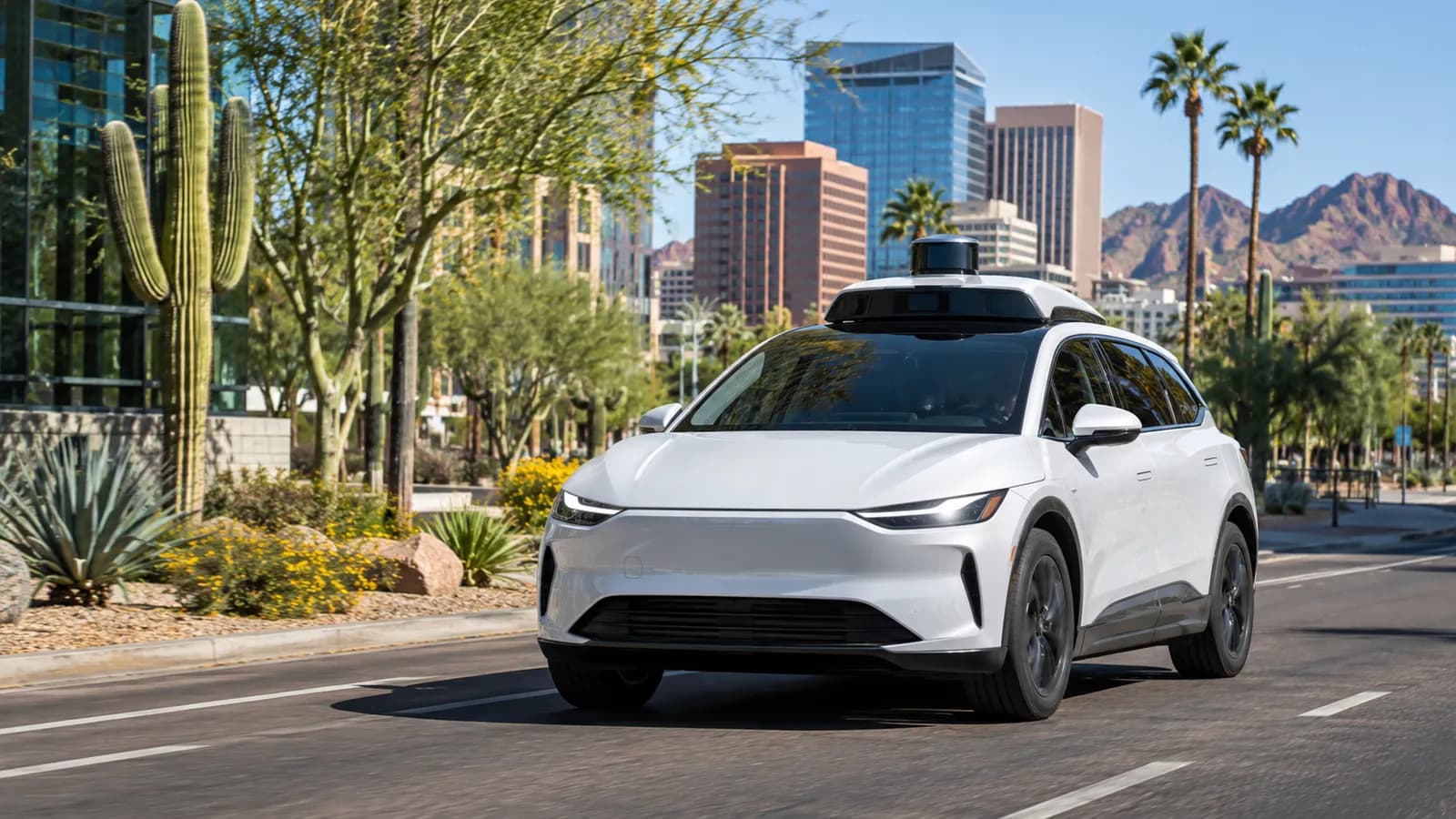
Is There a Waymo Stock?
Waymo is the autonomous driving company that began as Google's self-driving car project in 2009. It operates a paid robotaxi service called Waymo One in several U.S. cities. Waymo does not have publicly traded stock. Alphabet, the parent of Google, owns the majority of Waymo, which has also raised money from outside investors.
Waymo began as the Google Self-Driving Car Project in 2009 and became a separate Alphabet company in 2016.
It launched a public robotaxi service in the Phoenix area in 2020 and later expanded to San Francisco, Los Angeles, Austin, Atlanta and other cities.
Key Facts: Waymo Funding and Operations
Waymo is private, so these figures come from its funding announcements and company statements.
Alphabet supplied most of the capital in the February 2026 round, with Dragoneer, DST Global and Sequoia leading the outside investment.
How Waymo's Business Works
In February 2026, Waymo raised $16 billion at a reported $126 billion post-money valuation, with Alphabet supplying most of the capital.
Its vehicles use a combination of lidar, radar and cameras along with its own driving software, called the Waymo Driver.
Waymo has partnered with vehicle makers and ride-hailing platforms to expand service.
Other Companies in Autonomous Driving
Tesla, Zoox (owned by Amazon) and several Chinese companies such as Baidu's Apollo Go and Pony.ai are working on robotaxis.
Pony.ai and WeRide trade publicly in the U.S.
Measures Used to Track Waymo
Because Waymo is private, these measures are used to follow its progress:
- Paid rides per week
- Cities served
- Fleet size
- Safety data
- Funding and valuation
Risks and Uncertainties
Waymo faces several uncertainties:
- No public market for Waymo shares
- Regulation of autonomous vehicles
- Safety incidents
- High costs of expansion
Economics of a Driverless Ride
A robotaxi trip begins with a fare, but the fare is not the same as profit. The operator must pay for the vehicle, its autonomous equipment, insurance, cleaning, maintenance, charging or fuel, and customer support. Fleet positioning also matters: a vehicle may travel without a passenger to reach its next pickup or a busier area. Those unoccupied miles consume resources without producing a fare, so trip density and dispatch efficiency are important to understanding the business.
Vehicle utilization links revenue to capital costs. A vehicle that completes more paid trips over its useful life spreads its purchase and outfitting costs across more rides, although heavier use can also increase maintenance and shorten component life. The relevant measure is therefore not simply how long a car is available. Analysts would also want to understand paid miles, idle time, time spent on servicing, and the relationship between trip revenue and the costs incurred to provide it.
Revenue can be divided among parties when a ride-hailing platform supplies customer demand or another company provides fleet services. The amount charged to the rider may differ from the amount recognized by the autonomous operator. Contract terms determine who controls pricing, handles refunds, bears operating costs, and records revenue on a gross or net basis. Comparing businesses on ride counts alone can obscure these differences in responsibility and economics.
Pricing also has to accommodate demand that varies by place and time. Busy periods can put pressure on vehicle availability, while quiet periods can leave vehicles waiting between trips. A fleet must balance the convenience of having cars nearby with the cost of maintaining capacity that may not always be used. Average revenue per ride is therefore most informative when considered alongside trip length, utilization, and the resources needed to fulfill demand.
Building a Local Service
Launching a service in a new area involves more than placing vehicles on streets. An operator must establish an operating area, understand local road layouts and traffic patterns, arrange facilities, and set up support for riders and vehicles. Pickup and drop-off locations can require particular attention where curbs are crowded or access is restricted. The work needed to operate reliably can vary across neighborhoods even within the same metropolitan area.
Fleet operations combine automation with human support. Staff can clean and inspect vehicles, respond to rider questions, maintain facilities, and handle exceptional situations. Remote assistance can help resolve certain situations, depending on the system and operating procedures. These activities are distinct from a person continuously driving the vehicle, but they still require staffing and coordination. Their cost depends in part on how often vehicles need help and how efficiently support teams can serve the fleet.
A city count is consequently a limited measure of reach. An operating area may cover only part of a city, and service availability can differ by location, time, or conditions. Useful context includes the size and character of the service area, how readily riders can obtain a trip, and whether service is open to the general public. Such details help distinguish a broad commercial operation from a more restricted deployment.
Physical infrastructure shapes the service as well. Vehicles need convenient access to places where they can be cleaned, inspected, repaired, and charged or refueled. The location and capacity of these facilities affect how much time cars spend away from passengers. Local suppliers, property arrangements, and transportation rules can influence the complexity of setting up the supporting network, even when the same underlying driving system is used across multiple markets.
Reading Safety Evidence
Safety comparisons require a clear denominator. A count of collisions means little without knowing how much driving produced it, so reports often express events relative to distance traveled. The definition of an event also matters: a minor contact, a police-reported crash, and a crash involving injury describe different outcomes. A meaningful comparison uses consistent definitions and identifies whether all incidents or only those meeting a reporting threshold are included.
The comparison group matters as much as the event rate. Human driving data can reflect different roads, traffic conditions, times of day, and reporting practices from those in an autonomous fleet's operating area. Some collisions may be reported in one dataset but missed in another. Researchers can adjust for these differences, but the assumptions and remaining gaps should be read alongside the results. A single headline number cannot describe every driving environment or type of incident.
Safety evidence also changes with the amount and mix of driving observed. Rare, severe outcomes are difficult to study because relatively few events may be available, making estimates imprecise. Software updates, vehicle changes, and expansion into different road environments can also affect how well older observations represent current operations. Readers can look for the study period, data sources, uncertainty around estimates, and independent review when assessing a published analysis.
Exposure to risk is not evenly distributed across a trip. Different road types, speeds, intersections, and traffic conditions present different challenges, and a fleet's route mix affects the events it encounters. Disclosing results by relevant context can help readers understand what an overall average includes. It can also reveal whether a comparison depends heavily on one type of driving rather than reflecting a range of ordinary situations.
Interpreting Alphabet Disclosures
Alphabet's consolidated financial statements combine its controlled businesses. Revenue, expenses, assets, and cash flows at the parent level therefore reflect activities far beyond autonomous driving. Segment disclosures can add context, but a segment may include multiple businesses and shared costs. Unless Alphabet separately reports a Waymo-specific figure, a reader cannot reliably infer that figure from a consolidated or broader segment total alone.
An ownership stake held by outside investors adds another accounting distinction. Consolidated results can include all of a controlled subsidiary's activity even when the parent does not own every share. The portion of net income or loss attributable to other owners is then identified as noncontrolling interest. This presentation should not be confused with the parent's economic claim on the entire subsidiary or with cash distributions to its owners.
Cash flow and reported profit answer different questions. Spending on vehicles, facilities, and equipment can appear as capital expenditure, while the associated expense may be recognized over time through depreciation. Research and operating costs can affect earnings in a different period from related cash payments. Funding from investors is a financing inflow, not revenue from carrying passengers. Reading these categories together helps explain why cash movement, investment spending, and operating performance are distinct measures.
Private financing terms provide context that a headline valuation cannot supply by itself. Different classes of shares can carry different rights to proceeds, information, or governance. A valuation derived from a financing transaction reflects the terms of that transaction as well as the share price used in the calculation. Without details of those rights and the capital structure, a simple multiplication of a quoted valuation by an ownership percentage may miss meaningful distinctions.
Conclusion: Waymo and Public Markets
Waymo has no stock of its own. Its value is held mostly inside Alphabet, with additional outside investors in private rounds. Ride volumes, city expansion, safety data and funding rounds are the main public signals about the business.