What Happened to TELL Stock?
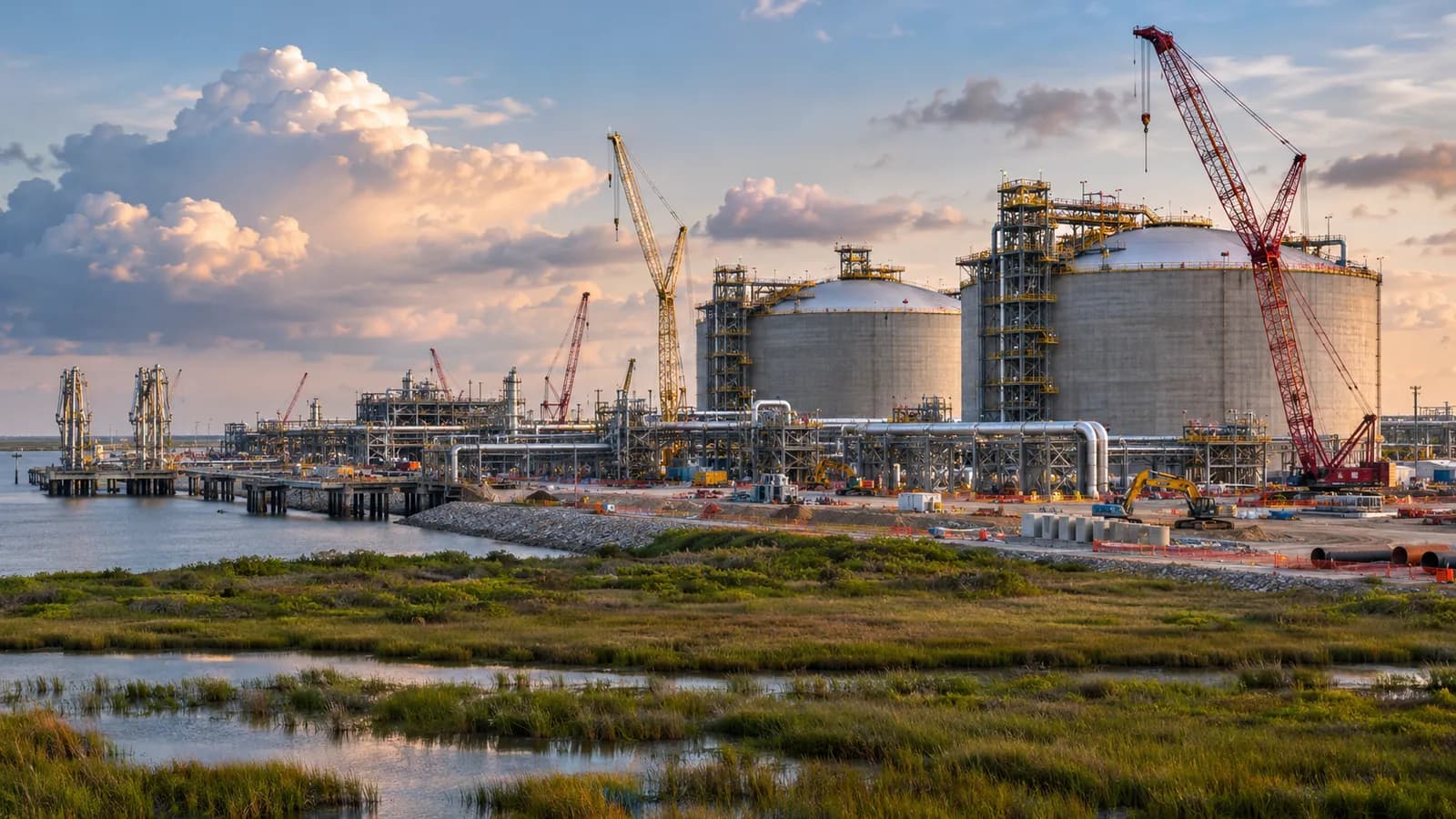
Tellurian was a natural gas company developing the Driftwood LNG export terminal in Louisiana. It traded on NYSE American under TELL until Woodside Energy completed its acquisition in October 2024, paying $1.00 per share in cash, about $900 million in equity value. Woodside renamed the project Louisiana LNG.
Tellurian was co-founded by Charif Souki, who earlier founded Cheniere Energy.
Woodside agreed to buy it in July 2024 and closed in October 2024.
Key Facts: Woodside's Acquisition of Tellurian
Woodside Energy completed its acquisition of Tellurian in October 2024.
Tellurian's Driftwood LNG project continues under Woodside.
How Tellurian's Business Worked
Tellurian struggled to secure financing and long-term customers for Driftwood.
The $1.00 price was a 75% premium to Tellurian's share price before the deal was announced.
Woodside later took a final investment decision on Louisiana LNG.
Other LNG Developers
Cheniere, Venture Global and NextDecade develop U.S. LNG export projects.
Woodside is a large Australian energy company.
Measures That Described Tellurian
These measures were central to Tellurian's story:
- Project financing
- LNG offtake contracts
- Construction progress
- Debt
- Gas production
Considerations After the Acquisition
The acquisition changes how the project can be followed:
- No standalone TELL stock
- LNG project execution
- Natural gas price swings
- Export policy
From Gas Field To Export Cargo
An LNG export project connects several businesses that operate under different commercial arrangements. Natural gas is produced from wells, gathered and processed to meet pipeline specifications, transported to a coastal terminal, and cooled until it becomes a liquid. Liquefaction greatly reduces its volume, making shipment by specialized vessel practical. At the destination, the liquid is typically warmed back into gas and delivered into a local network. Each link has its own costs, capacity constraints, counterparties and operating risks, so an export terminal's results cannot be understood solely by looking at a headline natural gas price.
A terminal needs a dependable supply of feed gas with appropriate quality and access to pipelines. Pipeline reservations may give the terminal the right to transport a specified amount of gas, often in exchange for charges that apply even when the reserved capacity is not fully used. Without sufficient firm transport, a terminal may have to compete for available pipeline space at times of heavy demand. Fuel used to run liquefaction equipment also matters: some incoming gas is consumed in the process, so the amount available for sale is lower than the amount delivered to the facility.
The terminal itself is built around liquefaction trains, which are production units containing equipment to cool and process gas. Storage tanks and marine berths allow production and vessel loading to occur on different schedules. A train can be operating while a ship is unavailable, within storage limits, but a prolonged interruption in either part of the chain can affect throughput. Maintenance, equipment reliability, weather and navigation restrictions can all influence how much LNG is shipped in a reporting period. Nameplate capacity describes an engineering capability under specified conditions; actual production is an operating result.
Ownership of gas and responsibility for transport can change along the chain. In one arrangement, a buyer takes LNG at the export terminal and arranges shipping. In another, the seller is responsible for delivery to a destination and must manage vessels and related logistics. These choices affect the revenue recorded, costs incurred and risks retained by each party. Comparing two LNG businesses therefore requires more than comparing cargo volumes: it also requires identifying where title transfers, who controls shipping and which services are included in the contract price.
LNG Contract Economics
LNG contracts can divide the economics of a cargo into several components. A buyer may pay an amount linked to the cost of feed gas, a charge for liquefaction, and, depending on delivery terms, an amount covering transport. Some agreements are structured as tolling arrangements: the customer supplies or pays for gas and pays the terminal for converting it into LNG. Other agreements involve a seller purchasing gas and delivering LNG as a finished product. The distinction affects which party bears exposure to feed gas prices and how much gross revenue the terminal operator reports.
Contract prices can reference different benchmarks, including a domestic natural gas index, an oil-linked formula or an LNG market index. A formula may include a fixed component as well as a variable component, and its exact terms determine how changes in the reference price pass through to each party. A larger reported sales price does not by itself establish a larger margin when the cost of gas moves with the same benchmark. Readers should look at both sides of the transaction, including fees, fuel allowances and transportation obligations, before interpreting changes in revenue.
Contract duration and payment obligations also shape cash flows. A long-term agreement may provide a framework for repeated deliveries, while a shorter transaction gives the parties less time under contract. Some contracts include take-or-pay or capacity payment provisions, under which a customer owes a specified payment even if it does not take all available volumes, subject to the agreement's terms. Such provisions can support more predictable facility revenue, but their value depends on enforceability, operating performance, contract exceptions and the customer's ability to pay.
Not every cargo necessarily follows the same route or sales channel. Destination flexibility can allow a buyer or seller to redirect LNG when contract terms and logistics permit. Diversion rights, cargo scheduling rules and the allocation of shipping costs determine who benefits from that flexibility. When comparing contract disclosures, distinguish committed volumes from volumes subject to conditions, options or later negotiation. A preliminary commercial agreement can establish a framework for discussions without creating the same obligations as an executed contract with all material conditions satisfied.
Reading Project Financial Statements
A project under development can spend substantial cash before it reports meaningful revenue. Engineering, site work, equipment deposits and construction outlays may be recorded as assets when accounting rules permit, rather than immediately appearing as operating expenses. Capitalization places eligible costs on the balance sheet; it does not mean cash has been preserved or that the asset will necessarily earn its recorded value. The cash flow statement helps show the timing of actual expenditures, while notes to the financial statements explain accounting policies and the nature of major construction commitments.
Once an asset is ready for its intended use, its capitalized cost is generally allocated over its useful life through depreciation. Depreciation reduces reported earnings but is not itself a new cash payment in the period recorded. Interest costs incurred during qualifying construction can also be capitalized under applicable accounting rules, adding to the asset's carrying amount. Consequently, a later income statement may reflect both the operating costs of producing LNG and depreciation associated with prior spending. The timing of those charges differs from the timing of construction cash outflows.
Debt analysis begins with more than the headline balance. Readers can examine maturity dates, interest rate terms, repayment schedules, collateral and financial covenants in the notes and financing agreements. Some borrowings sit at a project subsidiary and may have different recourse to the wider group. Restricted cash may be reserved for debt service or other specified purposes, limiting its availability for general spending. Interest expense, principal repayments and cash set aside for required reserves affect liquidity in different ways and appear in different places in the financial statements.
Accounting earnings can also change because of noncash items. An impairment charge reflects a reduction in an asset's carrying amount when the relevant accounting test requires it; it is not the same as construction spending in that period. Derivative contracts used to manage commodity or interest rate exposures may generate reported gains or losses as their measured values change, with cash settlement occurring at a different time. To understand operating performance, read these items alongside cash flows and the notes, rather than assuming every movement in net income represents cash generated by the terminal.
Construction And Operating Tradeoffs
Large LNG facilities require coordination among engineering firms, equipment suppliers, construction contractors, pipeline operators and marine service providers. A construction contract can assign responsibility for cost increases and delays in different ways. A fixed-price arrangement may transfer some cost risk to a contractor, but it does not remove the owner's exposure to contract exclusions, approved changes or a contractor's inability to perform. A reimbursable arrangement gives the owner a different share of cost exposure. The contract's scope and remedies matter as much as the label used to describe it.
Milestones such as mechanical completion, commissioning and commercial operation describe different stages. Mechanical completion generally means equipment and systems have been installed to a defined standard. Commissioning involves testing systems and preparing them to operate together, while commercial operation is tied to the applicable contracts and their acceptance criteria. Initial production or a first cargo can demonstrate progress without establishing that every train is operating at its intended sustained rate. The definitions used in project disclosures provide the context for interpreting each milestone.
A project's access to water, power, skilled labor and marine infrastructure affects its operating design and its relationship with surrounding communities. Environmental permits can address matters such as air emissions, water use and construction impacts, while operating requirements may involve monitoring and reporting. Methane management is relevant across the supply chain because natural gas can escape during production, processing and transport. Emissions disclosures should be read for their boundaries: figures covering a terminal's direct operations are different from figures that also include upstream production, shipping or the eventual use of the gas.
A diversified energy company may report an LNG project within a broader portfolio that includes other assets and activities. Consolidated revenue, operating cash flow and debt therefore cannot automatically be attributed to one terminal. Segment reporting, project updates and notes about ownership interests can help identify the portion associated with a particular activity, although the level of detail varies. Joint ownership adds another distinction: gross facility capacity describes the whole asset, whereas an owner's economic interest depends on its contractual share and the accounting treatment of the venture.
Understanding The Acquisition
In a cash acquisition, the amount paid to shareholders for their shares and the value assigned to the entire business measure different things. Equity value relates to the ownership interests purchased. Enterprise value also considers financing claims and cash under the transaction's stated calculation. The difference should not automatically be treated as an extra payment to shareholders: it can reflect obligations remaining with the acquired business or other adjustments. The merger agreement and transaction announcement explain which items are included and how the purchase consideration is determined.
A completed acquisition also changes the accounting perspective. The buyer generally records identifiable acquired assets and assumed liabilities at their acquisition-date fair values under applicable business combination rules. Those amounts can differ from the carrying values in the acquired company's historical statements. Any goodwill recognized is a separate accounting item, not cash available to build the project. Subsequent depreciation, impairment assessments and reported gains or losses can be affected by the acquisition accounting, so a direct comparison of the buyer's later results with the former standalone company requires care.
For former shareholders, the transaction consideration was determined through the merger process, rather than through later project operating results. Shares held through a brokerage are typically handled through the broker and its intermediaries, while registered holders may receive instructions from a paying agent. The relevant transaction documents describe treatment of different securities and any conditions on payment. For analytical purposes, separating the completed share purchase from subsequent spending on the project helps explain why a project's overall capital requirements are not the same measure as the cash paid for its former owner's equity.
Conclusion: Tellurian Inside Woodside
Tellurian no longer trades after Woodside's $1-per-share acquisition closed in October 2024. Its Driftwood project continues as Woodside's Louisiana LNG.