Company Overview
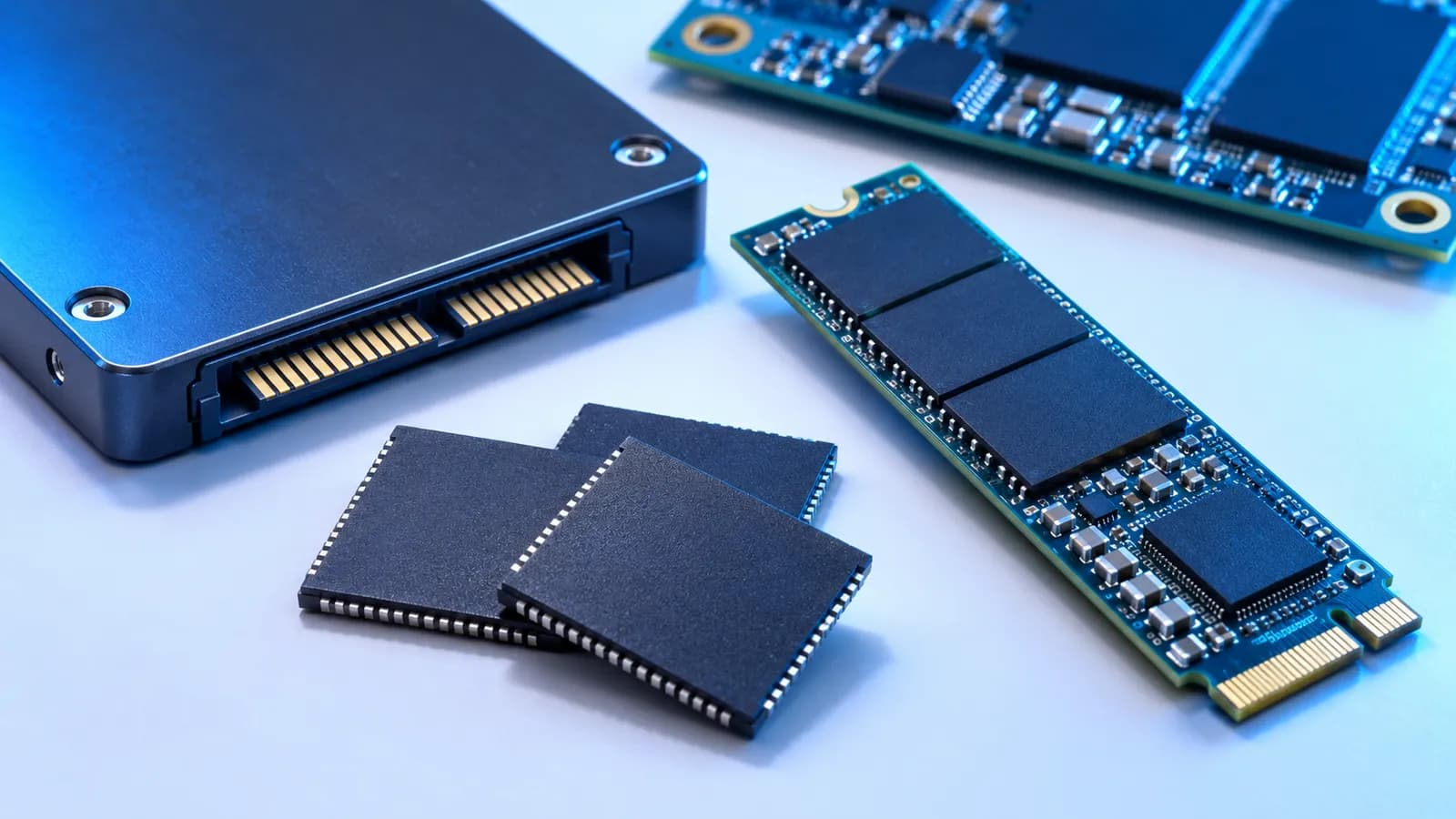
SanDisk develops and sells NAND flash memory and storage products used in consumer devices, computing and data-center infrastructure. The SNDK stock query refers to the publicly traded company; historical comparisons should account for changes in corporate structure and reporting scope.
SanDisk was one of the pioneers of flash memory and helped turn NAND flash from a niche technology into the storage inside phones, cameras, laptops and data centers. For a period it operated as part of Western Digital, which combined it with a hard disk drive business.
The flash business was later separated again into a stand-alone public company under the SanDisk name. That separation gives investors a business focused purely on flash storage, without the hard drive operations that follow a different technology and demand cycle.
Latest Quarterly Results: Fiscal Q1 2027
SanDisk reported fiscal first-quarter 2027 results (quarter ended around September 2026) on October 29, 2026.
Fiscal 2026 revenue rose 175% to $20.25 billion, and GAAP net income swung from a $1.64 billion loss to an $11.43 billion profit, a typical pattern when flash memory moves from oversupply to tight supply.
Datacenter storage has become the largest growth driver, while consumer sales were weaker in recent quarters.
Business Model and Revenue Drivers
Flash-memory supply and pricing move through industry cycles. Production capacity, inventory levels and demand across end markets can affect revenue and margins.
Product mix matters: enterprise and data-center storage can have different qualification cycles, pricing and margins from consumer storage products.
The semiconductor supply chain is global. Customer concentration, manufacturing relationships and changes in technology generations can affect operating results.
Competitive Landscape
NAND flash is produced by a small group of large manufacturers, including Samsung, SK hynix (with its Solidigm unit), Micron, Kioxia and Chinese producers such as YMTC. Because products of the same specification are largely interchangeable, competition is driven by cost per bit, technology roadmap and the ability to qualify products with large customers.
SanDisk's long partnership with Kioxia gives it shared access to large-scale fabs and joint technology development. Its brand is also widely recognized in consumer storage, which supports retail products such as memory cards and portable drives, while enterprise SSDs depend more on performance, reliability and customer qualification.
Revenue Growth and Financial Performance
When reviewing SanDisk's reported results, these measures give the clearest view of growth, profitability and cash generation:
- Revenue and gross margin by product or end market
- NAND pricing, inventory and capacity utilization
- Research, development and capital expenditure
- Operating cash flow, debt and cash balances
- Customer concentration and reported shipment volumes
Profitability and Earnings Quality
Revenue growth is only part of the picture. For SanDisk, it helps to check whether growth comes from higher volumes, higher prices or acquisitions, and whether margins are widening or narrowing as the business scales.
Reported earnings can include one-time items such as restructuring charges, asset sales, tax effects or legal settlements. Separating these from recurring operating results, and comparing like-for-like periods, gives a more reliable view of underlying profitability.
Balance Sheet, Debt and Financial Stability
A review of SanDisk's financial position starts with cash, total debt, lease obligations and how operating cash flow compares with capital spending. A business that funds its investment from its own cash flow is in a different position from one that relies on borrowing or issuing new shares.
Changes in inventory, receivables and working capital are also worth monitoring, because they can absorb cash and signal shifts in demand before they appear in revenue.
SNDK Stock Valuation Analysis
Measures such as the price-to-earnings ratio, price-to-sales ratio and enterprise value to EBITDA describe how the market is currently pricing SanDisk relative to its results.
However, a single valuation ratio cannot establish whether a stock is undervalued or overvalued. Earnings quality, free cash flow, margins, competitive position and the growth needed to support the current price all need to be considered together, and compared with similar companies.
Business Outlook and Investment Risks
Management guidance and industry conditions shape expectations for SanDisk, but guidance is an estimate rather than an established outcome. Several uncertainties are specific to this business:
- Memory-price volatility and periods of excess industry supply
- Rapid technology change and the cost of moving to new process generations
- Dependence on manufacturing partners and a concentrated supply chain
- Comparability issues when corporate structure or reporting segments change
From Wafers To Usable Storage
NAND production begins with silicon wafers that undergo many processing steps before individual memory dies are tested and packaged. A wafer's useful output depends on yield: the share of manufactured dies that meet the required specifications. A process can produce more potential storage per wafer while still encountering yield challenges. Consequently, an announced increase in memory density does not by itself establish an equivalent increase in usable output or a corresponding reduction in manufacturing cost.
Manufacturers also sort memory according to the characteristics it achieves in testing. Dies can be combined with controllers, firmware and other components in finished products, or supplied for use in customers' designs. The relationship between raw memory output and finished storage shipments is therefore not mechanical. Packaging, testing and product configuration add steps and costs, while the available mix of dies must match the requirements of the products being assembled.
How Flash Stores Data
NAND flash retains data without a continuous power supply. Its memory cells store electrical charge, and the controller interprets that charge as data. Storing more bits in each cell increases density but requires the system to distinguish among more charge levels. That makes signal management and error correction particularly important. The trade-off helps explain why products built from NAND can differ in endurance, speed and cost even when their stated storage capacity is similar.
Flash is written and erased in groups of cells rather than in the same way as ordinary computer memory. Repeated erase and write operations gradually wear cells, so SSD controllers distribute writes across available space and use spare capacity to replace worn areas. Firmware also manages background housekeeping and error correction. These functions influence consistent performance and useful life, making the complete drive design significant alongside the underlying memory.
Reading Inventory And Cost Of Sales
Inventory accounting connects manufacturing decisions to results reported later. Production costs are initially recorded in inventory and generally move into cost of sales when the related goods are sold. As a result, a quarter's gross margin reflects both selling conditions and costs accumulated during earlier production. Changes in manufacturing efficiency may take time to appear in reported margins because products made under different cost conditions can move through inventory at different times.
Financial statement notes can provide context for inventory write-downs when the recorded cost of goods exceeds their estimated recoverable value. Such charges affect the period in which they are recognized and can also change the cost assigned to goods sold later. Reading the notes alongside the income statement helps distinguish the accounting timing of a write-down from changes in the underlying manufacturing process or the specifications of products shipped.
Capacity And Customer Requirements
A storage device's stated capacity does not describe every aspect of its usefulness. Data-center customers can specify requirements for latency, sustained throughput, power consumption, endurance and data protection. Performance may also depend on the workload: sequential transfers and small random operations place different demands on a drive. Comparing products therefore requires attention to the conditions used in performance measurements, including how full the drive is and whether it has reached a steady operating state.
Large storage customers integrate drives into systems with their own software, power and service requirements. Qualification can involve testing compatibility and reliability across those systems, followed by validation of firmware or component changes. This process makes a customer relationship more involved than a single sale of capacity. Product support, documentation and the handling of updates can matter throughout deployment, even when competing drives use similar underlying NAND technology.
Conclusion: Is SNDK Stock Worth Analyzing in 2027?
SanDisk has a business model with clear drivers that can be tracked through its reported results, and a set of risks that are specific to its industry and financial position.
A balanced assessment considers growth, profitability, balance-sheet strength, valuation and risk together. SNDK is a company worth monitoring for what its results reveal about its business.