Company Overview
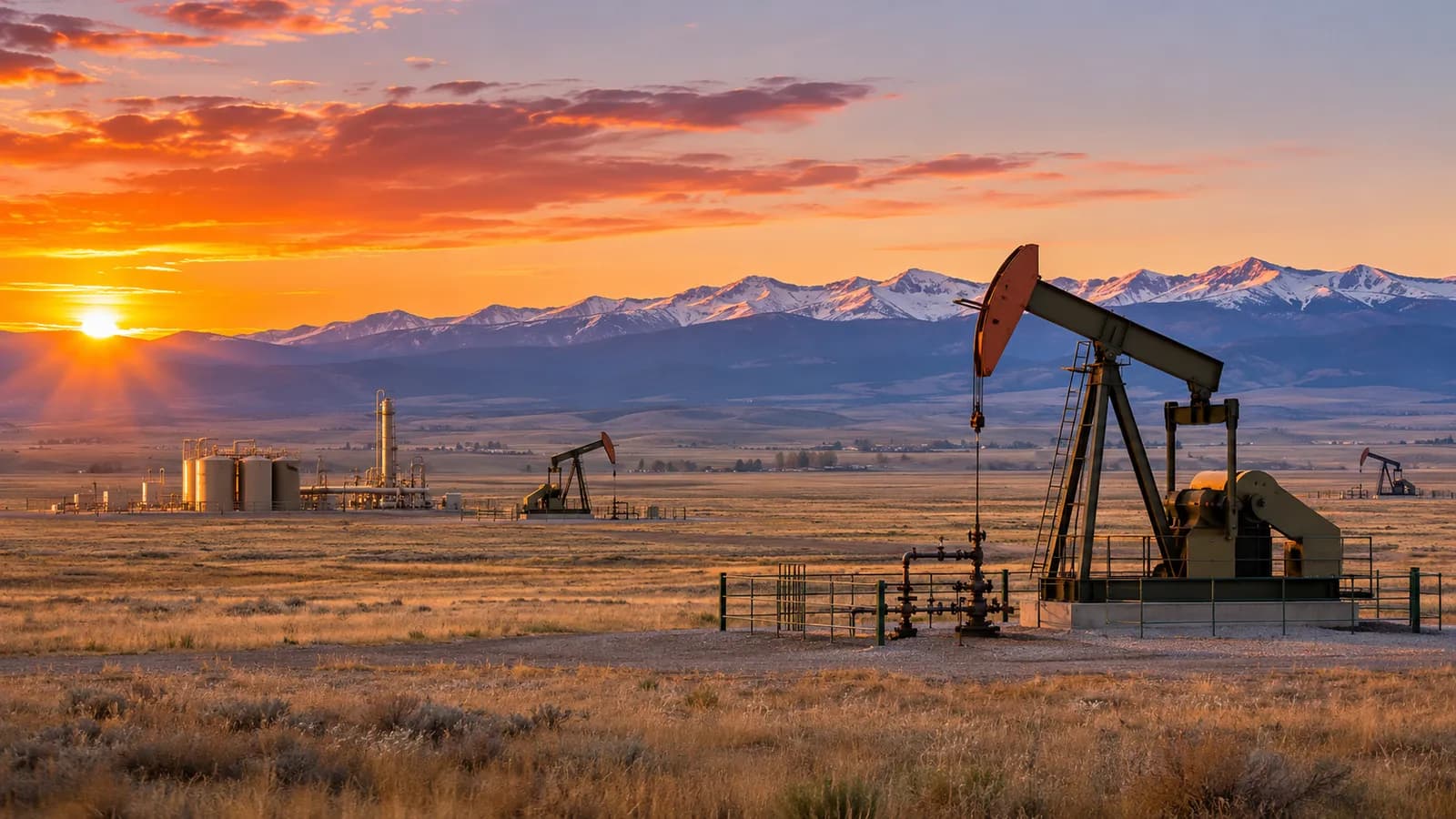
Prairie Operating Co. is an oil and gas producer in the Denver-Julesburg (DJ) Basin of Colorado. It trades on Nasdaq under the ticker PROP. It has grown quickly through acquisitions, including assets purchased from Bayswater Exploration and Production.
Prairie Operating began as a crypto-mining company and shifted to oil and gas in 2023.
It acquired Bayswater assets in the DJ Basin.
Latest Quarterly Results: Q3 2026
Prairie Operating reported third-quarter 2026 results on November 12, 2026.
Production reached about 32,287 Boe/d by early October as new wells came online.
Liquidity was described as tight, and a large derivative loss affected reported results.
Business Model and Revenue Drivers
Production has ramped up as new well pads come online.
The company uses commodity hedges, which can create large gains or losses as prices move.
Liquidity and debt are closely watched because of the pace of growth.
Competitive Landscape
Civitas Resources, Chevron and Occidental also operate in the DJ Basin.
Prairie is a much smaller producer.
Revenue Growth and Financial Performance
When reviewing Prairie Operating's reported results, these measures give the clearest view of growth, profitability and cash generation:
- Production (Boe/d)
- Lease operating expense per Boe
- Adjusted EBITDA
- Hedge position
- Liquidity
Profitability and Earnings Quality
Revenue growth is only part of the picture. For Prairie Operating, it helps to check whether growth comes from higher volumes, higher prices or acquisitions, and whether margins are widening or narrowing as the business scales.
Reported earnings can include one-time items such as restructuring charges, asset sales, tax effects or legal settlements. Separating these from recurring operating results, and comparing like-for-like periods, gives a more reliable view of underlying profitability.
Balance Sheet, Debt and Financial Stability
A review of Prairie Operating's financial position starts with cash, total debt, lease obligations and how operating cash flow compares with capital spending. A business that funds its investment from its own cash flow is in a different position from one that relies on borrowing or issuing new shares.
Changes in inventory, receivables and working capital are also worth monitoring, because they can absorb cash and signal shifts in demand before they appear in revenue.
PROP Stock Valuation Analysis
Measures such as the price-to-earnings ratio, price-to-sales ratio and enterprise value to EBITDA describe how the market is currently pricing Prairie Operating relative to its results.
However, a single valuation ratio cannot establish whether a stock is undervalued or overvalued. Earnings quality, free cash flow, margins, competitive position and the growth needed to support the current price all need to be considered together, and compared with similar companies.
Business Outlook and Investment Risks
Management guidance and industry conditions shape expectations for Prairie Operating, but guidance is an estimate rather than an established outcome. Several uncertainties are specific to this business:
- Oil price swings
- Limited liquidity
- Derivative losses
- Colorado regulation
From Wellhead To Sale
Production becomes revenue through a chain of gathering, processing and transportation arrangements. Oil, natural gas and natural gas liquids do not necessarily travel through the same facilities or reach the same buyers. A producer may deliver oil to a purchaser near the well or move it through a gathering system, while raw gas often requires processing before its components can be sold. Contract terms determine where ownership changes, which services are charged to the producer and how the sales price is calculated. The timing of deliveries can differ from the timing of production and affect reported sales volumes.
The price realized by a producer can differ from a widely quoted commodity benchmark. The difference may reflect the quality of the product, the delivery location, transportation charges and local supply and demand. A benchmark can therefore move in one direction while the price actually received changes by a different amount. Company disclosures sometimes describe these differences as differentials. When comparing periods, it is useful to distinguish a change in benchmark prices from a change in the producer's local differential. Disclosures should also show whether a differential is presented before or after specified transport costs.
A barrel of oil equivalent combines oil, gas and natural gas liquids using an energy conversion convention. It makes mixed production easier to describe, but it does not mean that each equivalent barrel earns the same sales price. Oil, gas and liquids have distinct markets and pricing arrangements. A change in product mix can affect revenue per equivalent barrel even when total equivalent volumes are unchanged. Product-level volumes and realized prices provide a clearer explanation than a single blended measure. The convention standardizes energy content, not the commercial value or physical properties of each product.
Gathering and processing contracts can also affect how revenue and costs appear in the accounts. Depending on the arrangement and accounting treatment, some charges may reduce the reported sales price while others appear as expenses. Two producers can therefore report different revenue and cost figures for economically similar transactions. Reading the notes on revenue recognition alongside transportation and processing disclosures helps identify these presentation differences before comparing margins across companies. Consistent definitions are especially important when comparing sales per unit and expense per unit across reporting periods.
Well Economics And Capital Allocation
An unconventional well typically requires substantial spending before it begins producing. The operator must secure access to acreage, prepare a pad, drill a well and complete it by hydraulically fracturing the reservoir. Production commonly declines from its initial rate as reservoir pressure and flow conditions change. As a result, a company's current output reflects both new wells and older wells at different stages of their productive lives. A single initial production figure describes only a small part of a well's history. A portfolio of wells with different ages can have a different aggregate decline pattern from an individual well.
A useful well-level assessment compares cumulative production and sales proceeds with the full cost of bringing the well online and operating it. Drilling and completion expenditures are only part of the picture: land, infrastructure, ongoing operating expenses and eventual site restoration can also matter. Well results vary with geology, lateral length, completion design and operating choices. Comparing wells without accounting for those differences can make an operational improvement look larger or smaller than it actually is. Cumulative results also depend on downtime, maintenance and the pace at which the well is produced.
Pad development allows several wells to share a surface location and certain equipment. This can reduce duplicated work, but it also means that spending and production additions may arrive in uneven batches. Wells on the same pad may be completed and connected together, creating a gap between cash outlays and the start of sales. Quarterly changes in capital spending and output should therefore be read alongside the timing of drilling, completion and connection activity. A quarterly snapshot may consequently contain expenditures for wells that have yet to contribute any sales.
Acreage is another important operating resource. Lease terms can require activity within a specified period to preserve rights, while existing production may extend rights under applicable agreements. An operator must also consider working interests, royalty burdens and access to supporting infrastructure when deciding where to drill. Gross acreage describes the whole area in which a company has an interest; net acreage adjusts for its ownership share. Neither measure alone establishes how much of the acreage can be developed economically. The location and continuity of leasehold interests can also influence how efficiently a company lays out wells.
Reading Reserves And Depletion
Reserves are estimated quantities of oil and gas that are expected to be recoverable under defined conditions, rather than a direct measurement of everything underground. Proved reserves must meet specified standards of reasonable certainty and are evaluated using prescribed economic and operating assumptions. Proved developed reserves generally relate to existing wells and facilities, while proved undeveloped reserves require additional investment. The distinction helps explain how much of the reported reserve base depends on future development work. Reported categories reflect the information and development plans available when the estimates are prepared.
Reserve estimates change for several reasons. Production removes quantities from the reserve base, while discoveries, extensions, acquisitions, sales and revisions can add or subtract quantities. Revisions may reflect new well performance, changed development plans or the economic assumptions required by reporting rules. A reserve reconciliation separates these movements. It is more informative to examine their sources than to treat the total change as a simple measure of drilling success. Acquired reserves, for example, expand the reported total without establishing the performance of wells drilled by the purchaser.
Oil and gas properties are recorded as assets and their costs are allocated over time through depletion, depreciation and amortization. The amount charged in a period depends partly on the accounting method and estimates of recoverable reserves. A change in those estimates can alter the expense recognized per unit of production without an equivalent change in the cash spent that period. The accounting policies and property notes explain the method used and the assumptions that influence the calculation. Different accounting approaches can complicate comparisons of book values and depletion rates among producers.
Impairment charges arise when accounting rules require a reduction in the carrying amount of an asset. Such charges can reflect changes in commodity prices, costs, expected production or development plans, depending on the applicable accounting method. An impairment is generally a noncash charge in the period recorded, but it can indicate that earlier spending is not expected to be recovered as previously assumed. It also changes the asset balance used in subsequent accounting calculations. The related note can clarify which properties were affected and the circumstances behind the charge.
Ownership And Field Obligations
An operator manages activity on a well, but may share the costs and proceeds with other working interest owners. Its working interest represents a share of specified costs and production before royalties. The net revenue interest reflects the share of production revenue remaining after royalty and other burdens. The two percentages serve different purposes: applying the same percentage to both costs and sales can misstate the economics of a shared well. The operator's responsibilities and the allocation of costs are governed by the relevant operating agreements.
Royalty owners generally receive a share of production or revenue under the terms of their agreements without bearing the same drilling and operating costs as working interest owners. The precise calculation can depend on contract language, product pricing and permitted deductions. A producer's reported gross production may therefore differ from the volumes or revenue attributable to its own interest. Definitions in operating tables matter when comparing field output with sales and financial results. This distinction matters when operating statistics include interests held by partners or royalty owners.
Producing wells carry obligations beyond their active lives. Operators generally must plug wells and address site restoration when operations end, subject to applicable requirements and agreements. The balance sheet can include an estimated asset retirement obligation for these future costs. That estimate depends on assumptions about the work required, timing and discounting, and it can change as those assumptions are revised. The liability is an accounting estimate rather than a bill for the full amount due immediately. Actual expenditure can differ from the recorded amount as conditions and regulatory requirements change.
Field operations also depend on arrangements for water, power, access roads and the handling of produced water. These services connect individual wells to the surrounding infrastructure and can influence operating costs and development scheduling. Some commitments may be disclosed in contract or obligation notes rather than in headline operating measures. Reading those notes alongside asset retirement disclosures gives a fuller picture of obligations attached to the producing properties. The scale and duration of these arrangements can differ substantially from one field to another.
Conclusion: Is PROP Stock Worth Analyzing in 2027?
Prairie Operating has a business model with clear drivers that can be tracked through its reported results, and a set of risks that are specific to its industry and financial position.
A balanced assessment considers growth, profitability, balance-sheet strength, valuation and risk together. PROP is a company worth monitoring for what its results reveal about its business.