Company Overview
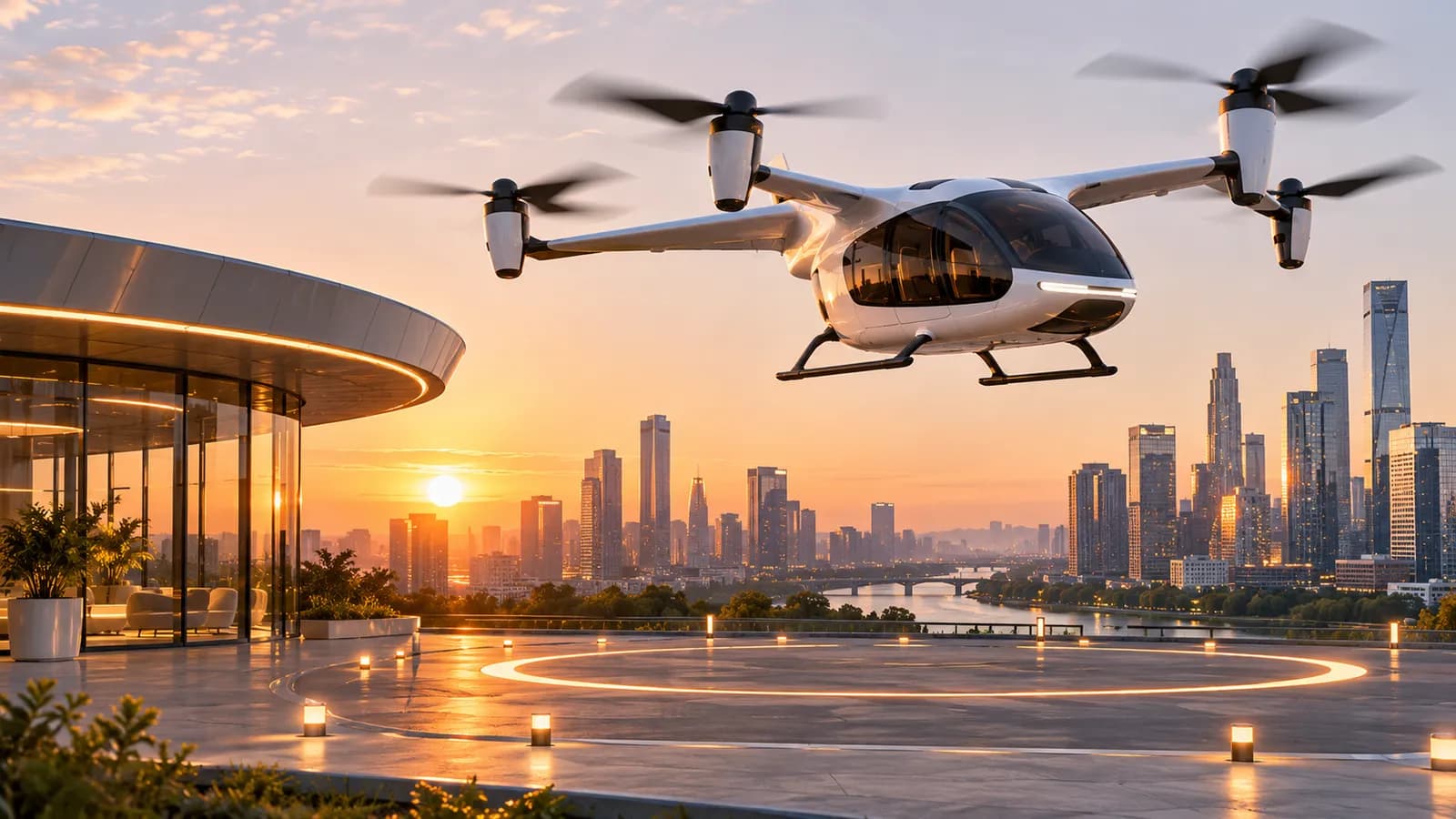
Joby Aviation is developing an electric vertical takeoff and landing (eVTOL) aircraft designed to carry a pilot and passengers on short urban trips. It trades on the NYSE under the ticker JOBY. Joby plans to operate its own air taxi service rather than only selling aircraft.
Joby Aviation was founded by JoeBen Bevirt and spent years developing its electric aircraft before becoming public through a merger with a special purpose acquisition company.
Joby acquired Uber's air taxi unit Elevate and later Blade's passenger business, and has partnerships with Toyota and Delta.
Latest Quarterly Results: Q3 2026
Joby reported third-quarter 2026 results on November 4, 2026.
The narrower net loss was helped by non-cash revaluation gains on warrants and earnout shares, so operating loss ($278.1 million) gives a clearer view of underlying spending. Joby expects cash use of $385–415 million in the second half of 2026.
Business Model and Revenue Drivers
Before commercial passenger service in the United States, Joby needs FAA type certification of its aircraft, which involves a long multi-stage testing process.
Joby has partnerships with Toyota for manufacturing support and Delta Air Lines for airport connections, and has worked toward launching service in Dubai.
The company is pre-revenue on a commercial scale and funds development through cash reserves and capital raising.
Competitive Landscape
Joby competes with Archer Aviation, Beta Technologies, Wisk (backed by Boeing), Eve (backed by Embraer) and others developing eVTOL aircraft.
Certification progress, funding and partnerships are key competitive factors.
Revenue Growth and Financial Performance
When reviewing Joby Aviation's reported results, these measures give the clearest view of growth, profitability and cash generation:
- FAA certification progress
- Cash and short-term investments
- Operating expenses and cash burn
- Manufacturing scale-up milestones
- Launch market agreements
Profitability and Earnings Quality
Revenue growth is only part of the picture. For Joby Aviation, it helps to check whether growth comes from higher volumes, higher prices or acquisitions, and whether margins are widening or narrowing as the business scales.
Reported earnings can include one-time items such as restructuring charges, asset sales, tax effects or legal settlements. Separating these from recurring operating results, and comparing like-for-like periods, gives a more reliable view of underlying profitability.
Balance Sheet, Debt and Financial Stability
A review of Joby Aviation's financial position starts with cash, total debt, lease obligations and how operating cash flow compares with capital spending. A business that funds its investment from its own cash flow is in a different position from one that relies on borrowing or issuing new shares.
Changes in inventory, receivables and working capital are also worth monitoring, because they can absorb cash and signal shifts in demand before they appear in revenue.
JOBY Stock Valuation Analysis
Measures such as the price-to-earnings ratio, price-to-sales ratio and enterprise value to EBITDA describe how the market is currently pricing Joby Aviation relative to its results.
However, a single valuation ratio cannot establish whether a stock is undervalued or overvalued. Earnings quality, free cash flow, margins, competitive position and the growth needed to support the current price all need to be considered together, and compared with similar companies.
Business Outlook and Investment Risks
Management guidance and industry conditions shape expectations for Joby Aviation, but guidance is an estimate rather than an established outcome. Several uncertainties are specific to this business:
- Certification delays
- Large funding needs before revenue
- Competition from Archer Aviation and others
- Uncertain demand and operating economics for air taxis
Aircraft Approval And Operating Authority
Aircraft design approval addresses the design itself, while production approval concerns the processes used to make aircraft that conform to that design. These are distinct from the operating authority needed to carry passengers for compensation. An operator also needs approved procedures, trained personnel and systems for maintaining aircraft. Reading regulatory announcements with these distinctions in mind helps identify which part of the aviation system a milestone addresses, without treating one approval as permission to conduct every activity.
Certification evidence can include analysis, ground tests and flight tests. Regulators review whether the evidence demonstrates compliance with applicable requirements, and the details depend on the aircraft and the authority involved. After an aircraft enters service, operators must follow continuing airworthiness requirements, including maintenance and corrective actions when required. These obligations make engineering records, parts traceability and maintenance documentation relevant throughout the aircraft's operating life, not just during initial development.
Economics Of An Air Taxi Trip
A passenger service converts aircraft capacity into revenue through a network of trips. The revenue associated with a flight depends on seats sold and the fare or contractual payment for those seats. An aircraft can also fly without paying passengers when it must reposition for its next assignment. Such movements consume crew time, energy and aircraft availability, so passenger load alone does not describe how efficiently a fleet is used across a full operating day.
Flight expenses extend beyond electricity. Pilots, maintenance technicians, insurance, landing facilities, reservations and customer support all contribute to the cost of providing service. Some expenses vary with flying activity, while others support the network regardless of the number of trips. Aircraft downtime for charging, inspection or repair also affects how much service each aircraft can provide. Comparing revenue and operating costs on a consistent basis is therefore more informative than looking at a fare in isolation.
Building A Practical Route Network
A useful route requires suitable takeoff and landing sites at both ends, access to passengers and coordination with the surrounding airspace. A vertiport is more than a landing pad: passenger handling, security arrangements, charging equipment and maintenance access can all matter. Ground connections determine how much time a traveler spends on the complete journey. A short flight may represent only one part of a trip that also includes travel to the departure site and onward from the arrival site.
Weather, air traffic restrictions and site operating rules can affect whether a particular flight can take place. Operators must plan schedules, reserves and passenger handling around interruptions, while considering noise and the communities near landing sites. Airport routes introduce another coordination problem because the air taxi service must fit alongside existing airport operations. These practical constraints help explain why the number of announced locations alone says little about the capacity or reliability of a network.
Production And Maintenance Systems
An aircraft prototype demonstrates engineering capabilities, but repeatable production requires controlled processes, reliable suppliers and consistent inspection. Each aircraft contains components whose quality and documentation must meet aviation requirements. A manufacturer must manage changes to designs and production methods while preserving evidence that completed aircraft conform to the approved configuration. Supplier capacity and the availability of qualified parts can affect the pace of assembly even when a final assembly facility is ready.
Electric propulsion changes the mix of maintenance tasks rather than eliminating maintenance. Batteries, electric motors, power electronics, structures and flight controls each require inspection or servicing under applicable maintenance instructions. Battery condition and replacement needs matter because batteries are both a significant aircraft component and a source of operational constraints. Maintenance records and the availability of trained technicians and spare parts help determine how quickly an aircraft can return to service after scheduled work or an unexpected fault.
Reading Segment And Cash Flow Disclosures
A consolidated income statement can combine activities with different economics. Passenger transport using existing aircraft, development work and other contracted services may involve different costs, assets and customer relationships. Where filings provide segment or other disaggregated information, readers can examine what each category measures and whether the presentation changes between periods. Acquisition accounting can also affect comparability, because an acquired operation contributes results only for the portion of a reporting period in which it is included.
The cash flow statement separates operating, investing and financing activities. Purchases and maturities of investments can move cash between categories without representing the same thing as cash consumed by day-to-day operations. Capital expenditures show spending on long-lived assets, while financing flows include proceeds from issuing securities or borrowing. Comparing these categories with the notes to the financial statements helps explain why a change in cash alone does not describe the sources and uses of funds.
Conclusion: Is JOBY Stock Worth Analyzing in 2027?
Joby Aviation has a business model with clear drivers that can be tracked through its reported results, and a set of risks that are specific to its industry and financial position.
A balanced assessment considers growth, profitability, balance-sheet strength, valuation and risk together. JOBY is a company worth monitoring for what its results reveal about its business.