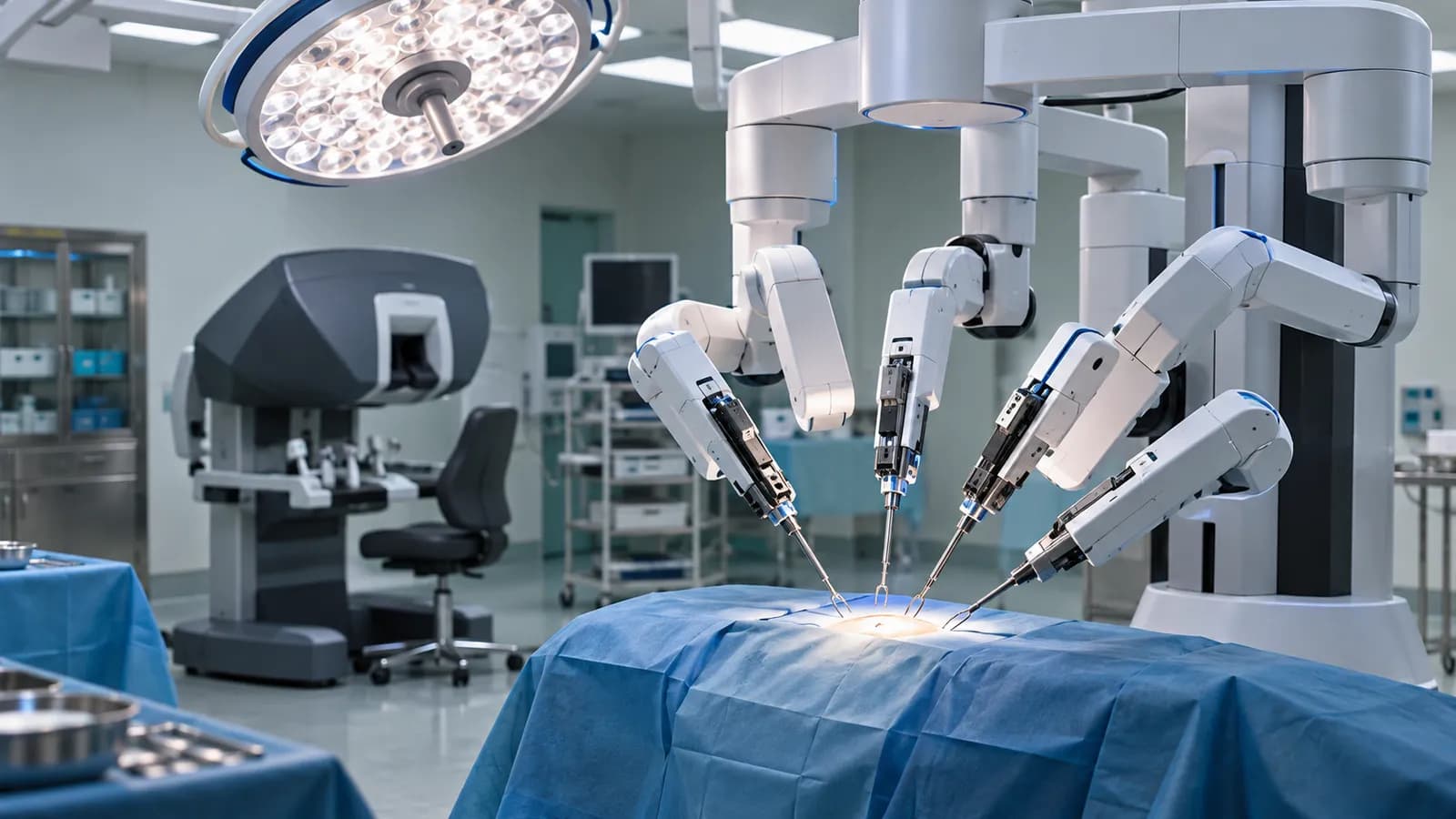
Company Overview
Intuitive Surgical makes the da Vinci robotic surgical systems and the Ion endoluminal system for lung biopsies. It trades on Nasdaq under the ticker ISRG. Hospitals buy or lease the systems and then buy instruments and services for each procedure.
Intuitive Surgical was founded in 1995, and its da Vinci system received FDA clearance in 2000.
It pioneered robotic-assisted surgery.
Recent Update
In its mid-2026 report, Intuitive Surgical highlighted growth in its single-port platform.
Procedure growth drives recurring instrument and service revenue, which is why it is the most closely watched figure for the company.
Business Model and Revenue Drivers
Most revenue is recurring, coming from instruments, accessories and service tied to the number of procedures performed.
Growth in procedure volume is the key driver, as more surgeons adopt robotic approaches across specialties.
The newer da Vinci 5 system adds features such as force feedback.
Competitive Landscape
Intuitive competes with Medtronic's Hugo, J&J's Ottava, CMR Surgical and others.
Its large installed base and surgeon training are key strengths.
Revenue Growth and Financial Performance
When reviewing Intuitive Surgical's reported results, these measures give the clearest view of growth, profitability and cash generation:
- Worldwide procedure growth
- System placements
- Recurring revenue share
- Gross margin
- Installed base
Profitability and Earnings Quality
Revenue growth is only part of the picture. For Intuitive Surgical, it helps to check whether growth comes from higher volumes, higher prices or acquisitions, and whether margins are widening or narrowing as the business scales.
Reported earnings can include one-time items such as restructuring charges, asset sales, tax effects or legal settlements. Separating these from recurring operating results, and comparing like-for-like periods, gives a more reliable view of underlying profitability.
Balance Sheet, Debt and Financial Stability
A review of Intuitive Surgical's financial position starts with cash, total debt, lease obligations and how operating cash flow compares with capital spending. A business that funds its investment from its own cash flow is in a different position from one that relies on borrowing or issuing new shares.
Changes in inventory, receivables and working capital are also worth monitoring, because they can absorb cash and signal shifts in demand before they appear in revenue.
ISRG Stock Valuation Analysis
Measures such as the price-to-earnings ratio, price-to-sales ratio and enterprise value to EBITDA describe how the market is currently pricing Intuitive Surgical relative to its results.
However, a single valuation ratio cannot establish whether a stock is undervalued or overvalued. Earnings quality, free cash flow, margins, competitive position and the growth needed to support the current price all need to be considered together, and compared with similar companies.
Business Outlook and Investment Risks
Management guidance and industry conditions shape expectations for Intuitive Surgical, but guidance is an estimate rather than an established outcome. Several uncertainties are specific to this business:
- Competition from Medtronic, Johnson & Johnson and others
- Hospital capital budgets
- Tariffs and trade
- Regulatory approvals
How Hospitals Evaluate Surgical Technology
A hospital's decision to introduce a surgical platform involves more than the purchase department. Surgeons, operating room staff, administrators and clinical leaders each assess different aspects of its use. A surgeon may consider the procedures suited to the system, while administrators examine scheduling, staffing and the resources needed to support a program. The decision also depends on whether the hospital can incorporate the technology into existing clinical workflows and maintain access for the specialties that want to use it.
The economic calculation extends beyond the system itself. A hospital must consider disposable supplies, instrument usage, maintenance, operating room time and staff training alongside the reimbursement it receives for care. Reimbursement arrangements vary by payer, setting and procedure, and a hospital may not receive a separate payment simply because a robotic system was used. Reported procedure growth therefore describes activity, but it does not by itself reveal the economics experienced by each hospital.
From Placement To Clinical Use
A system placement and a completed procedure represent different stages of adoption. After a hospital obtains a system, it must allocate operating room time, train teams and decide which cases are appropriate for the platform. Usage can vary across hospitals and across systems within one hospital. A facility with several systems may use them in different specialties, while a newly installed system may require time to become part of a regular surgical schedule.
The relationship between the installed base and procedures can be considered as a broad measure of utilization. Dividing total procedures by a relevant installed base provides a rough average, but the result has limits: systems are installed throughout a reporting period, and regional and specialty mixes differ. An average also hides variation between busy and lightly used systems. When reviewing company disclosures, note how the installed base is defined and whether the procedure and system figures cover comparable periods and geographies.
Procedure mix matters because operations differ in their use of instruments, accessories and operating room resources. A change in the types of procedures performed can alter revenue per procedure even if the number of procedures remains unchanged. Geographic mix can matter as well, since commercial arrangements and healthcare systems differ. Comparing procedure trends with instrument and accessory revenue can prompt useful questions, but the difference between the two measures should not automatically be attributed to pricing.
Reading Revenue And Contract Disclosures
System revenue can arise under different commercial arrangements, including purchases and leases. Their accounting can affect when revenue appears and how much is recognized in a given period. A sale may be recorded at a different point from revenue earned over the life of a lease or service contract. As a result, two periods with similar placement activity can show different system revenue. The notes to the financial statements provide context about revenue recognition and the types of arrangements involved.
Service contracts also require attention to timing. Customers may pay for coverage before all of the related service has been provided, creating a contract liability that is recognized as revenue as obligations are fulfilled. The balance reflects the timing of billings and performance, among other factors. It should be read alongside the company's stated accounting policies rather than treated as an independent measure of future procedure activity.
The cost structure of each revenue category can differ. Systems require manufacturing and installation, instruments require production and distribution, and service involves personnel, parts and support infrastructure. A shift in the proportions of these categories can therefore change overall gross margin even when the economics within each category are stable. If the company reports category-level revenue or margins, those details can help distinguish a change in sales mix from a change in costs within a business line.
Clinical Evidence And Regulatory Pathways
A robotic surgical platform is a tool used by a clinical team, so its contribution depends on the procedure, the patient and how the team uses it. Studies may compare outcomes such as complications, recovery or length of hospital stay across surgical approaches. Interpreting those studies requires attention to patient selection, surgeon experience and whether the comparison groups were similar. An association in an observational study does not necessarily establish that the technology alone caused an observed difference.
Regulatory authorization is tied to the relevant device, intended use and jurisdiction. It should not be confused with a finding that a device is preferable for every patient or procedure. Changes to a system, its instruments or its intended uses can require regulatory review under applicable rules. Hospitals and clinicians also make their own decisions about credentialing, appropriate case selection and ongoing oversight, so regulatory status is only one part of clinical adoption.
Conclusion: Is ISRG Stock Worth Analyzing in 2027?
Intuitive Surgical has a business model with clear drivers that can be tracked through its reported results, and a set of risks that are specific to its industry and financial position.
A balanced assessment considers growth, profitability, balance-sheet strength, valuation and risk together. ISRG is a company worth monitoring for what its results reveal about its business.