What Happened to IAA Stock?
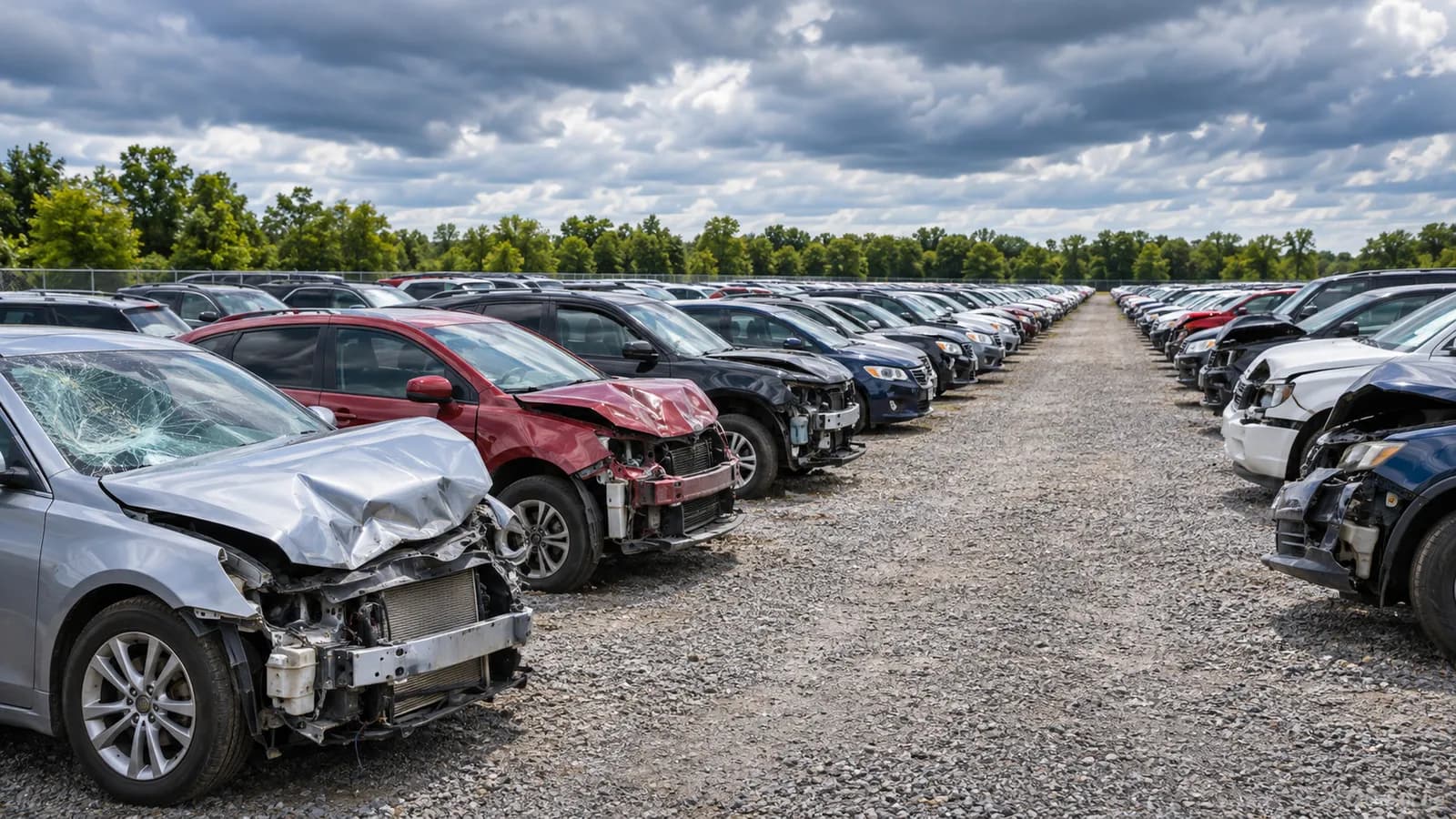
IAA, formerly Insurance Auto Auctions, runs auctions for damaged and total-loss vehicles, mainly for insurance companies. It traded on the NYSE under IAA until March 2023, when Ritchie Bros. Auctioneers, now RB Global, completed its acquisition. IAA shareholders received $10.00 in cash plus 0.5804 RB Global shares for each IAA share.
Insurance Auto Auctions was founded in 1982. KAR Auction Services spun IAA off in 2019.
RB Global completed the acquisition in March 2023.
Key Facts: RB Global's Acquisition of IAA
RB Global (formerly Ritchie Bros.) completed its acquisition of IAA in March 2023.
IAA's salvage auction results are now reported within RB Global.
How Salvage Auctions Work
IAA was spun off from KAR Auction Services in 2019.
Insurance companies send total-loss vehicles to salvage auctions, where buyers bid for parts or repair.
Copart is the main competitor in salvage vehicle auctions.
IAA, Copart and Other Auction Businesses
Copart is the largest salvage auction company. Online auction sites also sell used vehicles.
RB Global combines IAA with Ritchie Bros. equipment auctions.
Measures That Described IAA
These measures were central to IAA's results:
- Vehicles sold
- Revenue per unit
- Insurance industry volumes
- Gross margin
- Integration with RB Global
Considerations After the Merger
The merger changes how IAA can be followed:
- No standalone IAA stock
- Insurance claim volumes
- Used car prices
- Competition from Copart
From Claim To Auction
A vehicle can enter the salvage channel after an insurer settles a claim and takes ownership of the damaged property. The insurer's decision involves comparing the cost of repair with the vehicle's value and applying the rules of the relevant jurisdiction. Damage is not always visible from the outside: water intrusion, electrical faults and structural distortion can complicate an assessment. The auction operator's role begins with coordinating the vehicle's movement and preparing information that allows potential buyers to evaluate the lot. The handoff also requires coordination among the owner, insurer, transporter and auction facility. Each party's responsibilities can depend on the claim and the terms of the assignment.
The path from a claim to a completed sale includes assignment, towing, storage, inspection, documentation and release to the winning buyer. These steps have different costs and can involve independent service providers as well as auction staff. A delay in obtaining documents or moving a vehicle can extend its stay at a yard. That matters operationally because each occupied space competes with incoming vehicles, and the company must coordinate physical capacity with the timing of online sales. Efficient scheduling can reduce unnecessary movements and make it easier to locate vehicles when buyers or transporters arrive. Yard utilization should be considered alongside turnaround time, since a full yard is not necessarily an efficient one.
Titles and other ownership documents are central to the process. Rules governing salvage branding, rebuilding and registration differ across jurisdictions, and some vehicles may be eligible only for dismantling or export. A buyer's ability to use a vehicle therefore depends on more than its apparent condition. Auction listings and sale documents help communicate the available information, while buyers must account for the documentation and rules that apply to their intended use. Document processing can involve parties outside the auction company, including government agencies and lienholders. The time needed to clear an ownership issue may differ from the time needed to prepare a vehicle physically.
The condition and history disclosed for a lot also affect how buyers assess uncertainty. Images, damage descriptions, vehicle identification information and available keys can reduce some information gaps, but they do not turn a damaged vehicle into a fully inspected product. Buyers may have limited ability to examine hidden components before bidding. The auction process brings competing assessments together, so the winning bid reflects one buyer's estimate of usable value, costs and risk under the sale terms. A bidder who specializes in a particular make or type of damage may be better equipped to estimate the value of its components. Sale terms matter because they specify the responsibilities that accompany a successful bid.
Fees Services And Auction Economics
An auction platform can earn revenue from sellers, buyers and related services. Seller arrangements may include fees for processing or selling vehicles, while buyers can face transaction charges and fees tied to services they choose or activities required to complete a purchase. The precise allocation depends on contracts and published terms. Because both sides contribute to the economics of a transaction, the amount retained by the operator cannot be inferred simply from the winning bid. Published charges can vary according to the transaction and the services involved. The full cost to a buyer includes applicable fees and the expense of removing and transporting the vehicle after the sale.
The operator may also arrange or provide towing, vehicle preparation, storage, paperwork and other services around a sale. Some activities generate separate charges; others may be included in a broader customer agreement. Gross revenue from an ancillary service should be read alongside the associated labor, transportation and facility costs. Accounting presentation can also differ depending on whether a company acts as a principal providing a service or as an agent arranging for another party to provide it. Different service mixes can therefore produce different revenue totals even when underlying transaction activity is similar. Notes to the accounts and management commentary can help identify which activities are included in a reported line.
Contract structure changes which party bears different risks. Under a service arrangement, the vehicle owner can retain exposure to the auction proceeds while paying agreed fees. Other arrangements can shift more economic exposure to the auction company. To understand reported results, readers should look for management's description of the mix of arrangements, how revenue is recognized and whether proceeds from selling a vehicle are recorded as company revenue or passed through to the owner. The distinction is useful when comparing operators: a larger reported revenue figure can partly reflect a different contractual role. The associated expenses and cash flows need to be considered in the same context.
A marketplace also depends on participation on both sides. Insurers and other sellers value access to qualified bidders and an orderly process, while bidders value a steady supply of vehicles and reliable information. Broader participation can improve the matching of a vehicle with a buyer who can use it, but it also requires customer support, compliance and technology. Participation alone does not establish profitability: the cost of attracting, serving and retaining customers must also be considered. Marketplace liquidity can also differ by vehicle category and location. A large audience is most useful to a seller when it includes buyers with the permissions, expertise and logistics needed for the specific lot.
Reading Operating Results
Reported revenue combines several influences that should be separated before drawing conclusions about activity. A change can reflect the number of transactions, the mix of customer contracts, the types of services provided or the accounting treatment of those services. Acquisitions and disposals can also change the scope of a reporting period. Comparing a company's discussion of organic activity with its description of changes in the business can help explain why a revenue movement does not necessarily match a change in vehicles handled. Seasonality and the timing of large assignments can complicate comparisons between individual periods. Longer sequences of reports can help readers distinguish a change in operating mix from a short-lived timing effect.
The income statement can be read alongside disclosures about facilities and staffing. Yards, equipment, systems and administrative functions create costs that cannot always be adjusted immediately when activity changes. Other costs, including transportation and certain processing expenses, can move more directly with transactions. This mix creates operating leverage: a change in activity can have a different proportional effect on operating income because costs do not all change at the same rate. Utilization is one way to think about this relationship. When existing facilities handle more work without a corresponding increase in fixed costs, the cost attributed to each transaction can change.
Cash flow provides a separate view from reported earnings. Receivables, payables and amounts owed to vehicle sellers can change the timing of cash collection and payment. Spending on yards, equipment and software may appear as capital expenditure rather than an immediate operating expense, with the related cost recognized over time through depreciation or amortization. A reader can compare operating cash flow with capital spending and examine the notes for explanations of material working capital movements. Capital expenditure should be interpreted in context: maintaining existing facilities and expanding capacity serve different purposes. A temporary working capital movement can also reverse without representing a lasting change in earnings.
An acquisition can make comparisons more complex because the buyer records acquired assets and liabilities and may recognize intangible assets and goodwill. Amortization, financing costs and transaction or integration expenses can affect reported earnings after a deal. Management may present adjusted measures to explain operations, but those measures depend on the adjustments selected. Reading the reconciliation to the corresponding reported measure shows which costs were excluded and helps distinguish recurring operating demands from items management treats separately. Goodwill is subject to impairment assessment rather than routine amortization. An impairment charge can affect reported earnings, while the original cash paid for an acquisition is reflected in the investing section of the cash flow statement.
Industry Capacity And Vehicle Technology
Salvage auction capacity is both digital and physical. Online bidding can connect vehicles with geographically dispersed buyers, but each vehicle still needs space, handling and transportation. Suitable yards require access to transport routes, staff and local permits. Land availability and environmental requirements can make expanding or relocating a facility a lengthy process. A network's usefulness therefore depends on where its yards are located relative to claims, customers and the routes used to move vehicles. Digital reach does not eliminate local constraints, because a buyer still needs a practical way to collect the vehicle. Capacity planning therefore involves both the auction platform and the network of physical locations.
Environmental handling is relevant because damaged vehicles can contain fluids, batteries and other materials that require controlled storage or removal. The applicable obligations depend on the location and the activities performed at a facility. These requirements influence procedures, training and facility design, and they can create costs that are not visible in an auction listing. Operational quality includes the ability to document handling and coordinate with transporters and downstream dismantlers. Requirements may cover more than the immediate sale, including the condition of storage areas and records of materials handled. Site-specific obligations can differ, so a single description may not capture every facility.
Changes in vehicle design affect both damage assessment and the pool of potential buyers. Electronic sensors, advanced driver assistance equipment and integrated components can make diagnosis and repair more specialized. Electric vehicles introduce high-voltage systems and battery handling considerations. A dismantler, repairer or exporter may assess the same vehicle differently depending on its skills, facilities, access to parts and the rules in its market. Detailed vehicle information helps buyers apply those different assessments. The availability of diagnostic knowledge and appropriate equipment can influence how readily a buyer participates. Differences in vehicle technology can also change which parts can be reused and what work is needed before reuse.
Demand for salvage vehicles comes from several uses, including recovering parts, repairing eligible vehicles and recycling materials. Those uses have different cost structures: a dismantler considers labor, storage and the market for usable components, while a recycler considers processing costs and recoverable materials. Transport distance and documentation can affect all of them. The range of possible uses helps explain why two vehicles with similar visible damage can attract different bidding interest. A vehicle's location can change its practical appeal even when its physical condition is unchanged. Buyers weigh the value they expect to recover against collection, processing, compliance and other costs they expect to incur.
Conclusion: IAA Inside RB Global
IAA no longer trades on its own after RB Global completed the acquisition in 2023. Its salvage auction business now reports within RB Global, which trades under RBA.