Company Overview
Halliburton is one of the largest oilfield services companies, providing hydraulic fracturing, drilling, cementing and well evaluation. It trades on the NYSE under the ticker HAL. Its two segments are Completion and Production, and Drilling and Evaluation.
Halliburton was founded in 1919 by Erle P. Halliburton.
It is one of the big three oilfield services companies with SLB and Baker Hughes.
Latest Quarterly Results: Q3 2026
Halliburton reported third-quarter 2026 results on October 20, 2026.
Completion and Production earned $457 million of operating income and Drilling and Evaluation earned $391 million.
Reported operating income included impairments and other charges.
Business Model and Revenue Drivers
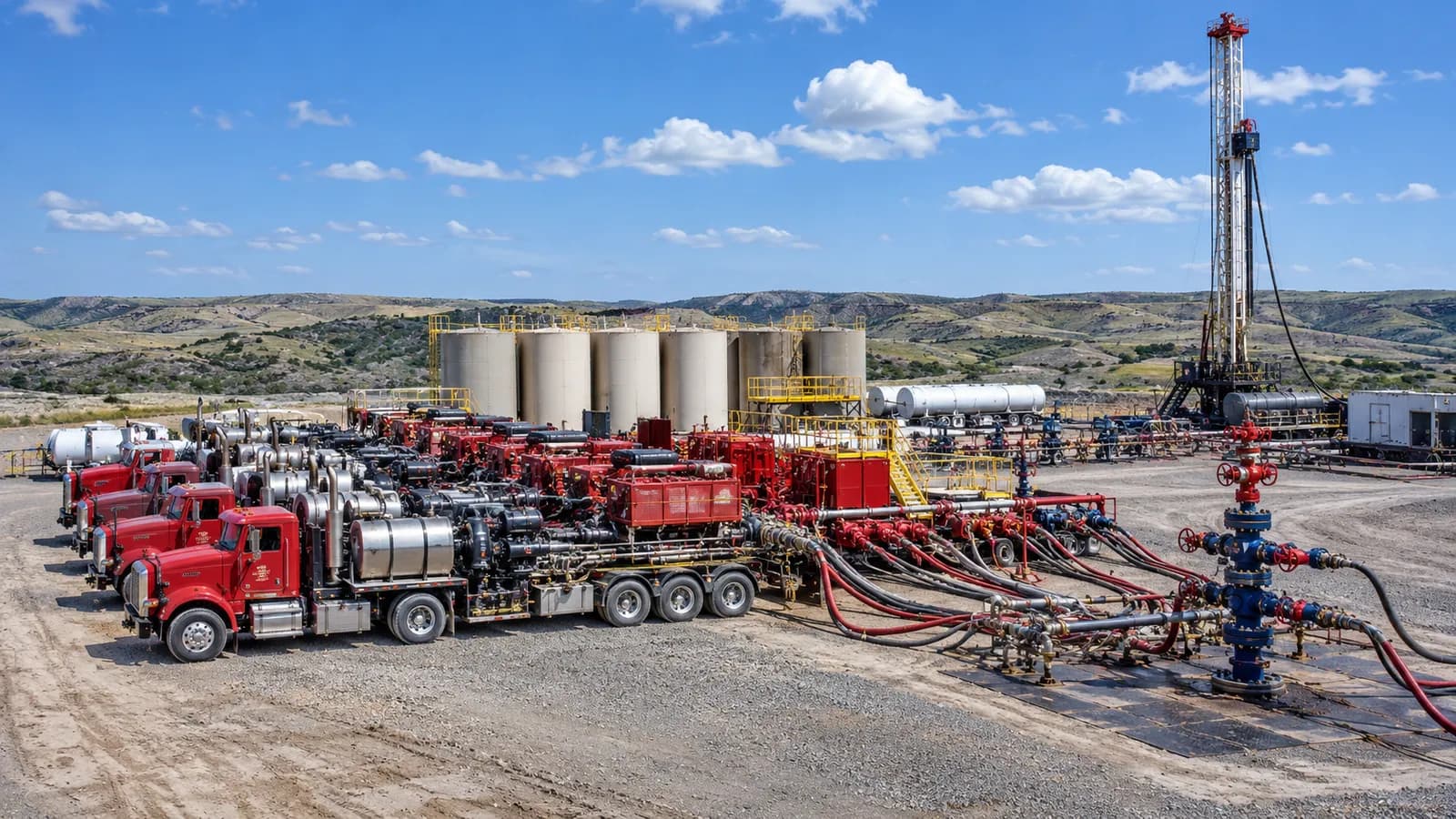
Halliburton is the largest provider of hydraulic fracturing in North America.
International activity has become a larger share of revenue.
Results depend on how much oil and gas producers spend on drilling and completions.
Competitive Landscape
SLB, Baker Hughes and Liberty Energy compete with Halliburton.
Halliburton is especially strong in North American fracturing.
Revenue Growth and Financial Performance
When reviewing Halliburton's reported results, these measures give the clearest view of growth, profitability and cash generation:
- Revenue by segment
- Operating margin
- North America vs international revenue
- Free cash flow
- Shareholder returns
Profitability and Earnings Quality
Revenue growth is only part of the picture. For Halliburton, it helps to check whether growth comes from higher volumes, higher prices or acquisitions, and whether margins are widening or narrowing as the business scales.
Reported earnings can include one-time items such as restructuring charges, asset sales, tax effects or legal settlements. Separating these from recurring operating results, and comparing like-for-like periods, gives a more reliable view of underlying profitability.
Balance Sheet, Debt and Financial Stability
A review of Halliburton's financial position starts with cash, total debt, lease obligations and how operating cash flow compares with capital spending. A business that funds its investment from its own cash flow is in a different position from one that relies on borrowing or issuing new shares.
Changes in inventory, receivables and working capital are also worth monitoring, because they can absorb cash and signal shifts in demand before they appear in revenue.
HAL Stock Valuation Analysis
Measures such as the price-to-earnings ratio, price-to-sales ratio and enterprise value to EBITDA describe how the market is currently pricing Halliburton relative to its results.
However, a single valuation ratio cannot establish whether a stock is undervalued or overvalued. Earnings quality, free cash flow, margins, competitive position and the growth needed to support the current price all need to be considered together, and compared with similar companies.
Business Outlook and Investment Risks
Management guidance and industry conditions shape expectations for Halliburton, but guidance is an estimate rather than an established outcome. Several uncertainties are specific to this business:
- Oil and gas price swings
- Customer spending cuts
- Pricing pressure in fracking
- Energy transition
From Reservoir To Producing Well
An oil or gas well moves through a sequence of technical decisions, and service work changes as the project advances. Before drilling, operators use geological information to choose a location and design a well path. During drilling, they need equipment and measurements that help keep the borehole on course and manage pressure. After the target is reached, the well must be prepared to move fluids safely to the surface. These stages are connected: an early design choice can affect the equipment, materials and procedures needed later. Operators may hire separate contractors for each stage or arrange a broader package of services.
Cementing illustrates that connection. Cement placed between steel casing and the surrounding formation helps isolate subsurface zones and support the well structure. The service depends on both the material and its placement under the conditions found in the well. A cementing job is therefore more than a sale of cement: it combines design, specialized equipment, field personnel and execution. The quality of the seal matters throughout the well's life, including when the operator eventually closes and abandons it.
Well evaluation provides another link between decisions. Measurements taken in or near the borehole help operators assess rock properties and the fluids a formation may contain. Those measurements can inform where to drill, how to complete a well and how to manage production. The commercial value of such information comes from reducing uncertainty in a costly physical project, although measurements still require interpretation and do not eliminate geological uncertainty. Evaluation services may be requested at several points rather than only once.
A completion makes a drilled well ready for production. Depending on the reservoir, it can involve installing equipment in the well and stimulating the surrounding rock so fluids can flow more readily. Hydraulic fracturing is one form of stimulation; its design and execution depend on reservoir conditions and the operator's objectives. The sequence matters when reading service-company results because a change in drilling activity does not necessarily appear in completion work in the same reporting period. Wells can be drilled and completed on different schedules.
How Service Contracts Generate Revenue
Oilfield service contracts can combine equipment, consumable materials, technical personnel and engineering work. The bill for a job may reflect a defined scope, the time equipment is used, quantities of materials consumed or a combination of these elements. The operator and service provider also agree on responsibilities for logistics and execution. Contract terms matter because the same headline activity can produce different revenue per job when its design, duration, material intensity or included services differs.
The economic burden of a job is equally varied. A service provider must mobilize crews and equipment, maintain its fleet, obtain materials and coordinate transport to the site. Some costs arise when a job is performed, while others continue when equipment is idle. A job that generates revenue may contribute little toward overhead if its direct costs are high. Conversely, efficient scheduling can spread the cost of equipment and support functions across more work without requiring a proportional increase in those costs. Mobilization is particularly relevant when work is remote: equipment and people must reach the site before the service can begin, and moving them elsewhere takes additional time. The allocation of these costs depends on the contract.
Utilization is a useful concept in this setting: it describes how much available capacity is actually working. It should be interpreted alongside the definition of available capacity, since equipment under repair or held in reserve may be treated differently across disclosures. High utilization can reduce idle time, but it can also increase maintenance needs and complicate scheduling. Revenue per crew or unit of equipment is similarly incomplete on its own because job complexity, materials supplied and contract terms can differ.
The timing of revenue also depends on the service promised and the applicable accounting rules. Some work is performed over a period, while other obligations are satisfied at a particular point. An invoice, cash collection and revenue recognition need not occur together. Contract assets, contract liabilities and receivables can help explain those timing differences when disclosed. Reading the accounting policy and related notes helps distinguish a change in commercial activity from a change in when completed work is recorded.
Reading Segment Results And Cash Flows
Segment reporting helps connect the income statement to different kinds of work, but segment operating income is not the same as consolidated net income. Companywide costs, interest, taxes and other items can sit outside the segment measure. A reader can follow the reconciliation in the filing from the sum of segment results to the consolidated figure. This prevents corporate expenses from disappearing from the analysis when the performance of individual businesses is compared.
Geographic revenue disclosures answer a different question from segment disclosures. A region describes where activity is attributed, while a segment groups services and products. Neither view alone reveals every combination of location and service line. A regional revenue increase, for example, does not establish which product drove it unless the company provides that detail. Management commentary can supply context, but the financial statement notes establish the definitions and boundaries used in the reported categories. Period-to-period comparisons also benefit from checking whether the company changed its reporting categories or presentation. If it did, restated comparative figures and explanations in the filing help readers avoid treating a reporting change as an operating change.
The cash flow statement starts with net income and adjusts for noncash items and changes in operating assets and liabilities. Depreciation is added back because it reduced accounting income without being a current-period cash payment. That adjustment does not make equipment free to replace: spending on equipment appears separately in investing cash flows. Comparing depreciation with capital spending over several periods can help frame the relationship between past investment and current cash outlays, while recognizing that the two measures have different timing and purposes.
A disposal or impairment also requires care. An impairment reduces the carrying value of an asset when accounting rules require it, but the charge itself does not measure the cash spent in that period. Cash proceeds from a sale appear separately, and any gain or loss reflects a comparison with the asset's carrying amount. The notes can show the nature of the affected assets and the circumstances of the charge, providing context for both reported earnings and the remaining asset base.
Technology, Maintenance And Contract Execution
Oilfield technology competes on practical operating outcomes as well as technical specifications. An operator may value a tool that delivers usable measurements under difficult conditions, reduces time on location or fits an established well design. Adoption can require testing, trained crews and integration with the operator's workflows. A service company must therefore support equipment in the field and demonstrate reliability, not simply develop a new tool. The benefit of a technology can vary with the geology and the design of each project. Training and service support can also influence whether an operator can use a tool consistently across multiple locations. Field experience can reveal limitations and inform product development.
Maintenance is part of the operating model because pumps, downhole tools and other equipment work under demanding conditions. Planned maintenance can remove equipment from service temporarily, while unexpected failures can disrupt an active job. Spare parts, repair facilities and trained technicians all support continuity. When comparing periods, equipment availability and repair activity can help explain why reported activity and costs do not move in lockstep. Financial disclosures may not quantify each cause, so management's explanation should be read in the context of the reported totals.
Execution also depends on coordination among the operator, service providers and suppliers. Site access, materials, personnel and equipment must be available in the right sequence. A delay in one part of a project can shift the timing of another service, and a contract may allocate the associated costs differently depending on its terms. These dependencies are especially relevant for integrated work involving several service lines. A broader scope can simplify coordination for an operator while requiring the contractor to manage more interfaces.
Safety and environmental procedures are embedded in that execution. Well control, handling of fluids and materials, equipment inspection and worker training all affect how a job is planned and delivered. Legal requirements and customer standards can vary by jurisdiction and project. Incident records, discussion of operational controls and disclosed contingencies can add context to financial statements, although they do not fully describe every operational exposure. The notes on contingencies and commitments are useful places to examine obligations whose final timing or amount may be uncertain. A commitment differs from an expense already recorded: it describes an obligation that may require resources under specified terms. The accompanying note helps explain its nature and any conditions attached to it.
Conclusion: Is HAL Stock Worth Analyzing in 2027?
Halliburton has a business model with clear drivers that can be tracked through its reported results, and a set of risks that are specific to its industry and financial position.
A balanced assessment considers growth, profitability, balance-sheet strength, valuation and risk together. HAL is a company worth monitoring for what its results reveal about its business.