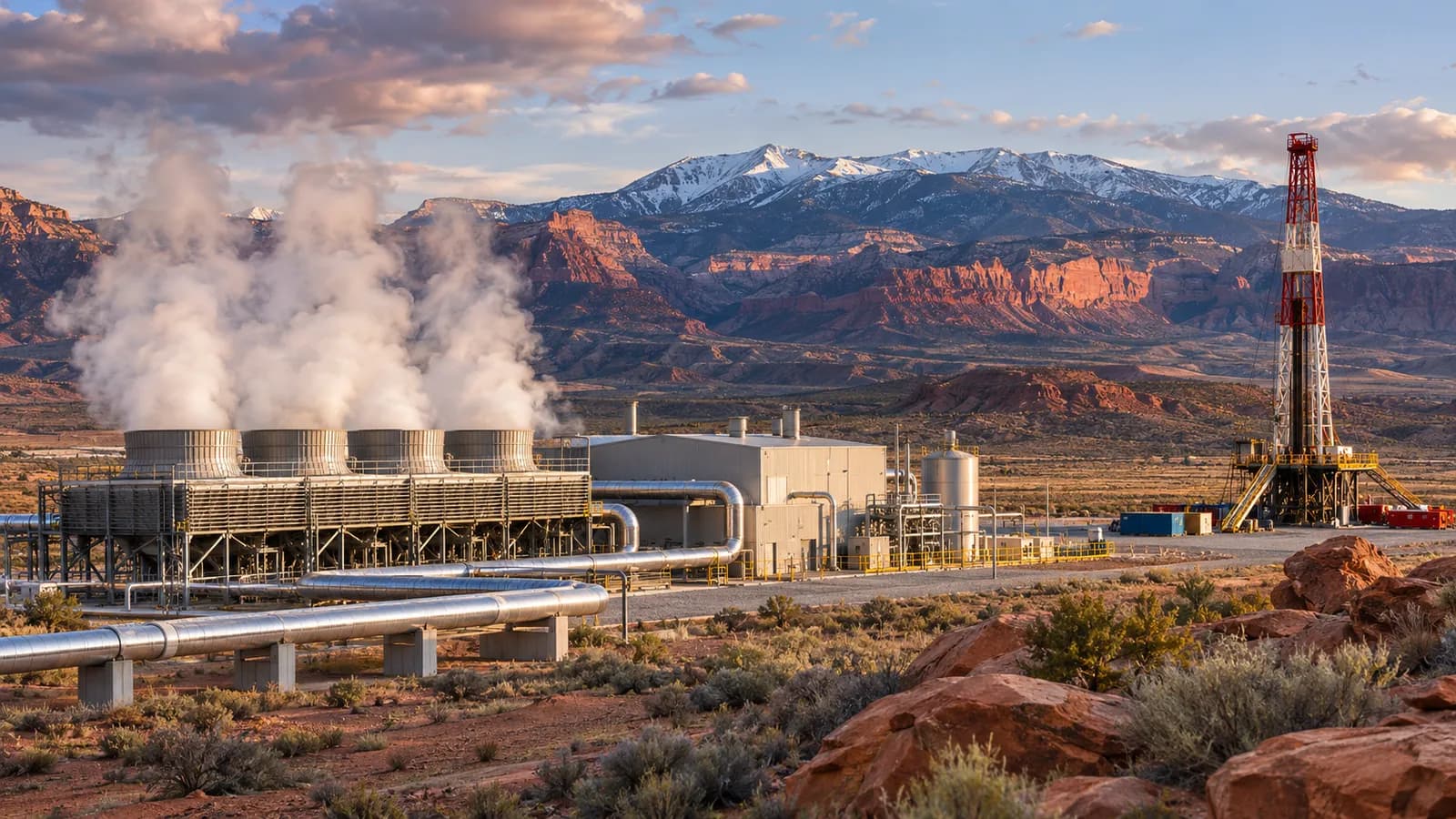
Company Overview
Fervo Energy develops enhanced geothermal power plants, using horizontal drilling and fracturing techniques from the oil industry to reach hot rock. It listed on Nasdaq under the ticker FRVO on May 13, 2026, pricing its IPO at $27 per share and raising about $1.89 billion.
Fervo Energy was founded in 2017 by Tim Latimer and Jack Norbeck.
Its Project Red pilot in Nevada began supplying power to the grid in 2023.
Key Facts: Fervo Energy IPO
Fervo Energy listed on Nasdaq on May 13, 2026.
Fervo priced above its marketed range, reflecting investor interest in around-the-clock power for data centers.
Business Model and Revenue Drivers
Its Cape Station project in Utah is designed to be one of the largest geothermal plants in the U.S.
Fervo has signed power agreements with utilities and technology companies, including Google.
Geothermal power can run around the clock, unlike solar and wind.
Competitive Landscape
Ormat Technologies is a long-established geothermal producer. Nuclear, gas and storage companies also compete to supply around-the-clock power.
Fervo focuses on enhanced geothermal systems.
Revenue Growth and Financial Performance
When reviewing Fervo Energy's reported results, these measures give the clearest view of growth, profitability and cash generation:
- Megawatts under contract
- Project milestones
- Capital spending
- Net loss and cash
- Drilling costs
Profitability and Earnings Quality
Revenue growth is only part of the picture. For Fervo Energy, it helps to check whether growth comes from higher volumes, higher prices or acquisitions, and whether margins are widening or narrowing as the business scales.
Reported earnings can include one-time items such as restructuring charges, asset sales, tax effects or legal settlements. Separating these from recurring operating results, and comparing like-for-like periods, gives a more reliable view of underlying profitability.
Balance Sheet, Debt and Financial Stability
A review of Fervo Energy's financial position starts with cash, total debt, lease obligations and how operating cash flow compares with capital spending. A business that funds its investment from its own cash flow is in a different position from one that relies on borrowing or issuing new shares.
Changes in inventory, receivables and working capital are also worth monitoring, because they can absorb cash and signal shifts in demand before they appear in revenue.
FRVO Stock Valuation Analysis
Measures such as the price-to-earnings ratio, price-to-sales ratio and enterprise value to EBITDA describe how the market is currently pricing Fervo Energy relative to its results.
However, a single valuation ratio cannot establish whether a stock is undervalued or overvalued. Earnings quality, free cash flow, margins, competitive position and the growth needed to support the current price all need to be considered together, and compared with similar companies.
Business Outlook and Investment Risks
Management guidance and industry conditions shape expectations for Fervo Energy, but guidance is an estimate rather than an established outcome. Several uncertainties are specific to this business:
- Project execution and delays
- High capital needs
- Continued losses
- Permitting and transmission
From Underground Heat To Delivered Electricity
An enhanced geothermal project is a connected system, not simply a collection of wells. Operators drill into hot rock, create or improve pathways through it, and circulate fluid between injection and production wells. The returning fluid transfers heat to equipment at the surface, where a power plant converts part of that heat into electricity. Cooled fluid can then be sent underground again. The usable output depends on how the reservoir, wells, pumps and surface plant perform together, so a strong result from one component does not by itself describe the whole project.
Reservoir management involves balancing the volume of fluid circulated with its temperature and the pressure required to move it. Faster circulation can increase the amount of heat brought to the surface, but pumping consumes electricity and the flow paths must also sustain useful temperatures. Operators study pressure, flow and temperature data to understand how water moves through the rock. Differences in rock properties can make results vary between wells, even within the same development area. That makes repeated measurements and well tests important evidence when interpreting operating updates.
A plant's gross generation describes electricity produced before the facility's own equipment uses power. Net generation reflects electricity remaining after those internal needs, including pumps and other plant systems. This distinction matters because a change in net output can result from either the generating equipment or the energy needed to operate it. Availability, meanwhile, describes whether equipment is ready to operate; it is distinct from actual generation, which also depends on dispatch, maintenance and other operating conditions. These measures answer different questions and should not be treated as interchangeable.
Heat is converted to electricity with equipment suited to the temperature and characteristics of the produced fluid. A binary cycle, for example, transfers geothermal heat to a separate working fluid that drives a turbine. The geothermal fluid and working fluid have separate roles in that process. Surface design must account for heat exchangers, cooling, fluid chemistry and maintenance access as well as turbine capacity. Mineral deposits and corrosion can affect equipment performance, making the properties of the circulating fluid relevant to operating expense and plant reliability.
How Power Agreements Translate Into Revenue
A power purchase agreement sets out the commercial relationship between a generator and a customer, but the headline contracted capacity is only one part of its economics. The contract can specify when delivery begins, where electricity must be delivered, how output is measured and which party bears particular costs. Payment may depend on energy delivered, capacity made available, environmental attributes or a combination of these. The precise terms determine how physical plant performance becomes billed revenue, and agreements should be read individually rather than assumed to have a common structure.
A megawatt measures power at a point in time, while a megawatt-hour measures energy delivered over time. Contracted megawatts therefore do not directly state how many megawatt-hours a project will sell or how much revenue it will record. To connect the two, a reader needs the relevant operating period, actual generation and the contract's payment provisions. Scheduled outages, delivery limits and the plant's own electricity use can all affect delivered energy. The contractual definition of the measurement point is especially useful when comparing figures from different projects.
Some agreements include obligations to deliver a specified product or maintain availability, with remedies if those obligations are missed. Others provide flexibility around maintenance or permit adjustments under defined circumstances. A generator may also need to arrange transmission or other services to deliver power at the agreed location. These provisions affect the relationship between plant output and commercial results. When disclosures describe penalties, make-up obligations or termination rights, the relevant question is how those terms allocate responsibility among the generator, customer and other parties.
Electricity can carry additional attributes that describe how it was generated. Depending on the agreement and applicable rules, those attributes may transfer to the customer with the power or be handled separately. The accounting and economics depend on the rights conveyed and the services promised, not just on the label used in a contract announcement. Reading the revenue recognition note alongside descriptions of major agreements can help distinguish energy sales from other promised products and show when each type of consideration enters reported revenue.
Reading Project Costs Through The Financial Statements
A geothermal developer's spending can appear in different parts of the financial statements depending on its nature and the applicable accounting rules. Costs associated with constructing a qualifying long-lived asset may be capitalized on the balance sheet, while other costs are recognized as expenses. Capitalized spending does not disappear from the income statement: the depreciable amount is generally allocated over the asset's useful life once it is ready for its intended use. The accounting policy notes explain the company's approach and are essential for interpreting comparisons between periods.
The statement of cash flows helps connect reported costs to actual payments. Purchases of property and equipment generally appear in investing activities, while operating cash flows reflect cash effects of running the business. The timing of payments can differ from the timing of accounting recognition, including when suppliers have been invoiced but not yet paid. A project can therefore show substantial construction activity without an identical cash outflow in the same reporting period. Accrued construction costs and the notes on noncash investing activities can help explain that difference.
Once a facility is in service, depreciation affects reported operating results even though the original construction payment occurred earlier. Interest may also be treated differently during construction and after an asset is ready for use, depending on the applicable rules and circumstances. These timing differences mean that an accounting loss, cash used in operations and total cash spent on a project are distinct measures. Examining them together provides a clearer account of the resources consumed and the stage of the asset than any one figure alone.
Long-lived assets are also subject to accounting assessments when circumstances indicate that their carrying amounts may not be recoverable. An impairment charge reduces the recorded asset value and affects reported earnings in the period recognized, but it is not the same as a contemporaneous payment of cash. Disclosures about the affected assets, assumptions and subsequent accounting treatment explain what changed. Commitments disclosed in the notes deserve separate attention because contractual obligations can exist before all associated costs are recorded as completed assets or expenses.
The Geothermal Development Ecosystem
Geothermal development combines capabilities from several industries. Drilling contractors provide rigs and field services, equipment suppliers build components for wells and power plants, and engineering firms support design and construction. Utilities and grid operators play distinct roles in connecting and accepting electricity. The developer must coordinate these participants around a particular resource and site. A company's degree of control over design, procurement and field operations can influence how it captures learning from one project and applies it to another.
Drilling methods are transferable across industries, but geothermal wells face their own operating conditions. Heat, rock properties and the behavior of circulating fluids affect equipment selection, well design and maintenance. Experience from oil and gas can inform horizontal drilling and well completion, while geothermal projects must also manage the reservoir as a source of heat over a long operating life. Comparing approaches therefore involves more than counting wells: the intended purpose of each well and the conditions in which it operates also matter.
Geothermal resources are tied to geography, so access to suitable subsurface conditions must be considered alongside land rights and the ability to connect to customers. A promising resource and an available transmission route are separate parts of a viable development. Public agencies may have roles in leasing, environmental review, water use and other approvals, depending on the location and project design. These processes involve different authorities and documentation, which helps explain why a project can advance in one area while another part remains under review.
Operational learning is most meaningful when the basis of comparison is clear. A shorter drilling time, for instance, is easier to interpret when well depth, geometry, geology and the activities included in the measure are comparable. Similarly, a stated capacity may refer to a design, a contract or demonstrated output, each of which describes a different stage or obligation. Consistent definitions across project updates help readers distinguish repeatable improvements from changes in the mix of wells or the way a metric is presented.
Conclusion: Is FRVO Stock Worth Analyzing in 2027?
Fervo Energy has a business model with clear drivers that can be tracked through its reported results, and a set of risks that are specific to its industry and financial position.
A balanced assessment considers growth, profitability, balance-sheet strength, valuation and risk together. FRVO is a company worth monitoring for what its results reveal about its business.