Company Overview
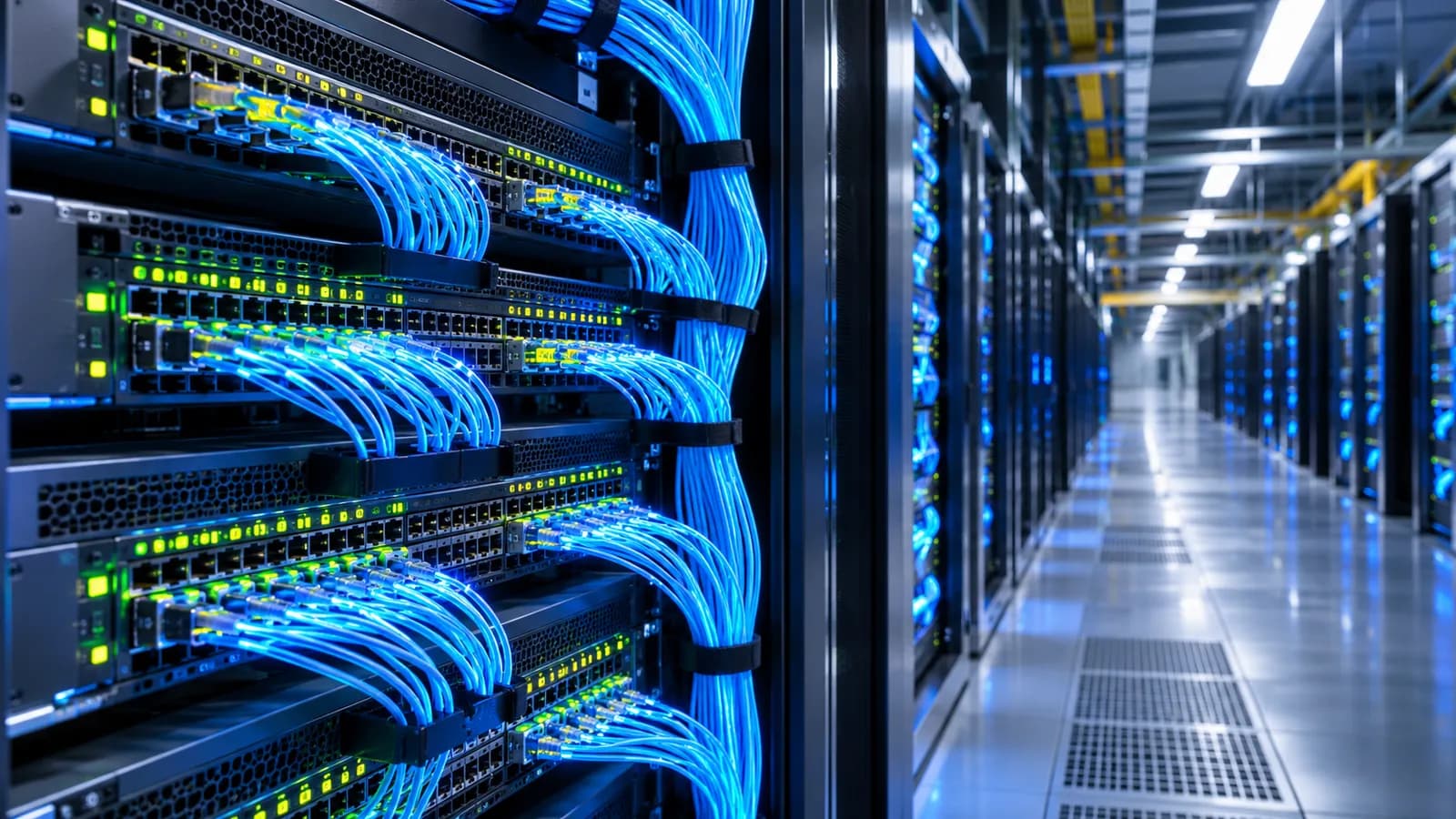
Cisco is the largest maker of networking equipment, including routers and switches, and also sells security, collaboration and observability software. It trades on Nasdaq under the ticker CSCO. It acquired Splunk in 2024 for about $28 billion.
Cisco was founded in 1984 by Leonard Bosack and Sandy Lerner and went public in 1990.
It became the leading supplier of internet networking equipment.
Latest Quarterly Results: Q1 Fiscal 2027
Cisco reported first-quarter fiscal 2027 results for the quarter ended October 24, 2026.
Cisco raised its expected fiscal 2027 AI infrastructure revenue from hyperscalers to about $9 billion from about $7.5 billion.
Orders for Nexus data center switches tagged for AI rose 47%, and campus networking orders grew 14%.
Business Model and Revenue Drivers
Cisco sells Ethernet switches and Silicon One chips for AI data centers built by large cloud companies.
Software and subscription revenue have become a larger share of sales.
Campus networking refresh cycles affect product orders.
Competitive Landscape
Arista Networks, Juniper (owned by HPE), Nvidia and Huawei compete in networking.
Palo Alto Networks and others compete in security.
Revenue Growth and Financial Performance
When reviewing Cisco's reported results, these measures give the clearest view of growth, profitability and cash generation:
- Product orders
- AI infrastructure orders
- Recurring revenue
- Gross margin
- Dividends and buybacks
Profitability and Earnings Quality
Revenue growth is only part of the picture. For Cisco, it helps to check whether growth comes from higher volumes, higher prices or acquisitions, and whether margins are widening or narrowing as the business scales.
Reported earnings can include one-time items such as restructuring charges, asset sales, tax effects or legal settlements. Separating these from recurring operating results, and comparing like-for-like periods, gives a more reliable view of underlying profitability.
Balance Sheet, Debt and Financial Stability
A review of Cisco's financial position starts with cash, total debt, lease obligations and how operating cash flow compares with capital spending. A business that funds its investment from its own cash flow is in a different position from one that relies on borrowing or issuing new shares.
Changes in inventory, receivables and working capital are also worth monitoring, because they can absorb cash and signal shifts in demand before they appear in revenue.
CSCO Stock Valuation Analysis
Measures such as the price-to-earnings ratio, price-to-sales ratio and enterprise value to EBITDA describe how the market is currently pricing Cisco relative to its results.
However, a single valuation ratio cannot establish whether a stock is undervalued or overvalued. Earnings quality, free cash flow, margins, competitive position and the growth needed to support the current price all need to be considered together, and compared with similar companies.
Business Outlook and Investment Risks
Management guidance and industry conditions shape expectations for Cisco, but guidance is an estimate rather than an established outcome. Several uncertainties are specific to this business:
- Competition from Arista, Nvidia and others
- Customer spending cycles
- Supply constraints in optics
- Integration of acquisitions
How Network Architecture Shapes Demand
Enterprise networks connect users, devices, applications and data across offices, data centers and remote locations. Switches generally move traffic within a network, while routers direct traffic between networks. Wireless access points connect devices without a physical cable. These components operate as a system, so a purchasing decision can involve compatibility with existing equipment, management tools and security policies as well as the specifications of an individual device. A customer may replace one layer of a network while retaining other layers, creating a mixture of equipment generations that must work together.
Network design involves tradeoffs among capacity, latency, resilience and operating complexity. Capacity describes how much traffic a connection can carry; latency describes the time taken for data to travel. Resilience depends on how the network continues operating when a component or connection fails. A design with redundant paths can improve continuity, but adds equipment and configuration work. Different workloads place different demands on these characteristics, so a campus office network, a cloud data center and an industrial site do not necessarily need the same architecture.
Standards such as Ethernet allow equipment from different suppliers to exchange traffic, but interoperability does not make every feature interchangeable. Optional functions, software interfaces and management practices can differ. Customers therefore test combinations of products and consider the effort required to retrain staff or redesign operations. This creates room for both integrated systems and products designed around open interfaces. When comparing suppliers, useful questions include which functions are standards based, which depend on proprietary software and how easily the system can be operated alongside existing equipment.
From Product Delivery To Ongoing Service
A networking contract can combine hardware, software licenses, technical support and other services. These elements do not necessarily generate revenue at the same time. Hardware revenue is generally associated with the transfer of control of the product, while support that stands ready over a coverage period is generally recognized over that period. Software accounting depends on the rights provided and the terms of the contract. The financial statement notes on revenue recognition explain how Cisco applies these distinctions to its arrangements.
A subscription gives a customer access to specified software or services for a defined period, but the label alone does not reveal when cash is collected or revenue is recognized. A customer might pay in advance, in installments or after invoicing. Deferred revenue represents consideration received or due for performance obligations that have not yet been satisfied. It is therefore a balance sheet measure, rather than revenue already earned. Its movement can reflect billing and contract timing as well as changes in the underlying volume of business.
Remaining performance obligations describe contracted revenue that has not yet been recognized, subject to the definitions and exclusions in a company's disclosures. The amount includes obligations that may not yet have been billed, so it is broader than deferred revenue. Contract length and the expected timing of delivery matter when interpreting the total. Comparing these measures requires attention to changes in contract terms and accounting scope; neither measure alone establishes how much cash a contract will ultimately generate after the cost of fulfilling it.
Distribution And Customer Relationships
Cisco reaches many customers through distributors, resellers, systems integrators and service providers as well as direct relationships. A channel partner may combine equipment with design, installation, configuration and ongoing support. This arrangement can help serve customers with different technical needs and locations, while giving partners a role in product selection and deployment. The customer using a network may therefore be different from the entity that places an order with Cisco, which matters when interpreting the path from end-user demand to reported sales.
Channel inventory can also affect timing. A distributor may purchase products before they are installed for an end customer, and changes in the stock held by partners can alter the relationship between shipments into the channel and sales through it. Payment terms, return rights and other contract provisions influence the accounting treatment. The relevant notes and management discussion can help explain the distinction between products shipped to partners, revenue recognized and equipment ultimately deployed. These are related events, but they need not occur in the same reporting period.
A supplier's relationship with an enterprise often extends beyond the initial installation. Customers need software updates, technical assistance, replacement parts and help integrating new systems. Renewal decisions can reveal whether customers continue to use and support existing products, although renewal rates require context about the contracts included and any changes in pricing or scope. Training and certification also shape how administrators and partners work with a platform. Those capabilities can make an installed system easier to maintain, while creating work when a customer changes vendors or tools.
Reading Margins And Cash Conversion
Gross margin is revenue less the direct cost of providing products and services, expressed as a share of revenue. Cisco reports product and service categories separately, allowing readers to examine whether a change in the overall figure reflects a shift in the mix of activities or a change within a category. Hardware configuration, component costs, software content, support obligations and customer discounts can all affect the economics of a sale. Segment or category disclosures should be read alongside the company's explanation of what each measure includes.
Operating margin takes the analysis further by considering expenses such as research and development, sales and marketing, and administration. Spending in these areas supports product development and customer relationships across more than one reporting period, even though much of it is expensed as incurred. A change in operating margin can therefore reflect the timing of spending as well as the profitability of current revenue. Comparing expense categories with revenue over several periods helps distinguish a broad change in the cost structure from a temporary shift in a single line.
The cash flow statement links earnings to cash generated by operations through adjustments for noncash items and changes in operating assets and liabilities. Stock-based compensation is one such adjustment: it does not require cash payment when the expense is recognized, but share issuance can affect the ownership represented by each existing share. Purchases of equipment and other capital expenditures appear in investing activities. When comparing free cash flow figures, check the company's definition and whether acquisition spending is included, since definitions can differ.
Acquisitions can leave goodwill and identifiable intangible assets on the balance sheet. Goodwill represents the portion of the purchase consideration not assigned to identifiable net assets, while acquired intangible assets can include technology and customer relationships. Amortization of certain intangibles reduces reported earnings over time, and impairment charges may arise if accounting tests indicate that carrying values are not recoverable. The acquisition notes provide useful context about the assets recognized, while reconciliations between GAAP and non-GAAP results show which acquisition-related costs management excludes from its adjusted measures.
Building And Securing Network Software
Network equipment relies on software to control traffic, apply policies and give administrators visibility into operations. Development therefore extends beyond designing physical devices: engineers also maintain operating systems, management applications and interfaces used by other tools. Security work includes identifying vulnerabilities, issuing fixes and explaining which products or configurations are affected. A vulnerability disclosure should be read alongside its severity, exposure conditions and available remediation, since the existence of a flaw alone does not establish that every installation is equally exposed.
Organizations often operate networks for years, so the timing of software support and product retirement matters. A vendor may announce an end to new sales, followed by separate milestones for software maintenance and technical support. These stages help customers plan testing, migration and replacement work. The operational burden depends on the systems involved and their dependencies: a change to network software may require coordination with applications, identity systems and security controls. Product lifecycle notices can clarify the scope and timing of support for a particular release or device.
Reading Acquisition And Tax Disclosures
The income statement's tax expense reflects more than cash paid to tax authorities during the period. It can include current taxes and deferred taxes arising from differences between accounting rules and tax rules. The effective tax rate divides tax expense by pretax income, but changes in that rate can reflect discrete events as well as the geographic mix of earnings. The tax footnote and rate reconciliation help identify major sources of variation and distinguish a period's tax expense from cash taxes paid.
For a company that acquires businesses, the statement of cash flows shows acquisition payments in investing activities, while the income statement incorporates acquired operations after their accounting inclusion. This distinction matters when comparing changes in operating cash flow with cash remaining after acquisitions. The acquisition footnotes may also describe contingent consideration or integration costs. Examining those disclosures with the cash flow statement helps explain how a transaction was funded and which costs appear in operating expenses rather than in the acquisition payment itself.
Conclusion: Is CSCO Stock Worth Analyzing in 2027?
Cisco has a business model with clear drivers that can be tracked through its reported results, and a set of risks that are specific to its industry and financial position.
A balanced assessment considers growth, profitability, balance-sheet strength, valuation and risk together. CSCO is a company worth monitoring for what its results reveal about its business.