Company Overview
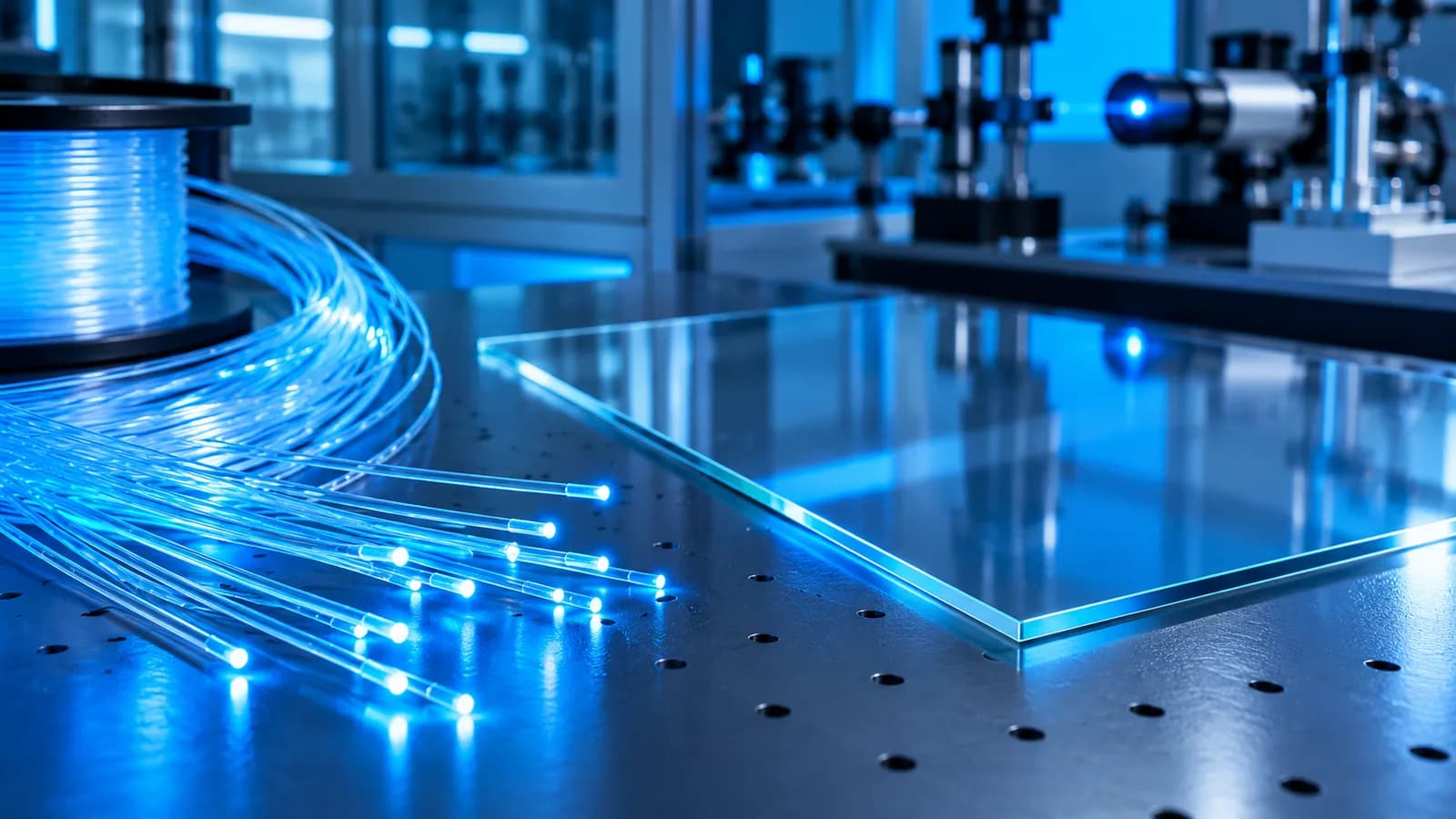
Corning is a materials science company known for specialty glass and ceramics. It trades on the NYSE under the ticker GLW. Its segments include Optical Communications, Display, Specialty Materials (including Gorilla Glass), Environmental Technologies and Life Sciences.
Corning was founded in 1851 and developed innovations such as optical fiber and Gorilla Glass.
It is headquartered in Corning, New York.
Latest Quarterly Results: Q3 2026
Corning reported third-quarter 2026 results in late October 2026, above its own guidance.
Demand for optical communications products tied to AI data centers was the main driver of the quarter. The shares traded far below their 52-week high in early November 2026.
Business Model and Revenue Drivers
Optical Communications sells fiber and cable, and demand from AI data centers has become an important driver.
Display sells glass for TVs and monitors, and its results are influenced by panel production and currency.
Corning's 'Springboard' plan targets higher sales and margins.
Competitive Landscape
Corning competes with Prysmian, CommScope, AGC, Schott and others.
Its materials expertise is a key advantage.
Revenue Growth and Financial Performance
When reviewing Corning's reported results, these measures give the clearest view of growth, profitability and cash generation:
- Core sales by segment
- Optical Communications growth
- Operating margin
- Free cash flow
- Dividend
Profitability and Earnings Quality
Revenue growth is only part of the picture. For Corning, it helps to check whether growth comes from higher volumes, higher prices or acquisitions, and whether margins are widening or narrowing as the business scales.
Reported earnings can include one-time items such as restructuring charges, asset sales, tax effects or legal settlements. Separating these from recurring operating results, and comparing like-for-like periods, gives a more reliable view of underlying profitability.
Balance Sheet, Debt and Financial Stability
A review of Corning's financial position starts with cash, total debt, lease obligations and how operating cash flow compares with capital spending. A business that funds its investment from its own cash flow is in a different position from one that relies on borrowing or issuing new shares.
Changes in inventory, receivables and working capital are also worth monitoring, because they can absorb cash and signal shifts in demand before they appear in revenue.
GLW Stock Valuation Analysis
Measures such as the price-to-earnings ratio, price-to-sales ratio and enterprise value to EBITDA describe how the market is currently pricing Corning relative to its results.
However, a single valuation ratio cannot establish whether a stock is undervalued or overvalued. Earnings quality, free cash flow, margins, competitive position and the growth needed to support the current price all need to be considered together, and compared with similar companies.
Business Outlook and Investment Risks
Management guidance and industry conditions shape expectations for Corning, but guidance is an estimate rather than an established outcome. Several uncertainties are specific to this business:
- Cyclical demand in display and smartphones
- Currency movements
- Competition in fiber
- Execution on capacity expansion
From Materials Research To Production
A specialty material begins with a performance problem: a customer may need a surface that resists damage, a substrate that tolerates heat, or a component with tightly controlled optical properties. Researchers adjust composition and manufacturing methods together, because the way a material is formed can be as important as its chemical recipe. Laboratory performance alone does not establish commercial usefulness. The process must also produce consistent material at the dimensions and quality required by a customer's equipment.
Moving from a laboratory sample to a production line involves choices about furnaces, forming equipment, inspection and process control. Small variations can affect yield, the share of output that meets specifications. Low yield raises the effective cost of usable material even when the factory produces plenty of units. Once a process is established, accumulated manufacturing knowledge can be difficult to reproduce. Patents can protect certain inventions, while practical experience and control of production conditions can also matter.
Customer Qualification And Product Design
Materials suppliers often work with customers before a finished product reaches the market. Engineers test samples for properties such as strength, clarity, uniformity and compatibility with the customer's manufacturing process. Qualification can involve repeated tests and changes to both the material and the customer's design. This work creates a connection between the supplier and the customer's product development cycle, so a commercial opportunity can take time to become recognized sales.
Qualification does not guarantee a permanent position in a product. Customers may qualify alternative suppliers, change designs or bring some processing in-house. A material that performs well in isolation must also fit the customer's cost, assembly and reliability requirements. When reviewing a new product announcement, distinguish a demonstrated technical capability from a confirmed production program. Subsequent disclosures about customer adoption and commercial shipments provide different evidence from a prototype or development agreement.
Specialty Glass And Ceramics Applications
In environmental technologies, ceramic substrates provide a structured surface for emissions control systems. Their channels allow exhaust gases to pass through while supporting the materials that help convert pollutants. Filters can also capture particulate matter. Demand for these components depends on vehicle and engine production, the types of engines being made, and applicable emissions requirements. The relationship is indirect: a change in a rule matters commercially through its effect on equipment designs and the components manufacturers choose.
Life sciences products serve laboratories that need consistent surfaces and containers for handling cells and other samples. Their performance can affect how reliably an experiment is conducted or reproduced. Purchasing decisions may involve researchers, laboratory managers and procurement teams, each with different priorities. This business has a different demand pattern from consumer electronics: laboratory activity, research funding and customers' inventory policies can influence orders, while product qualification and distribution relationships shape how supplies reach users.
Optical components also have distinct roles within a network. Fiber carries light, while cables protect fibers and connectivity products join or route them. Installation conditions, space constraints and the need to make reliable connections influence the configuration a customer selects. These products can be sold into different stages of a network project, from initial construction to later additions. Consequently, a change in the mix of components can affect reported results even when the amount of fiber deployed is not the only thing changing.
Reading Manufacturing Disclosures
A useful way to interpret segment results is to connect changes in operating profit with the physical activity behind them. Glass and ceramic production requires substantial equipment and energy, and some costs continue even when a line operates below capacity. When output changes, those costs are spread across a different quantity of product. Management discussion of utilization, production efficiency and energy expenses can therefore help explain why segment profit moves differently from sales.
Capital expenditure deserves a separate reading from depreciation. Spending records cash used for equipment and facilities, while depreciation allocates the recorded cost of existing assets over their useful lives. The two measures need not move together in a particular period. Notes to the financial statements and management commentary can help distinguish spending to maintain existing operations from investment in new capabilities, where disclosed. This distinction gives context for cash generation without treating all spending as interchangeable.
Manufacturing assets can also be subject to impairment when their carrying value may no longer be recoverable under accounting rules. An impairment charge reduces reported asset values and earnings, but it does not represent the same period's cash spending on a replacement facility. The accompanying note can explain the assets involved and the circumstances behind the charge. Consider that explanation alongside later disclosures about operations and capacity, since the accounting entry alone does not describe every operational consequence.
Interpreting Core And Reported Results
Corning presents core measures alongside results prepared under generally accepted accounting principles. Core measures reflect management's chosen adjustments and can help readers follow operating trends as management sees them. They are not a substitute for reported figures. The reconciliation between the two shows which items were excluded and their effects. Reading it over several periods can reveal whether an adjustment is isolated or appears repeatedly, even if the underlying events differ.
Segment disclosures and consolidated statements answer related but different questions. Segment profit helps explain performance within operating businesses, while consolidated income also reflects items such as corporate costs, financing and taxes. Definitions matter when comparing a segment margin with a company-wide margin or with another supplier's figures. Check the denominator and the profit measure used in each calculation, and trace any material differences in accounting or presentation before drawing a conclusion about operating performance.
Conclusion: Is GLW Stock Worth Analyzing in 2027?
Corning has a business model with clear drivers that can be tracked through its reported results, and a set of risks that are specific to its industry and financial position.
A balanced assessment considers growth, profitability, balance-sheet strength, valuation and risk together. GLW is a company worth monitoring for what its results reveal about its business.