Company Overview
Constellation Energy is the largest U.S. producer of carbon-free electricity, operating the country's largest fleet of nuclear power plants. It trades on Nasdaq under the ticker CEG. It was spun off from Exelon in 2022 and acquired Calpine, a large natural gas and geothermal generator, in January 2026.
Constellation was separated from Exelon in February 2022.
It agreed to acquire Calpine in January 2025 and completed the deal in January 2026.
Latest Quarterly Results: Q3 2026
Constellation Energy reported third-quarter 2026 results on November 9, 2026.
The increase came mainly from the addition of Calpine, acquired in January 2026, and higher capacity prices in the PJM market.
Interest expense rose after the debt taken on for the Calpine deal.
Business Model and Revenue Drivers
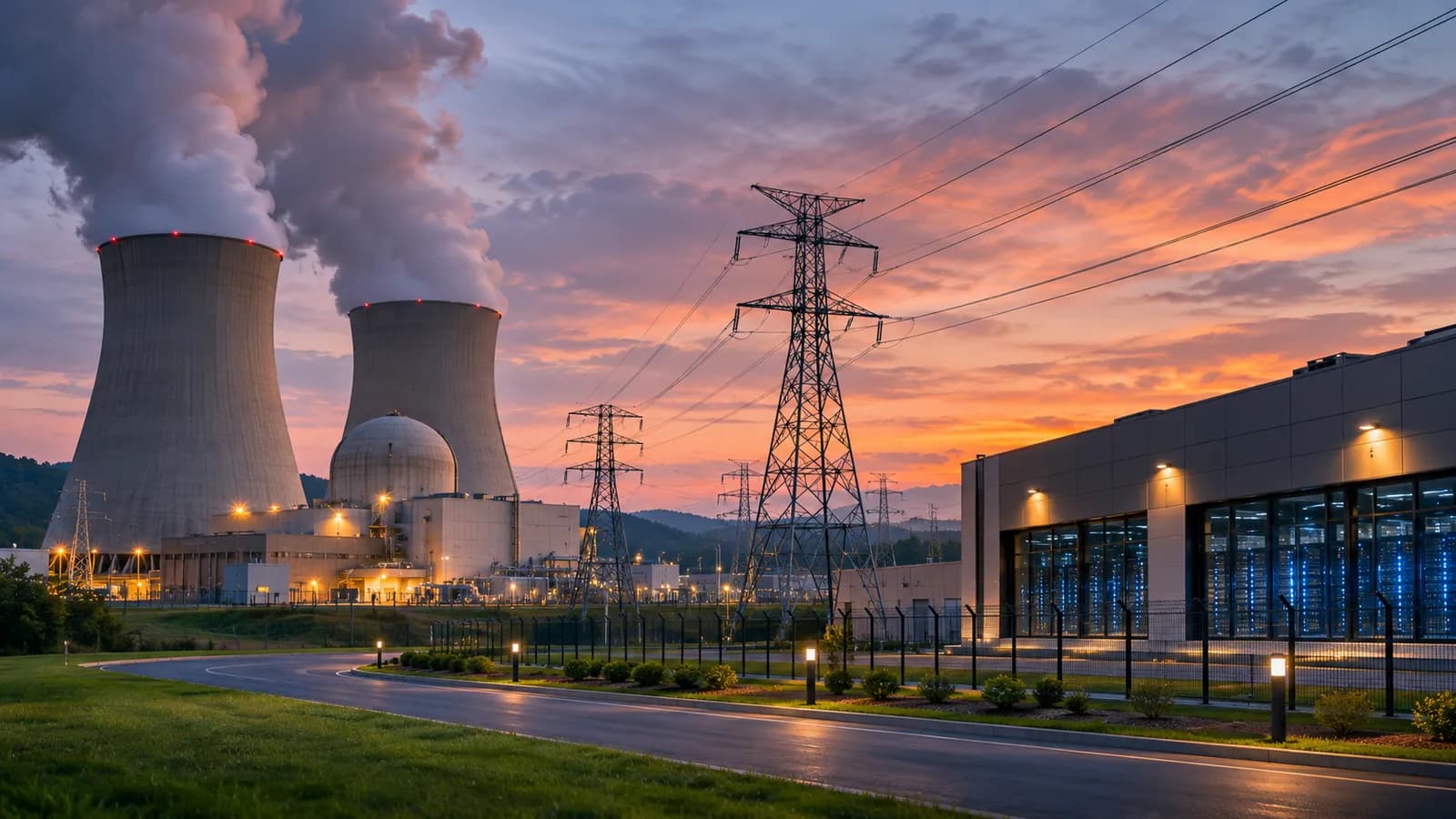
Constellation has signed long-term power agreements with large technology companies for data centers, including restarting the former Three Mile Island Unit 1.
Nuclear plants run at high capacity factors and supply steady output.
Federal nuclear production tax credits support earnings when power prices are low.
Competitive Landscape
Vistra, NRG and Talen Energy are other competitive power producers.
Constellation has the largest U.S. nuclear fleet.
Revenue Growth and Financial Performance
When reviewing Constellation Energy's reported results, these measures give the clearest view of growth, profitability and cash generation:
- Adjusted operating EPS
- Generation output
- Nuclear capacity factor
- Contracted power sales
- Net debt
Profitability and Earnings Quality
Revenue growth is only part of the picture. For Constellation Energy, it helps to check whether growth comes from higher volumes, higher prices or acquisitions, and whether margins are widening or narrowing as the business scales.
Reported earnings can include one-time items such as restructuring charges, asset sales, tax effects or legal settlements. Separating these from recurring operating results, and comparing like-for-like periods, gives a more reliable view of underlying profitability.
Balance Sheet, Debt and Financial Stability
A review of Constellation Energy's financial position starts with cash, total debt, lease obligations and how operating cash flow compares with capital spending. A business that funds its investment from its own cash flow is in a different position from one that relies on borrowing or issuing new shares.
Changes in inventory, receivables and working capital are also worth monitoring, because they can absorb cash and signal shifts in demand before they appear in revenue.
CEG Stock Valuation Analysis
Measures such as the price-to-earnings ratio, price-to-sales ratio and enterprise value to EBITDA describe how the market is currently pricing Constellation Energy relative to its results.
However, a single valuation ratio cannot establish whether a stock is undervalued or overvalued. Earnings quality, free cash flow, margins, competitive position and the growth needed to support the current price all need to be considered together, and compared with similar companies.
Business Outlook and Investment Risks
Management guidance and industry conditions shape expectations for Constellation Energy, but guidance is an estimate rather than an established outcome. Several uncertainties are specific to this business:
- Power price changes
- Regulation and transmission rules
- Plant outages
- Higher interest expense after Calpine
How Wholesale Power Markets Work
Wholesale electricity is traded in regional markets where generators, suppliers and other participants arrange delivery across the grid. In organized markets, the system operator matches supply and demand while accounting for transmission constraints. The resulting price can differ by location and hour because electricity must be delivered where it is needed and the network has limited capacity. A generator's realized revenue therefore depends on the terms and location of its sales, rather than on a single national electricity price.
Energy payments compensate a generator for electricity delivered, while some regions also have capacity markets that compensate eligible resources for making capacity available under specified rules. Ancillary services, such as frequency regulation and reserves, support reliable grid operations and can provide another revenue stream. These products have distinct eligibility requirements and settlement methods. When reviewing results, separating energy, capacity and other services helps explain why revenue may change even when physical generation is similar.
Contracts And Risk Management
A power producer can sell output at prevailing wholesale prices or arrange sales in advance through contracts and financial hedges. A fixed-price agreement provides a defined price for the contracted quantity, while other agreements may use a formula or contain provisions tied to delivery hours, location or environmental attributes. Contract duration alone does not reveal the economics: the volume covered, obligations during outages and treatment of market-price differences also matter.
Hedging changes the timing and distribution of exposure to power and fuel prices. A generator that has committed to deliver power may need to purchase replacement electricity if its own plant cannot produce enough, potentially at a different price from the contract price. Financial derivatives can also produce accounting gains or losses before the related physical transaction occurs. Reading the derivative and hedge disclosures alongside the company's explanation of adjusted results can clarify the difference between accounting movements and settled cash flows.
Plant Economics And Dispatch
Nuclear and natural gas plants have different operating cost structures. Nuclear facilities require substantial spending on maintenance, security, fuel management and regulatory compliance, much of which does not vary directly with each additional unit of electricity produced. Gas-fired plants generally face fuel costs that are more directly connected to output. Comparing revenue with plant operating expenses without considering these differences can obscure how each part of the fleet earns its margin.
Dispatch is the process of deciding which available generators produce electricity at a given time. For a gas plant, the relationship between the power price and the cost of gas needed to generate that power is an important operating measure. Efficiency, start-up costs and operating limits also affect dispatch decisions. A plant can be available without running continuously, so changes in its output should be interpreted in the context of market conditions and its role on the grid.
Reading Cash Commitments
The cash flow statement distinguishes spending on long-lived assets from expenses recorded in the income statement. Routine maintenance costs may appear in operating expenses, while qualifying capital projects are generally recorded as assets and recognized over time through depreciation. This distinction affects reported earnings and cash flow in different periods. Reviewing capital expenditure disclosures for maintenance, major projects and other categories can make the scale and purpose of spending more understandable.
Nuclear plant reporting also involves obligations associated with retiring facilities and managing spent fuel. Decommissioning liabilities reflect estimated future costs, while dedicated trust assets may be held to help fund eligible activities. Changes in estimates, discount rates and trust asset values can affect the amounts reported on the balance sheet. The notes to the financial statements explain the assumptions, funding arrangements and restrictions, which are useful context when assessing obligations that extend beyond an ordinary operating cycle.
Environmental Attributes And Retail Supply
Electricity's physical flow through a shared grid is separate from the contractual accounting used to track its generation attributes. Depending on the market and contract, certificates or similar instruments can represent specified environmental characteristics of generation. Ownership and retirement of those attributes matter when a customer claims use of a particular type of electricity. A power agreement's price and scope should therefore be read together with its provisions on which party receives those attributes.
Retail electricity supply adds another layer to the business model. A supplier contracts with customers for electricity and procures power and related services to meet their usage, while the local utility typically continues to operate the distribution network. Customer load varies by time and weather, so supplying a fixed-price retail contract requires managing differences between contracted customer demand and procurement costs. The financial effect depends on contract terms, the shape of customer usage and the supplier's purchasing and hedging arrangements.
Nuclear Fuel And Operating Cycles
Nuclear fuel moves through a multistage supply chain before it can be used in a reactor. Uranium is mined and processed, converted into a suitable chemical form, enriched and fabricated into fuel assemblies. A plant operator typically arranges these services through separate contracts. The price of uranium alone therefore captures only part of the cost of usable fuel. Contract terms, delivery schedules and inventories can make the cost recognized in a reporting period different from current quotations for raw uranium.
A reactor does not consume all of its fuel at once. Operators periodically shut a unit down to replace part of the fuel and perform inspections and maintenance that cannot be completed while it runs. Outage timing can shift generation and spending between reporting periods, even when the underlying maintenance program is planned. Disclosures about scheduled refueling and the duration of completed outages provide context for comparing output across quarters and for understanding how the operator coordinates work across a fleet.
Fuel expenditures and fuel expense are also recorded at different times. The purchase and preparation of fuel require cash before the fuel is used, while the cost of fuel loaded into a reactor is generally recognized over its useful life as the reactor produces power. Consequently, a period with heavy fuel purchasing can have a different cash flow profile from a period in which previously acquired fuel is consumed. The accounting policies and inventory notes explain the company's treatment.
Regulatory And Transmission Framework
A nuclear plant operates under a license and is subject to continuing oversight by the Nuclear Regulatory Commission. Inspections, safety requirements and license conditions shape how the operator maintains equipment and documents its performance. A license renewal extends the period during which a facility may operate, subject to applicable requirements; it does not eliminate the need for ongoing inspections or maintenance. Company filings and regulatory documents can help distinguish an application, an approval and the operating conditions attached to it.
Connecting generation or a large customer to the grid also involves transmission planning and technical review. Network operators assess whether equipment can accommodate a proposed connection while meeting reliability standards. The process can involve studies, agreements and upgrades, with responsibilities allocated under applicable rules. For an existing generator, access to the network is distinct from ownership of the plant: constraints elsewhere on the system can limit how much power reaches a particular market even when the generator itself is available.
Reading Acquisition Accounting
An acquisition can change reported results beyond the addition of the acquired company's operating activity. Purchase accounting generally records identifiable acquired assets and assumed liabilities at estimated fair values as of the acquisition date. The resulting carrying amounts may differ from those in the acquired company's earlier statements. For example, revised values assigned to generating facilities can change subsequent depreciation, while acquired contracts may create assets or liabilities that are recognized in earnings over their remaining terms.
Goodwill generally represents the portion of the purchase consideration that exceeds the fair value of identifiable net assets acquired. It is not a separate power plant or a source of cash receipts. Financial statement notes describe the allocation of purchase consideration and any later revisions, as well as the approach to testing goodwill for impairment. When comparing periods around an acquisition, readers can also check the date from which the acquired operations are included and the company's explanations of integration costs.
Impairment charges deserve separate attention because they reflect a reassessment of carrying value rather than an ordinary period's fuel or labor bill. A charge can reduce reported earnings without an equivalent cash payment in that period, although the underlying circumstances may still matter to operations. The notes identify the affected assets and the assumptions used in the assessment. Comparing those disclosures with segment reporting helps locate where the accounting change arose and how management describes the business involved.
Conclusion: Is CEG Stock Worth Analyzing in 2027?
Constellation Energy has a business model with clear drivers that can be tracked through its reported results, and a set of risks that are specific to its industry and financial position.
A balanced assessment considers growth, profitability, balance-sheet strength, valuation and risk together. CEG is a company worth monitoring for what its results reveal about its business.