Company Overview
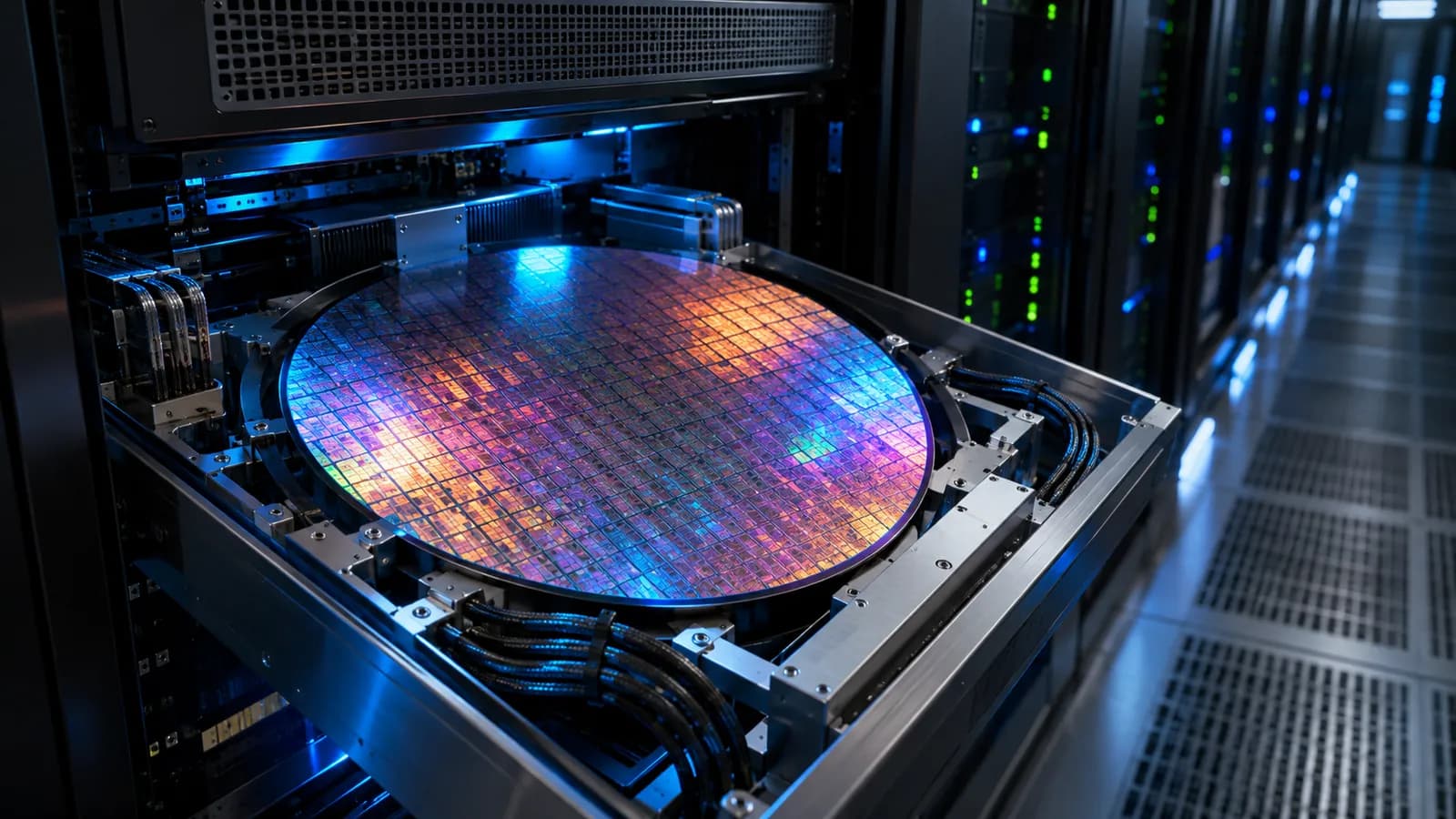
Cerebras Systems designs the Wafer-Scale Engine, a single chip the size of a silicon wafer built for AI training and inference. It went public on Nasdaq under the ticker CBRS on May 14, 2026, pricing its IPO at $185 per share. It sells systems and offers AI inference through its own cloud service.
Cerebras was founded in 2016 by Andrew Feldman and others.
It filed for an IPO in 2024, withdrew, and listed on Nasdaq in May 2026.
Latest Quarterly Results: Q3 2026
Cerebras Systems reported third-quarter 2026 results on November 12, 2026.
Cloud and services rose from 29% of revenue a year earlier to 67%, changing how Cerebras earns money from one-time hardware sales to ongoing services.
Cerebras listed on Nasdaq on May 14, 2026, at an IPO price of $185 per share.
Business Model and Revenue Drivers
Cloud and other services became the majority of revenue in 2026, while hardware revenue declined.
Historically, a large share of revenue came from G42, an Abu Dhabi technology group.
The company reports both GAAP revenue and a non-GAAP measure it calls core revenue.
Competitive Landscape
Nvidia dominates AI accelerators. AMD, Groq, SambaNova and custom chips from cloud providers also compete.
Cerebras emphasizes very fast inference from its wafer-scale design.
Revenue Growth and Financial Performance
When reviewing Cerebras Systems's reported results, these measures give the clearest view of growth, profitability and cash generation:
- GAAP and core revenue
- Cloud versus hardware mix
- Operating margin
- Backlog
- Customer concentration
Profitability and Earnings Quality
Revenue growth is only part of the picture. For Cerebras Systems, it helps to check whether growth comes from higher volumes, higher prices or acquisitions, and whether margins are widening or narrowing as the business scales.
Reported earnings can include one-time items such as restructuring charges, asset sales, tax effects or legal settlements. Separating these from recurring operating results, and comparing like-for-like periods, gives a more reliable view of underlying profitability.
Balance Sheet, Debt and Financial Stability
A review of Cerebras Systems's financial position starts with cash, total debt, lease obligations and how operating cash flow compares with capital spending. A business that funds its investment from its own cash flow is in a different position from one that relies on borrowing or issuing new shares.
Changes in inventory, receivables and working capital are also worth monitoring, because they can absorb cash and signal shifts in demand before they appear in revenue.
CBRS Stock Valuation Analysis
Measures such as the price-to-earnings ratio, price-to-sales ratio and enterprise value to EBITDA describe how the market is currently pricing Cerebras Systems relative to its results.
However, a single valuation ratio cannot establish whether a stock is undervalued or overvalued. Earnings quality, free cash flow, margins, competitive position and the growth needed to support the current price all need to be considered together, and compared with similar companies.
Business Outlook and Investment Risks
Management guidance and industry conditions shape expectations for Cerebras Systems, but guidance is an estimate rather than an established outcome. Several uncertainties are specific to this business:
- Competition from Nvidia and others
- Customer concentration
- Operating losses
- Share price volatility
Wafer Scale Manufacturing And System Design
Conventional chip production divides a silicon wafer into many smaller dies, which are packaged and connected to other components. A wafer-scale processor takes a different route: much more of the computation resides on one large piece of silicon. The design must account for manufacturing defects across that large area and provide paths for data to move among processing elements. This makes the relationship between chip design, manufacturing yield and system assembly especially important when interpreting production costs and the ability to deliver hardware.
The processor is only one part of a working AI system. Memory, power delivery, cooling, networking and software all affect how much useful work a machine can perform. A large processor can reduce some communication between separate chips, but the overall system still has to move data to and from storage and other equipment. Comparing hardware approaches therefore requires attention to the complete configuration and the workload being run, rather than treating chip dimensions or a single performance figure as a complete measure.
Manufacturing and packaging capacity are also distinct from design capability. A designer depends on specialized suppliers to fabricate silicon and provide components, while system assembly and testing must bring those parts together reliably. Delays or constraints at any stage can affect delivery timing and costs. Disclosures about supplier commitments, manufacturing arrangements and product qualification can help explain why orders, production expenses and recognized revenue do not necessarily move together in the same reporting period.
Software determines how effectively applications use the hardware. Developers need tools that translate model operations into instructions for the machine, along with libraries and interfaces that fit their existing workflows. Adapting a model can involve engineering work, and results depend on which operations the software supports. Documentation, ease of deployment and compatibility with common frameworks are therefore relevant alongside physical design when assessing how a computing platform fits into an organization's infrastructure.
Understanding Inference Economics
Inference is the process of running an existing AI model to produce an output from an input. A service provider must operate computing equipment, supply power and cooling, maintain software and make capacity available to customers. Revenue can depend on the amount of work requested and the commercial terms of each contract. The cost of serving that work depends on both the resources consumed by each request and how effectively the available machines are kept in use over time.
Two common performance concepts are latency and throughput. Latency describes the time a user or application waits for a response, while throughput describes the amount of work completed over a given period. Providers may group requests together to improve throughput, but waiting to form a group can add latency. Model size, input length, output length and the number of simultaneous users all influence the result, so performance comparisons are most informative when these conditions are clearly specified.
Utilization connects technical performance to service economics. A system that is available but idle still incurs ownership and operating costs, while heavy usage spreads some fixed costs across more work. Capacity planning must also allow for maintenance and changes in demand. When reviewing service disclosures, look for explanations of capacity additions, utilization and the costs included in service delivery. Changes in these factors can affect margins even when reported service revenue moves in the opposite direction.
The unit used to describe inference activity also matters. A token is a piece of text processed by a language model, but token counts do not by themselves capture every cost of a request. Processing a long input and generating a long output can place different demands on a system, and other model types handle different forms of data. When contract terms or usage metrics are disclosed, their definitions help explain what is being measured and how usage relates to billing.
Reading Contracts And Cash Flows
A customer agreement can cover equipment, installation, support or access to computing services. Accounting depends on what the customer has purchased and when the company satisfies its obligations. Hardware revenue may be recognized when control of equipment transfers, subject to contract terms, while service revenue generally follows delivery of the service. Acceptance provisions, bundled support and other contractual details can therefore affect the timing of reported revenue without changing the headline value of an agreement.
Backlog and other measures of contracted business need careful reading because they describe commitments rather than completed work. Definitions can differ across companies and may exclude some arrangements or include contracts that extend over multiple periods. Cancellation rights, customer acceptance conditions and the expected timing of delivery all affect interpretation. Comparing changes in these disclosures with recognized revenue and contract explanations gives a more useful picture than assuming every outstanding commitment will become revenue on a particular schedule.
Cash flow statements add a separate view of the business. Operating cash flow reflects cash collected and paid during a period, including the effects of working capital, while investing cash flow shows spending on long-lived assets. For a company operating computing infrastructure, the treatment and timing of equipment purchases matter when comparing cash generation with accounting earnings. The notes can clarify depreciation methods, asset useful lives and financing arrangements, each of which helps explain differences between reported expenses and cash spending.
Training Workloads And Model Development
Training adjusts a model's parameters using data and repeated computation. A training run can involve preparing data, calculating outputs, measuring errors and updating parameters across many iterations. The time required depends on the model, the data and the way the work is distributed. Researchers also run experiments to compare architectures and settings, so the ability to complete and reproduce experiments matters alongside the performance of any single run. These activities create a different pattern of computing demand from serving completed models to users.
Large training jobs can divide work across processors in several ways. Data parallelism gives workers different portions of a dataset, while model parallelism divides parts of a model among them. Each approach requires coordination and can spend time exchanging intermediate results. A useful comparison of systems considers how much of the elapsed time goes into productive computation, how the workload is divided and whether the same model and numerical precision are used. A benchmark's stated result is easier to interpret when its setup and measurement boundaries are available.
Training also involves choices about numerical precision, checkpointing and reliability. Lower precision can reduce memory and computation requirements, but its suitability depends on the model and training method. Checkpoints save a model's state so work can resume after an interruption, although saving and restoring them consumes time and storage resources. These details affect the amount of work completed within a given allocation of equipment. They also help explain why theoretical hardware capacity and completed training work are distinct measures.
Interpreting Costs And Equity Compensation
The income statement separates the direct costs of revenue from operating expenses, which can include research, development, sales and administration. Gross profit is revenue less cost of revenue; gross margin expresses that difference as a share of revenue. Classification matters when comparing companies because activities such as support, infrastructure operations and engineering may not be grouped identically. Reading the accounting policies and expense descriptions alongside the totals helps identify which costs are included before drawing conclusions from differences in reported margins.
Research and development spending supports activities such as chip design, system engineering and software development. Some expenses serve products already being delivered, while others support projects that have not reached customers. Financial statements generally aggregate these efforts, so an expense total alone cannot reveal the contribution of each project. Notes and management discussion can provide context about changes in staffing, development activity and other expense categories, although they may not isolate the cost or outcome of every initiative.
Share-based compensation is an accounting expense associated with awards such as employee stock options and restricted stock. It can affect reported operating results without requiring an equivalent cash payment at the time the expense is recorded. Equity awards can also increase the number of shares outstanding as they vest or are exercised. The equity compensation note and the reconciliation of basic and diluted shares help explain outstanding awards, their treatment and how the share count used in per-share calculations is determined.
Conclusion: Is CBRS Stock Worth Analyzing in 2027?
Cerebras Systems has a business model with clear drivers that can be tracked through its reported results, and a set of risks that are specific to its industry and financial position.
A balanced assessment considers growth, profitability, balance-sheet strength, valuation and risk together. CBRS is a company worth monitoring for what its results reveal about its business.