Is There a Boston Dynamics Stock?
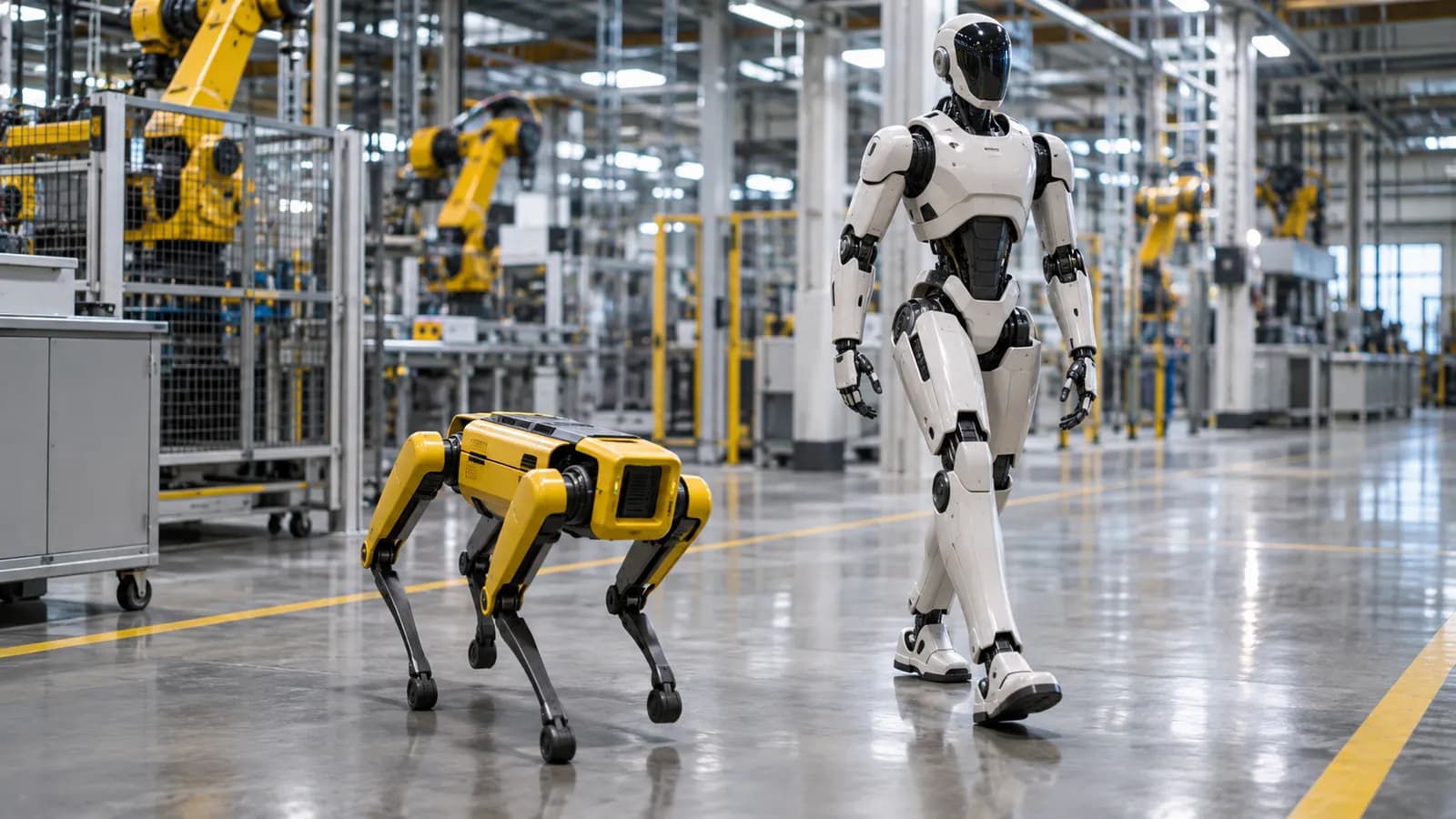
Boston Dynamics is a robotics company known for its Spot four-legged robot, Stretch warehouse robot and Atlas humanoid. It has no publicly traded stock. Hyundai Motor Group acquired control in 2021 and moved to buy SoftBank's remaining stake in 2026, and a Hyundai executive said in September 2026 that an IPO was unlikely in 2027.
Boston Dynamics was founded in 1992 as a spin-off from MIT. Google owned it from 2013 to 2017, then SoftBank.
Hyundai acquired a controlling stake in 2021.
Key Facts: Boston Dynamics
Boston Dynamics is private, so these figures come from company and Hyundai disclosures and reporting.
Analyst estimates of a future IPO valuation vary widely and are not company figures.
How Boston Dynamics' Business Works
Spot and Stretch generate most of Boston Dynamics' current revenue, while Atlas is still being prepared for factory work.
Boston Dynamics recorded a loss of about 528 billion won in 2025.
Hyundai Motor and other listed Hyundai group companies hold the stake, which is how public investors are indirectly exposed.
Other Companies Building Robots
Tesla (Optimus), Figure AI, Agility Robotics and Unitree are developing humanoid and legged robots.
Warehouse robot makers compete with Stretch.
Measures Used to Track Boston Dynamics
Because it is private, these measures describe its progress:
- Robot units deployed
- Revenue by product
- Operating losses
- Atlas deployment milestones
- Funding and ownership
Risks and Uncertainties
Boston Dynamics faces several uncertainties:
- No public market for shares
- High development costs
- Uncertain timeline for humanoids
- Competition in robotics
From Robot Sale To Working System
A robot purchase is only one part of putting an automated system to work. A customer must determine where the machine will operate, what tasks it must perform and how it will interact with workers, equipment and software. Site surveys, installation, configuration and testing turn a general product into an operational tool. These activities can require substantial labor even when the robot itself is standardized. The commercial relationship may therefore include hardware, software and services, each with different costs and delivery schedules. The division of responsibility between supplier, integrator and customer also matters, because a delay in preparing a site can affect when the system is ready for routine use.
For an inspection robot such as Spot, the useful output can be the information collected during a route rather than movement alone. Cameras and other sensors capture observations that staff can review, compare and incorporate into maintenance workflows. The value of a deployment depends on such factors as access to equipment, the consistency of inspection routes and the ability to act on the data. A robot can automate collection while people retain responsibility for interpreting results and deciding what to do. A useful assessment may compare observations with existing inspection records and consider whether the same route can be repeated under the conditions encountered during ordinary operations.
Warehouse unloading presents a different integration problem. A machine must handle packages that vary in position, shape and condition while fitting into the flow of a facility. Performance depends on the surrounding process, including how containers arrive, where packages go next and how exceptions are handled. A demonstration of repeated movement does not by itself describe a complete shift: operators also need to account for setup, interruptions, maintenance and changes in the mix of work. The rate achieved during active unloading is only one measure. The time spent recovering from a problem or waiting for the next load also affects the overall process.
After installation, the supplier may support customers through training, repairs, replacement parts and software updates. Contract terms determine which services are included in the initial transaction and which are billed separately. A growing installed base can create ongoing service work, but it also creates obligations to keep machines usable in the field. When comparing robotics businesses, it helps to distinguish the original equipment transaction from the continuing work required to support the equipment. Service arrangements can differ in response time, coverage and the availability of spare parts. Those details affect customer operations and the resources the supplier must maintain.
Reading Robotics Financial Results
Revenue recognition can differ from the timing of an order or a customer payment. Accounting depends on the contract and the obligations the supplier has promised to fulfill. A hardware delivery, installation service and period of software access may be assessed separately or together under applicable accounting rules. An order backlog, a shipment and recognized revenue therefore describe different stages of a commercial relationship. Contract disclosures are useful for understanding which stage a reported figure represents. For example, a customer deposit can arrive before the related work is complete. The financial statements may then show a contract liability until the relevant obligation is satisfied.
Gross profit measures revenue remaining after the direct costs included in cost of revenue. For a robotics business, those costs can include components, assembly, installation and support, depending on its accounting policies. Product mix also matters: a period with more hardware deliveries may have a different cost profile from one with more services. A change in gross margin is more informative when read alongside explanations of product mix, production volumes, warranty costs and any unusual charges. Gross margin is gross profit expressed as a share of revenue. It does not include every expense of running the company, so it should be read alongside operating expenses.
Operating expenses capture other activities needed to run and develop the business. Research and development spending can cover engineering staff, prototypes, testing and software development, while sales and administrative costs support commercial and corporate functions. The classification of a particular expense depends on the accounting framework and the facts. Reading these categories separately helps explain whether a change in operating results arose from delivery costs, development activity or the expense of supporting the organization. Accounting treatment can also affect comparisons across companies. Notes describing policies and the composition of expenses provide context that broad category labels alone cannot supply.
Cash flow provides a separate view of the business. A company may pay for components and production before it collects from customers, while customer deposits can change that sequence. Inventory, receivables and payables help explain differences between reported results and cash generated or used in operations. Spending on equipment and facilities appears in investing cash flows, while borrowing or contributions from owners generally appear in financing cash flows. These categories answer different questions about how operations are funded. Working capital changes can reverse as a project proceeds: inventory becomes a delivered product, a receivable is collected, and supplier invoices come due at different times.
Manufacturing And Supply Chain Economics
Building a capable prototype and producing a repeatable commercial product are different engineering challenges. Manufacturing requires consistent parts, assembly procedures, testing and quality controls across many individual machines. Engineers may redesign components to simplify assembly or make repairs easier without changing the basic task the robot performs. The economics of a product depend on both the design and the practical work of making, testing, delivering and maintaining it. Production testing checks whether each machine meets defined requirements. The procedures and equipment used for those checks are part of the manufacturing system as well as the design.
A mobile robot brings together mechanical structures, motors, sensors, computing hardware, batteries and software. A delay or quality issue in one component can affect the completion of an entire machine. Suppliers also differ in their ability to provide specialized parts and engineering support. A manufacturer must balance inventory against the risk of interruption, while managing changes to components and ensuring replacements remain compatible with machines already in use. An alternative component may require engineering work and fresh testing before it can be used. The cost of maintaining an older part can continue after a design changes.
Production scale can spread some fixed expenses across more units, but a higher unit count does not automatically reduce every cost. Changes in product design, labor, purchased components and quality requirements can offset efficiencies. Early production may also involve adjustments as the manufacturer learns from assembly and field use. To interpret cost trends, look for explanations of manufacturing changes and product mix rather than assuming that all units have the same cost or require the same support. The timing of deliveries can also make results uneven from one reporting period to another. A single period may reflect a different combination of products and production activity.
Reliability affects both the supplier and the customer. A failure can require diagnosis, replacement parts and technician time, as well as interrupt the customer workflow. Warranty provisions are estimates of expected obligations under the terms offered to customers; the amounts recorded depend on accounting policy and available experience. Field performance can also inform later design changes. Evidence about service requirements and the frequency and duration of interruptions can add context to simple shipment counts. Availability describes the portion of scheduled time a machine is ready to operate. It should be considered together with the amount and quality of work completed during that time.
Comparing Automation Approaches
Robotics customers can choose among fixed automation, mobile machines and human-operated processes. Fixed equipment can be designed around a repeatable task in a controlled location, while a mobile system is intended to move through a workspace. Each approach creates different requirements for infrastructure, routing and supervision. The relevant comparison is the whole workflow, including the tasks before and after the automated step, rather than the appearance or mobility of a machine alone. The comparison may include changes to a building or process, staff training and the handling of unusual cases. These factors affect the cost and practicality of each approach.
A legged platform and a wheeled platform make different trade-offs. Legs can be designed to navigate steps and uneven terrain, while wheels can suit prepared, relatively level surfaces. The best fit depends on the actual site, the loads or sensors involved, operating time and the complexity of maintenance. A customer evaluating an inspection route must also consider doors, communications coverage and access restrictions, since navigation through the site is only one part of completing the work. Payload and endurance should be considered together: carrying a different sensor or traveling a different route can change the demands placed on a robot and its battery.
Humanoid designs use a body form that can potentially interact with spaces and tools arranged for people. That form also requires coordination of balance, perception and manipulation. An application may instead be served by a purpose-built arm, conveyor or mobile platform with a narrower task. Comparing approaches requires identifying the work to be done, the range of objects involved and the amount of human intervention needed when conditions differ from the expected routine. The relevant tasks may include picking an object, placing it accurately and recovering when a grip fails. These actions place different demands on sensing and control.
Interoperability is another practical distinction among suppliers. Robots may need to exchange information with warehouse systems, inspection records or other equipment, and customers may want to manage a mixed fleet. Interfaces, data formats, access controls and support arrangements affect the effort required to connect these systems. Evaluating a deployment over its working life includes asking who maintains integrations when software or equipment changes and how operational data can be retrieved and used. Access to data can matter after a supplier relationship changes. Contract terms and technical documentation can clarify how records are exported and what is needed to interpret them.
Conclusion: Boston Dynamics and Public Markets
Boston Dynamics is owned by Hyundai Motor Group and has no stock of its own. Robot deployments, losses and any IPO plans are the main signals investors follow, with Hyundai companies providing indirect exposure.