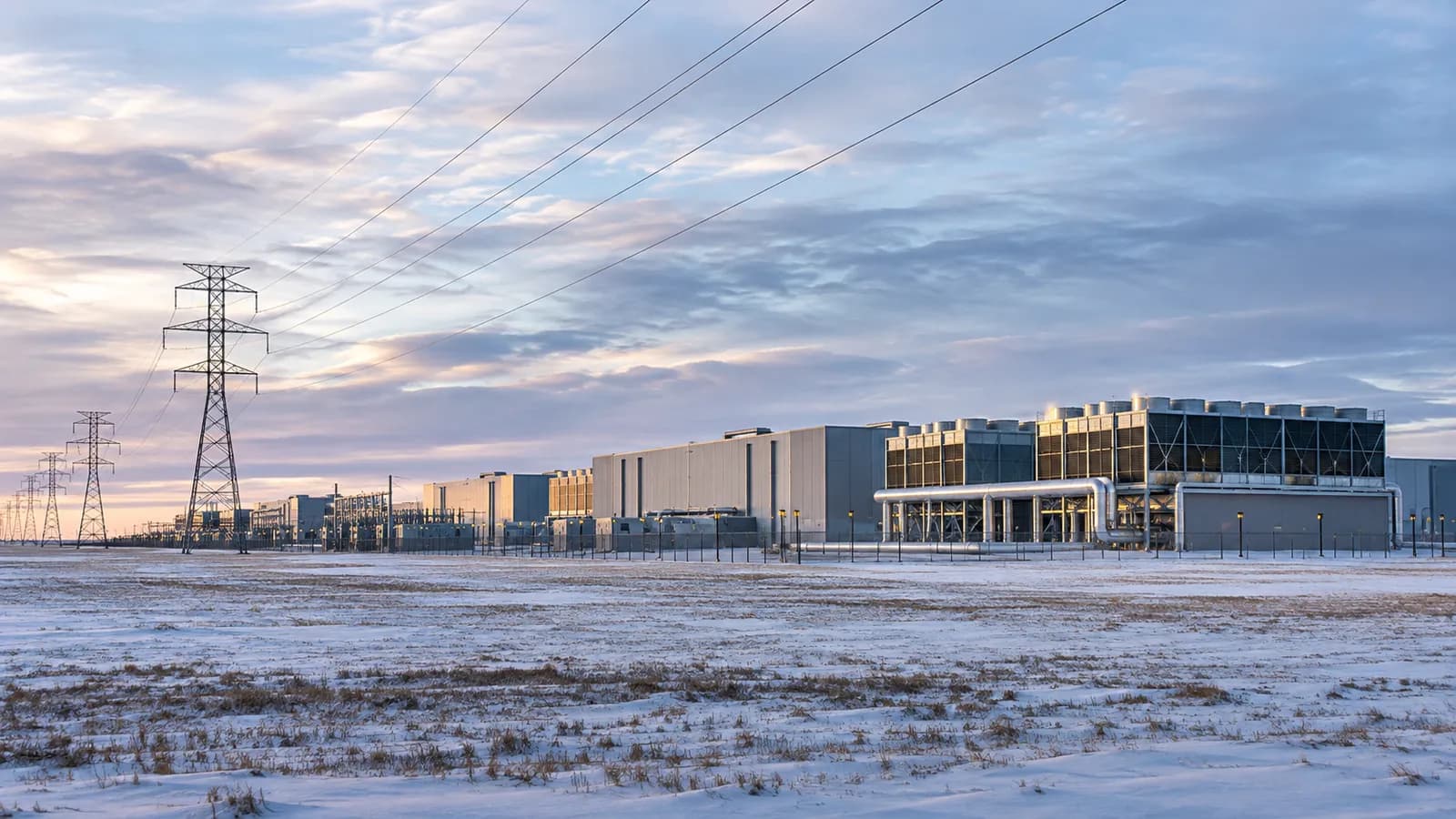
Company Overview
Applied Digital builds and leases data centers designed for AI and high-performance computing, mainly in North Dakota. It trades on Nasdaq under the ticker APLD. Its tenants include CoreWeave and an investment-grade hyperscaler.
Applied Digital began by hosting crypto mining and shifted to AI data centers.
It signed leases with CoreWeave for its Polaris Forge campus.
Latest Quarterly Results: Q1 Fiscal 2027
Applied Digital reported first-quarter fiscal 2027 results (quarter ended August 31, 2026) on October 7, 2026.
Much of the quarter's revenue came from tenant fit-out work ($157.2 million) rather than ongoing rent ($79.1 million).
A new 210 MW, 15-year lease with an investment-grade hyperscaler added about $5.2 billion of contracted revenue.
Business Model and Revenue Drivers
Applied Digital signs long-term leases, often 15 years, for data center capacity.
Much of its recent revenue has come from tenant fit-out work.
Building campuses requires large amounts of debt and equity financing.
Competitive Landscape
CoreWeave, Iren, Cipher Mining and traditional data center REITs compete for AI tenants.
Applied Digital focuses on North Dakota campuses with cool climate and power access.
Revenue Growth and Financial Performance
When reviewing Applied Digital's reported results, these measures give the clearest view of growth, profitability and cash generation:
- Contracted lease revenue
- Megawatts leased
- Revenue mix
- Adjusted EBITDA
- Debt and cash
Profitability and Earnings Quality
Revenue growth is only part of the picture. For Applied Digital, it helps to check whether growth comes from higher volumes, higher prices or acquisitions, and whether margins are widening or narrowing as the business scales.
Reported earnings can include one-time items such as restructuring charges, asset sales, tax effects or legal settlements. Separating these from recurring operating results, and comparing like-for-like periods, gives a more reliable view of underlying profitability.
Balance Sheet, Debt and Financial Stability
A review of Applied Digital's financial position starts with cash, total debt, lease obligations and how operating cash flow compares with capital spending. A business that funds its investment from its own cash flow is in a different position from one that relies on borrowing or issuing new shares.
Changes in inventory, receivables and working capital are also worth monitoring, because they can absorb cash and signal shifts in demand before they appear in revenue.
APLD Stock Valuation Analysis
Measures such as the price-to-earnings ratio, price-to-sales ratio and enterprise value to EBITDA describe how the market is currently pricing Applied Digital relative to its results.
However, a single valuation ratio cannot establish whether a stock is undervalued or overvalued. Earnings quality, free cash flow, margins, competitive position and the growth needed to support the current price all need to be considered together, and compared with similar companies.
Business Outlook and Investment Risks
Management guidance and industry conditions shape expectations for Applied Digital, but guidance is an estimate rather than an established outcome. Several uncertainties are specific to this business:
- Tenant concentration
- Construction and power delays
- High debt
- AI spending changes
From Power Capacity To Usable Computing Space
A data center lease begins with a physical capacity problem. Electrical power must reach a site, pass through substations and distribution equipment, and arrive at the tenant's computing equipment with the required reliability. A campus can have a headline power capacity without all of that capacity being available to operating servers at the same time. When reading company materials, distinguish power secured for a site, capacity under construction, capacity delivered to a tenant, and capacity supporting active operations. These describe different stages and should not be added together as if they were separate revenue sources.
Critical IT load refers to the power available for computing equipment, while total facility power also includes cooling and other supporting systems. The relationship between the two depends on facility design and operating conditions. Power usage effectiveness, or PUE, expresses total facility energy use relative to IT equipment energy use; a lower ratio indicates less overhead energy for the same IT energy consumption. PUE does not by itself measure a tenant's computing output or the financial return on a campus, and comparisons require consistent measurement boundaries and periods.
AI computing can place unusually dense equipment in a small area, creating demanding cooling and electrical requirements. Liquid cooling moves heat away from equipment through a liquid circuit, while air cooling relies primarily on airflow. Both require supporting infrastructure and maintenance. The division of responsibility matters: a landlord may provide the building and shared systems while a tenant installs and operates computing hardware. Lease documents and company disclosures can clarify who pays for upgrades, who maintains equipment, and which performance obligations apply to each party.
Capacity utilization and availability describe different aspects of a facility. Utilization concerns how much of a defined resource is being used over a period; availability concerns whether the facility can provide service when required. A lease can cover reserved capacity even when a tenant does not use every available unit of power continuously. The definitions in a contract or operating disclosure matter when interpreting either measure. A comparison is more meaningful when it uses the same denominator, measurement period, and treatment of capacity that is still being commissioned.
Reading Lease Economics
A long lease is a collection of contractual cash flows, obligations, and conditions rather than a single payment received at signing. Rent commencement can depend on delivery of a specified space or power capacity and satisfaction of acceptance conditions. Some agreements contain staged delivery schedules, rent escalators, renewal options, or termination provisions. The accounting value of contracted revenue is therefore different from cash collected in a reporting period. A useful reading starts with the lease term and commencement conditions, then considers the timing and nature of each payment.
Lease accounting can spread fixed contractual rent over the lease term, even when the cash payment schedule is uneven. This can create a difference between rental revenue and rent collected in a particular period. Tenant incentives, concessions, and reimbursements can also affect the timing or presentation of reported amounts. The notes to the financial statements explain the company's accounting policies and may identify the resulting receivables or deferred balances. Comparing those explanations with operating cash flow helps distinguish an accounting timing difference from cash that has actually arrived.
Power charges deserve separate attention because a data center can use substantial electricity. Depending on the agreement, electricity may be paid directly by the tenant, reimbursed to the landlord, or included in a broader charge. A reimbursement can increase both reported revenue and expense without producing the same economic contribution as rent. Contract terms also determine exposure to changes in utility charges and the treatment of unused capacity. Revenue categories, expense disclosures, and lease descriptions together are more informative than total revenue alone.
Contracted revenue is also different from a backlog of completed work. It can extend over many years and depend on future delivery and tenant performance. An analyst can examine whether disclosed totals include optional extensions, variable charges, or amounts linked to facilities that have not yet been delivered. The credit quality of a named customer, a parent guarantee, and any security deposit are distinct forms of protection; one should not be assumed from another. Concentration can be assessed across tenants, guarantors, and campuses rather than by tenant count alone.
Following Construction Through The Accounts
Construction spending typically appears on the balance sheet as property and equipment or construction in progress before the asset is placed in service. Once a facility or component is ready for its intended use, its cost is generally depreciated over an estimated useful life. This means a period of intensive building may show large cash outflows before the full depreciation expense appears in earnings. The accounting policy and property and equipment note help explain when costs are capitalized, when depreciation begins, and which asset categories are significant.
Some borrowing costs associated with constructing a qualifying asset may be capitalized rather than immediately recognized as interest expense. Capitalized interest becomes part of the asset's recorded cost and is generally reflected in later depreciation. A comparison of interest expense alone can therefore understate the financing cost associated with a construction program during a reporting period. The cash flow statement, debt note, and capitalization disclosures provide complementary views. Changes in the amount capitalized can also affect comparisons between periods with different levels of construction activity.
The cash flow statement separates operating, investing, and financing activity, but a project's economics span all three. Payments to construct facilities generally appear in investing activity, while borrowing and equity issuance appear in financing activity. Customer payments and operating costs generally affect operating activity. Restricted cash and funds held for specified project purposes may not be as freely available as unrestricted cash. Reading the accompanying notes helps identify restrictions, committed spending, and whether cash balances are available to the parent company or held within a project entity.
A project subsidiary can have its own lenders, collateral, and contractual limits on distributing cash. Consolidated statements combine controlled entities, so a group cash balance or debt total may conceal differences in where resources and obligations sit. Debt notes can explain guarantees, security interests, repayment terms, and financial covenants. A covenant is a contractual condition, and the relevant definition of a financial measure may differ from the figure shown on the face of the financial statements. The maturity schedule adds another dimension to the headline debt balance.
Comparing Data Center Operating Models
Companies serving computing customers can occupy different layers of the supply chain. A data center owner may provide land, buildings, power distribution, and cooling; a cloud provider may own or arrange access to computing equipment and sell computing services; a customer may use those services to run its own applications. A single company can perform more than one role. These distinctions affect the assets on its balance sheet, its operating costs, and the type of contract it signs, so similar end markets do not make reported margins directly comparable.
A wholesale facility lease typically serves a customer taking a large dedicated allocation of space and power. Colocation arrangements can serve multiple customers in the same facility and may include a broader range of connectivity and operational services. The mix influences staffing, customer acquisition, contract administration, and the way capacity is divided. A campus designed around a small number of large deployments may have different occupancy and counterparty characteristics from a facility serving many smaller users. Neither model can be understood solely from its building size.
Location influences more than ambient temperature. Developers must coordinate land use, transmission connections, utility arrangements, water needs where applicable, and local permits. The availability of a grid connection is distinct from the availability of energy under a commercial arrangement, and backup systems are distinct from the normal power supply. Interconnection and construction milestones can be useful operational indicators because each represents a different step in delivering a usable facility. Disclosures should be read carefully to determine whether a milestone applies to an entire campus or a particular phase.
Operational performance also depends on maintenance and resilience after a facility opens. Redundant electrical and cooling components can allow maintenance or a component failure without necessarily interrupting all service, although the specific design and contractual commitments matter. Tenants may assess network connections, physical security, access procedures, and the ability to install their equipment alongside power and cooling specifications. Public disclosures may not reveal every technical feature, so a stated capacity figure alone cannot establish that two facilities offer identical service.
Conclusion: Is APLD Stock Worth Analyzing in 2027?
Applied Digital has a business model with clear drivers that can be tracked through its reported results, and a set of risks that are specific to its industry and financial position.
A balanced assessment considers growth, profitability, balance-sheet strength, valuation and risk together. APLD is a company worth monitoring for what its results reveal about its business.