Company Overview
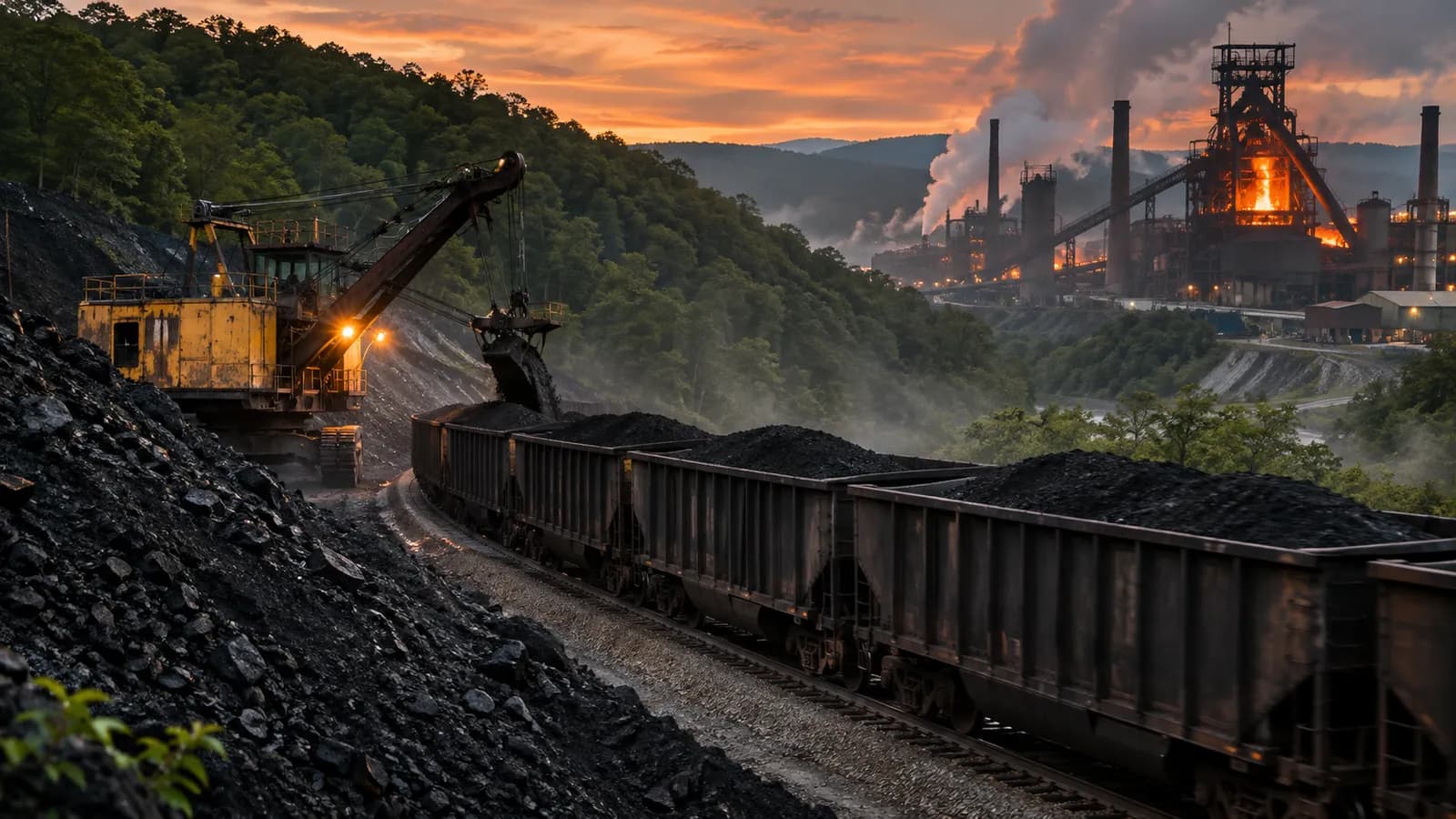
Alpha Metallurgical Resources mines metallurgical coal in Appalachia, which is used to make steel. It trades on the NYSE under the ticker AMR. It sells to domestic steelmakers and exports to steel producers abroad.
Alpha emerged from the restructuring of Alpha Natural Resources in 2016 and later renamed itself Alpha Metallurgical Resources.
It shifted fully to metallurgical coal.
Latest Quarterly Results: Q3 2026
Alpha Metallurgical Resources reported third-quarter 2026 results on November 6, 2026.
The gap between realized price and cost per ton was about $14, which explains the thin profit.
Business Model and Revenue Drivers
Metallurgical coal prices are set largely by global steel demand, especially in Asia.
Alpha sells some coal at fixed domestic prices and some indexed to export benchmarks.
The company returned large amounts of cash through buybacks when coal prices were high.
Competitive Landscape
Warrior Met Coal, Arch Resources (now Core Natural Resources) and Ramaco compete in U.S. met coal.
Australian producers dominate seaborne met coal.
Revenue Growth and Financial Performance
When reviewing Alpha Metallurgical Resources's reported results, these measures give the clearest view of growth, profitability and cash generation:
- Tons sold
- Net realized price per ton
- Cost of coal sales per ton
- Adjusted EBITDA
- Cash and liquidity
Profitability and Earnings Quality
Revenue growth is only part of the picture. For Alpha Metallurgical Resources, it helps to check whether growth comes from higher volumes, higher prices or acquisitions, and whether margins are widening or narrowing as the business scales.
Reported earnings can include one-time items such as restructuring charges, asset sales, tax effects or legal settlements. Separating these from recurring operating results, and comparing like-for-like periods, gives a more reliable view of underlying profitability.
Balance Sheet, Debt and Financial Stability
A review of Alpha Metallurgical Resources's financial position starts with cash, total debt, lease obligations and how operating cash flow compares with capital spending. A business that funds its investment from its own cash flow is in a different position from one that relies on borrowing or issuing new shares.
Changes in inventory, receivables and working capital are also worth monitoring, because they can absorb cash and signal shifts in demand before they appear in revenue.
AMR Stock Valuation Analysis
Measures such as the price-to-earnings ratio, price-to-sales ratio and enterprise value to EBITDA describe how the market is currently pricing Alpha Metallurgical Resources relative to its results.
However, a single valuation ratio cannot establish whether a stock is undervalued or overvalued. Earnings quality, free cash flow, margins, competitive position and the growth needed to support the current price all need to be considered together, and compared with similar companies.
Business Outlook and Investment Risks
Management guidance and industry conditions shape expectations for Alpha Metallurgical Resources, but guidance is an estimate rather than an established outcome. Several uncertainties are specific to this business:
- Coal price swings
- Steel demand
- Mining costs
- Environmental regulation
From Coal Seam To Steel Furnace
Metallurgical coal is not a uniform product. Steelmakers assess properties such as ash, sulfur, moisture, volatile matter and coking behavior because these affect how coal performs in a blend. Coal is heated without oxygen in a coke oven to produce coke, which supplies both heat and structural support inside a blast furnace. A mine's geology therefore matters commercially as well as operationally: two shipments with the same weight can have different uses and command different terms because their properties differ.
A steelmaker usually combines coals from several sources to achieve a workable coke blend. Some coals contribute strength to the finished coke, while others provide different properties needed in the mix. The choice depends on the customer's ovens, furnace operations and available alternatives. A producer's product mix can change when mining moves between seams or when preparation plants adjust how raw coal is washed. Comparing shipments by tonnage alone can therefore obscure a meaningful change in the quality or composition of sales.
The blast furnace is one route to steelmaking. Electric arc furnaces use electricity to melt metallic inputs, including scrap, and do not require coke in the same way. These processes serve overlapping markets but differ in equipment, input requirements and the qualities of steel they can produce. The balance between routes helps frame demand for coking coal without making every change in total steel output equivalent to a change in coal consumption. Technology, raw material availability and the mix of steel products all influence that relationship.
Coal properties also influence how a customer manages consistency across deliveries. A plant designed around a particular blend may need to adjust the proportions of its inputs when one component changes. Producers test and report characteristics using specified methods, while contracts define acceptable ranges and treatment of deviations. The relationship between quality and usable value is consequently specific to a customer's process. A specification that suits one buyer may be less useful to another, even if both operate blast furnaces. This helps explain why individual coal grades are not perfectly interchangeable.
Contract Terms And Delivered Economics
A coal sales agreement can specify quality ranges, delivery windows, pricing provisions and remedies when material falls outside an agreed specification. A contract may also define whether the seller or buyer arranges transportation beyond a stated delivery point. These details affect the economic meaning of a quoted price. A figure tied to a mine, a port or a customer's facility can include different services and costs, so matching the delivery basis is essential before comparing commercial terms across producers.
For export shipments, coal must move from a mine through inland transportation and a marine terminal before reaching a vessel. Rail service, terminal capacity, vessel availability and scheduling all shape the time between production and delivery. Disruptions at any link can leave coal waiting at a mine or terminal even when a buyer exists. Transportation arrangements can also determine which party bears a particular cost or delay. The company's disclosures on freight and handling help explain how sales revenue relates to the amount retained after moving coal.
Timing complicates comparisons between benchmark movements and reported results. Contract pricing periods, shipment schedules and the point at which a sale is recognized need not coincide. Coal produced in one reporting period may be shipped or recognized in another, and contracts can reference different products or periods. Quality adjustments and customer mix add further differences. When reviewing a reported realized price, it is useful to connect the measure to the company's definition and sales mix instead of treating one external benchmark as an exact proxy.
Contract disclosures can also help distinguish a commitment to deliver a quantity from a commitment to a particular price. An agreement may identify expected volumes while leaving some prices to be determined by an index or subsequent negotiation. Conversely, a fixed price applies within the contract's particular quality, timing and delivery conditions. Readers can examine how much business is covered by each type of arrangement, using the company's own definitions. The distinction helps explain why the timing of changes in market conditions may differ across parts of the sales book.
Mining Operations And Unit Costs
Appalachian coal production can involve underground mines, surface mines or a combination of methods. The choice reflects the location and geometry of a seam, the surrounding rock and the applicable operating requirements. Underground mining relies on access, ventilation and equipment suited to the mine plan; surface mining requires the removal and management of overlying material. Each method has a different pattern of labor, equipment and site preparation needs. Even neighboring operations can have different economics when seam thickness or geological conditions vary.
Raw coal commonly passes through a preparation plant, where unwanted material is separated to meet customer specifications. The proportion of saleable coal recovered from raw production is often called yield. A change in yield affects the relationship between the material mined and the tons available for sale: more raw material may need to be handled to produce the same quantity of finished coal. Yield can reflect geology, mining practices and the quality targeted by the preparation process, so it provides context for both operating costs and product specifications.
Cost per ton is an average, not a fixed cost for each additional ton. Some expenses, such as certain site support activities and equipment commitments, do not move in direct proportion to production over a short period. When output changes, those expenses are spread over a different number of tons. Mine sequencing, maintenance, labor availability and the amount of material moved can also alter the average. A useful reading of a quarterly cost measure considers operating conditions and production mix alongside the number itself.
Mining is organized around a sequence of planned work areas rather than a single continuous source of identical material. Moving equipment, preparing access and maintaining ventilation or other infrastructure can consume resources before coal from a new area is available for sale. Unplanned geological conditions can interrupt that sequence and require changes to the plan. A temporary change in output or spending may therefore reflect operational timing as well as market conditions. Commentary about individual mines can make consolidated averages easier to interpret, especially when several operations contribute to the total.
Reading Cash Flows And Mine Obligations
Mining requires spending both to maintain existing operations and to develop access to reserves. Capital spending can cover equipment, mine development and other long-lived assets, while routine operating expenses generally flow through current results. The distinction matters because accounting earnings do not necessarily record the full cash cost of long-lived equipment when it is purchased. Depreciation and depletion allocate capitalized costs over time under accounting rules. Comparing cash spending with those noncash charges helps explain why accounting profit and cash generation can differ.
Mine operators also have obligations connected with restoring land and closing facilities. Asset retirement obligations are accounting estimates of the costs associated with those duties, with their measurement affected by assumptions about timing and other inputs. The recorded liability and the cash paid in a particular period are different measures: an estimate can change before a payment occurs, and payments may relate to work performed over an extended period. Notes to the financial statements provide context on the nature of these obligations and changes in their recorded amounts.
A cash flow statement can help distinguish operating cash movements from investing and financing activity. Purchases of mine equipment appear in investing cash flows, while debt transactions and share repurchases generally appear in financing cash flows. Reclamation payments and changes in accrued liabilities may affect operating cash flows. Reading the notes alongside the statement clarifies what is included in each line and whether a transaction is cash or noncash. This classification helps readers connect management's operating decisions with changes in the cash balance.
Reserve reporting adds another perspective to the financial statements. Reserves are estimates of coal that can be economically and legally extracted under the assumptions used in the report; they are not the same as tons already produced or sold. Estimates depend on geological information, engineering plans and economic and regulatory criteria, and they can change as those inputs are reviewed. Comparing disclosures over time can show how production, revisions and changes in the mine plan affect the reported reserve base. The accompanying definitions and assumptions are essential to interpreting those changes.
Conclusion: Is AMR Stock Worth Analyzing in 2027?
Alpha Metallurgical Resources has a business model with clear drivers that can be tracked through its reported results, and a set of risks that are specific to its industry and financial position.
A balanced assessment considers growth, profitability, balance-sheet strength, valuation and risk together. AMR is a company worth monitoring for what its results reveal about its business.