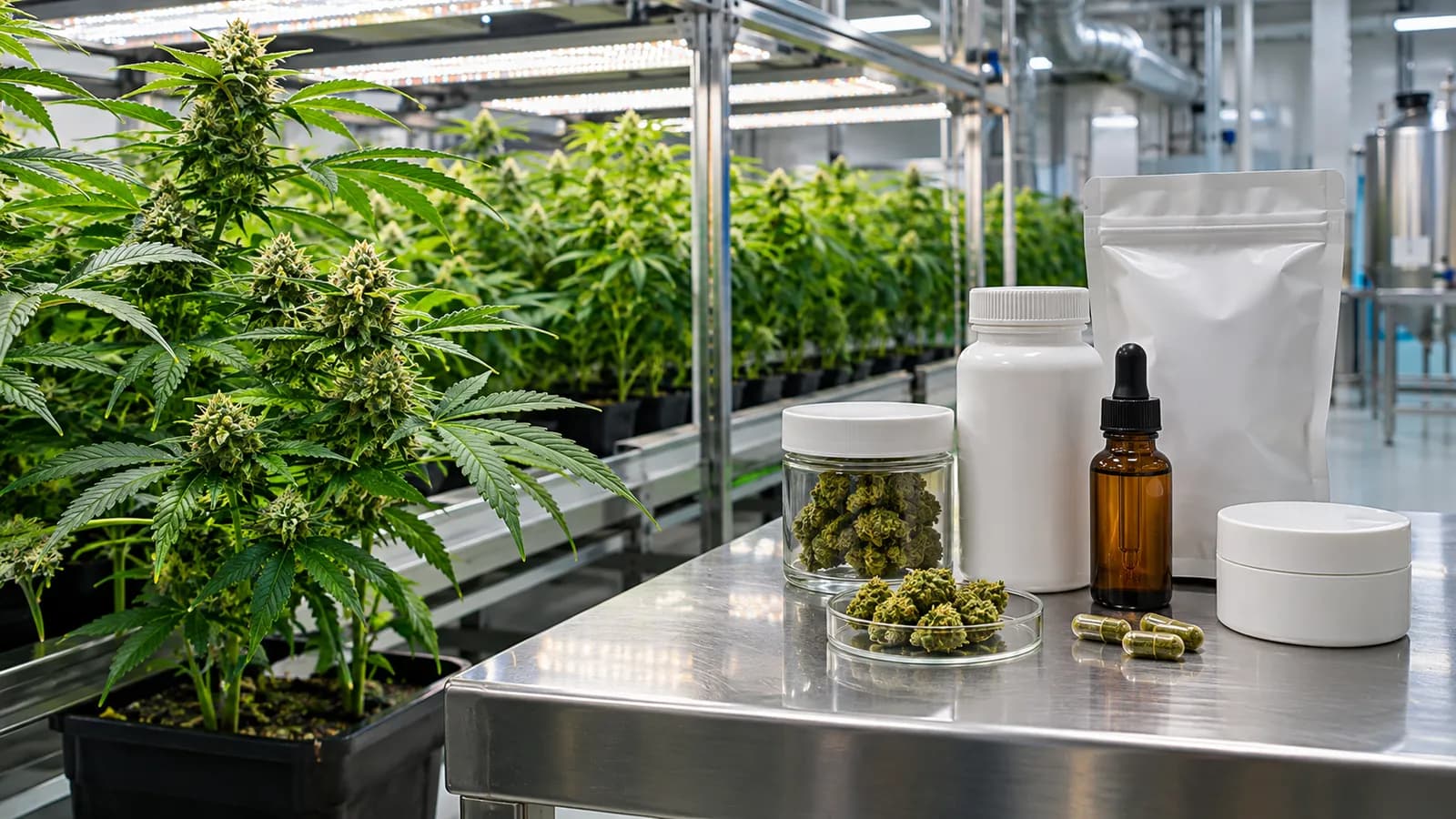
Company Overview
Aurora Cannabis is a Canadian cannabis company focused on medical cannabis in Canada and international markets such as Europe and Australia. It trades on Nasdaq and the TSX under the ticker ACB.
Aurora Cannabis was founded in 2013 in Canada and grew rapidly through acquisitions during the 2018 legalization period.
It later took large write-downs and restructured, focusing on medical cannabis.
Latest Quarterly Results: Fiscal Q2 2027
Aurora Cannabis reported fiscal second-quarter 2027 results (quarter ended September 30, 2026) on November 5, 2026. Figures are in Canadian dollars.
Canadian medical revenue fell after federal reimbursement changes effective April 1, 2026, while international sales grew.
Adjusted gross margin on medical cannabis declined to 62% from 69%.
Business Model and Revenue Drivers
Aurora has shifted away from Canadian consumer cannabis toward medical sales.
International markets, especially Germany, have become its largest growth area.
It also owns plant propagation business Bevo Farms.
Competitive Landscape
Tilray, Canopy Growth, SNDL and Organigram are other Canadian cannabis companies.
Aurora focuses more on medical and international markets than many peers.
Revenue Growth and Financial Performance
When reviewing Aurora Cannabis's reported results, these measures give the clearest view of growth, profitability and cash generation:
- Medical cannabis revenue
- International revenue
- Adjusted gross margin
- Adjusted EBITDA
- Cash
Profitability and Earnings Quality
Revenue growth is only part of the picture. For Aurora Cannabis, it helps to check whether growth comes from higher volumes, higher prices or acquisitions, and whether margins are widening or narrowing as the business scales.
Reported earnings can include one-time items such as restructuring charges, asset sales, tax effects or legal settlements. Separating these from recurring operating results, and comparing like-for-like periods, gives a more reliable view of underlying profitability.
Balance Sheet, Debt and Financial Stability
A review of Aurora Cannabis's financial position starts with cash, total debt, lease obligations and how operating cash flow compares with capital spending. A business that funds its investment from its own cash flow is in a different position from one that relies on borrowing or issuing new shares.
Changes in inventory, receivables and working capital are also worth monitoring, because they can absorb cash and signal shifts in demand before they appear in revenue.
ACB Stock Valuation Analysis
Measures such as the price-to-earnings ratio, price-to-sales ratio and enterprise value to EBITDA describe how the market is currently pricing Aurora Cannabis relative to its results.
However, a single valuation ratio cannot establish whether a stock is undervalued or overvalued. Earnings quality, free cash flow, margins, competitive position and the growth needed to support the current price all need to be considered together, and compared with similar companies.
Business Outlook and Investment Risks
Management guidance and industry conditions shape expectations for Aurora Cannabis, but guidance is an estimate rather than an established outcome. Several uncertainties are specific to this business:
- Regulatory changes
- Price competition
- Currency
- Past share dilution
Medical Market Access
Medical cannabis reaches patients through a chain that differs from a typical consumer packaged goods channel. Rules governing prescriptions or other medical authorization, dispensing, product registration and imports shape who can sell a product and how it reaches a patient. A producer may supply a distributor or pharmacy rather than the patient directly. The identity of the customer on an invoice therefore does not always reveal the identity of the final user, and channel inventory can affect the timing of orders.
Market access also depends on operational details. Products may need specific documentation, testing, labeling and packaging before they can enter a jurisdiction. A company with production capacity still needs the appropriate permissions and a functioning route to local customers. When reading management commentary, distinguish an authorization to operate from actual shipments and recurring orders. These are separate stages in commercial access, and each can involve different counterparties and administrative requirements.
Reimbursement arrangements influence the economics of medical demand. A patient, insurer or public program may bear different portions of the cost, depending on the applicable rules. Eligibility criteria and documentation requirements can affect the number of patients who use a channel and the products they receive. Comparing markets solely by population misses these institutional differences. The useful question is how a country's medical system translates an eligible patient's need into a prescription, payment and completed sale.
Production And Product Mix
Cannabis production combines agricultural processes with manufacturing controls. Cultivation requires attention to plant health, growing conditions and harvest timing; subsequent processing, testing and packaging prepare material for sale. These stages can create bottlenecks in different places. More growing space does not automatically produce more saleable inventory if processing capacity, quality testing or packaging is the limiting step. Batch failures and changes in product specifications can also separate harvested output from finished goods available for shipment.
Product mix matters because dried flower, extracts and other preparations involve different processing steps and input yields. Some plant material may be lost or redirected during extraction, and testing and packaging requirements can vary by format. A change in the mix of products sold can therefore alter reported cost of sales even when cultivation practices are unchanged. Looking at revenue alongside the descriptions of products and production activities can help explain why a margin change is not simply a change in selling prices.
Inventory accounting adds another layer to the interpretation of production results. Costs are accumulated as products move through cultivation and processing, then recognized in cost of sales when the goods are sold, subject to applicable accounting rules. The cost recognized in a quarter can reflect activity from earlier periods. Notes about inventory valuation, write-downs and changes in production costs help connect the reported expense to the physical movement of goods.
Reading Segment Disclosures
Segment disclosures help distinguish businesses with different customers and operating requirements. A consolidated income statement combines cannabis activities with plant propagation, so a movement in a company-wide measure may reflect a change in the relative contribution of those activities. Segment revenue and any disclosed segment profit measures provide a more specific starting point. The accounting policy and segment notes explain how management defines those categories and whether the presentation has changed between reporting periods.
Intercompany transactions and shared costs can complicate comparisons between segments. Corporate expenses may be reported separately or allocated using management's chosen method, while transactions within the group are eliminated in consolidation. A segment measure before unallocated expenses is consequently not the same as the profit attributable to shareholders. Reading the reconciliation to consolidated results shows which costs and adjustments sit outside the segment measure and prevents the same activity from being counted twice.
Geographic disclosures require similar care. A revenue destination describes where a sale is attributed under the company's policy; it does not necessarily identify where the product was cultivated or where all related expenses were incurred. Exchange rate movements can also affect the Canadian-dollar value of overseas activity. If a filing provides constant-currency information, compare its definition with the reported figure and check which periods and revenue categories it covers.
From Operating Results To Cash
The cash flow statement organizes cash movements into operating, investing and financing activities. It can clarify why a reported operating measure and cash generated from operations differ. Noncash expenses may be added back in an indirect reconciliation, while changes in operating assets and liabilities alter cash without necessarily changing current-period revenue by the same amount. Reading the individual reconciliation lines is more informative than assuming that an adjusted earnings measure represents cash received.
Capital spending also deserves interpretation beyond a single total. Spending on facilities and equipment can include maintaining existing operations as well as expanding or changing capacity, but financial statements may not fully separate those purposes. Acquisitions and disposals appear in investing activity too and should be distinguished from routine capital expenditure. Proceeds from an asset sale add cash in the period received, although they do not describe cash generated by the remaining operations.
Share-based compensation creates another distinction between expense and cash. Awards can be recognized as an expense over the service period without an equivalent immediate cash payment. Depending on their terms and settlement, awards may also affect the number of shares outstanding. The equity note and per-share calculation explain the instruments and share counts used. Together, they help readers distinguish the company's total results from the portion represented by each share.
Conclusion: Is ACB Stock Worth Analyzing in 2027?
Aurora Cannabis has a business model with clear drivers that can be tracked through its reported results, and a set of risks that are specific to its industry and financial position.
A balanced assessment considers growth, profitability, balance-sheet strength, valuation and risk together. ACB is a company worth monitoring for what its results reveal about its business.