Company Overview
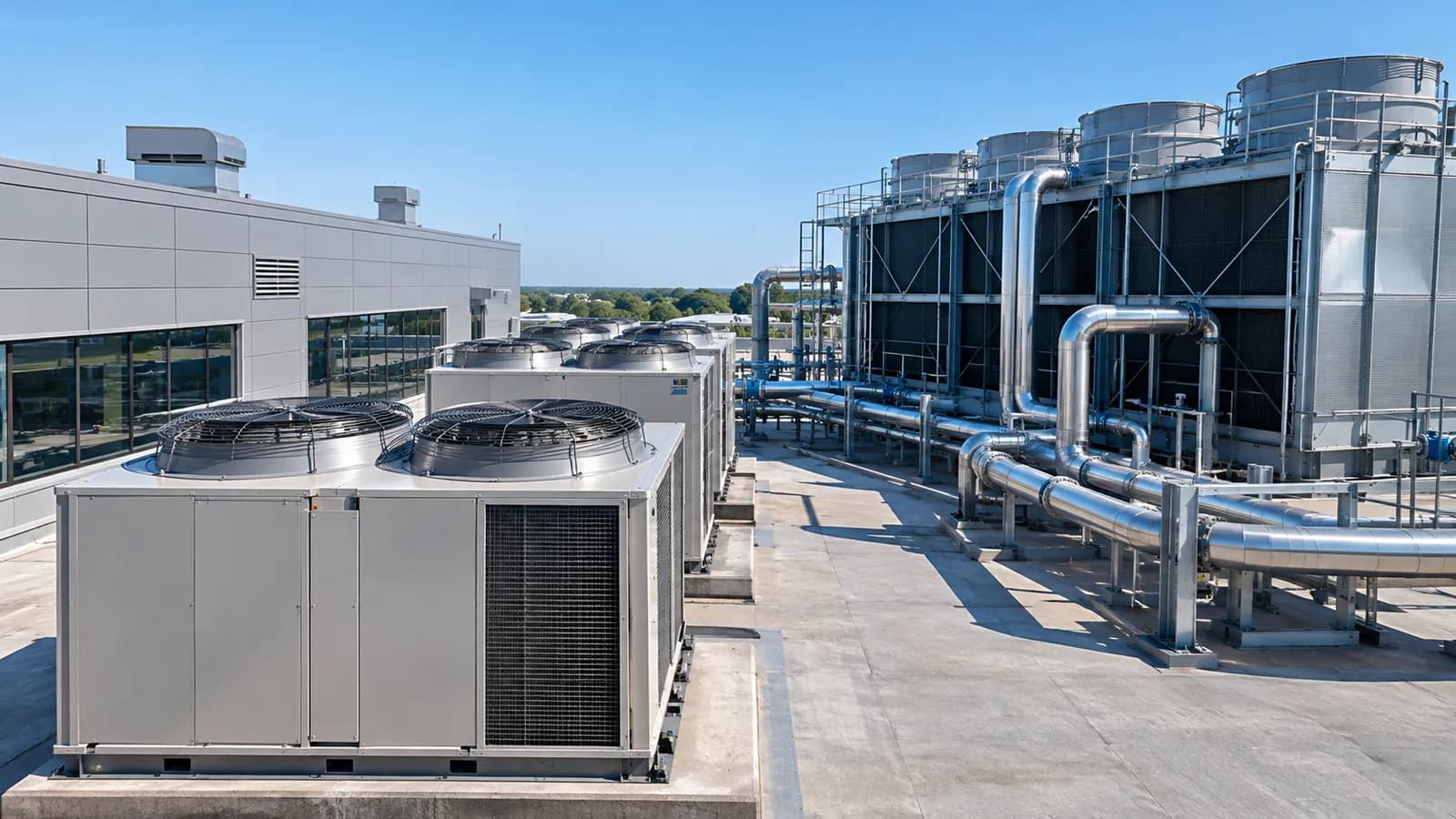
AAON makes heating, ventilation and air conditioning (HVAC) equipment for commercial buildings and liquid and air cooling systems for data centers through its BASX brand. It trades on Nasdaq under the ticker AAON.
AAON was founded in 1988 in Tulsa, Oklahoma.
It acquired BASX in 2021.
Latest Quarterly Results: Q3 2026
AAON reported third-quarter 2026 results on November 9, 2026.
BASX data center cooling sales passed AAON-branded HVAC sales.
AAON restated its first-half 2026 results and identified a material weakness in internal controls.
Business Model and Revenue Drivers
BASX data center cooling has become its fastest-growing business.
Backlog has grown sharply with data center orders.
AAON restated its first and second quarter 2026 financial statements and reported a material weakness in internal controls.
Competitive Landscape
Trane, Carrier, Lennox and Daikin compete in HVAC. Vertiv and others compete in data center cooling.
AAON focuses on semi-custom equipment.
Revenue Growth and Financial Performance
When reviewing AAON's reported results, these measures give the clearest view of growth, profitability and cash generation:
- Net sales by brand
- Backlog
- Gross margin
- Operating income
- Internal control remediation
Profitability and Earnings Quality
Revenue growth is only part of the picture. For AAON, it helps to check whether growth comes from higher volumes, higher prices or acquisitions, and whether margins are widening or narrowing as the business scales.
Reported earnings can include one-time items such as restructuring charges, asset sales, tax effects or legal settlements. Separating these from recurring operating results, and comparing like-for-like periods, gives a more reliable view of underlying profitability.
Balance Sheet, Debt and Financial Stability
A review of AAON's financial position starts with cash, total debt, lease obligations and how operating cash flow compares with capital spending. A business that funds its investment from its own cash flow is in a different position from one that relies on borrowing or issuing new shares.
Changes in inventory, receivables and working capital are also worth monitoring, because they can absorb cash and signal shifts in demand before they appear in revenue.
AAON Stock Valuation Analysis
Measures such as the price-to-earnings ratio, price-to-sales ratio and enterprise value to EBITDA describe how the market is currently pricing AAON relative to its results.
However, a single valuation ratio cannot establish whether a stock is undervalued or overvalued. Earnings quality, free cash flow, margins, competitive position and the growth needed to support the current price all need to be considered together, and compared with similar companies.
Business Outlook and Investment Risks
Management guidance and industry conditions shape expectations for AAON, but guidance is an estimate rather than an established outcome. Several uncertainties are specific to this business:
- Data center spending changes
- Customer concentration
- Internal control issues
- Commercial construction cycles
How Equipment Projects Take Shape
Commercial HVAC equipment is usually selected as part of a building system, not as an isolated appliance. Engineers establish the required airflow, temperature control, ventilation and physical dimensions, while owners and contractors weigh installation requirements and operating needs. A semi-custom manufacturer can configure equipment around a project's specifications using a range of design choices. That approach sits between standard catalog products and equipment designed entirely from scratch. The distinction matters because the amount of engineering, documentation and coordination required can differ substantially from one order to another. These choices also influence the documentation and approvals needed before production can begin.
The path from a specification to a completed installation involves several parties. A consulting engineer may describe the required performance, a contractor may coordinate purchasing and installation, and a manufacturer or its representative may help translate the specification into equipment selections. Equipment can be delivered to a construction site well before a building is occupied. Consequently, the timing of an equipment supplier's work does not necessarily match the timing of the owner's use of the building or the completion of the overall construction project. Project participants may revisit those selections when site conditions or construction schedules change.
A configured product also creates manufacturing tradeoffs. Common components and repeatable processes can support efficient production, while variations in dimensions, controls or operating conditions add complexity to scheduling and quality checks. A change requested after engineering begins can affect purchasing, factory sequencing and delivery. When reading management's discussion, it is useful to distinguish changes in factory utilization from changes in product complexity: both can influence the cost of completing a project, but they describe different operational issues. A consistent product platform can make those variations easier to manage across a factory.
Replacement projects follow a different decision process from new construction. Existing space, access routes, structural constraints and the need to keep a building operating can limit the equipment choices available. Compatibility with existing ductwork and controls may also matter. Replacement demand therefore depends partly on the condition and performance of installed equipment, rather than solely on the volume of new buildings. Project timing can still be affected by customer budgets, permitting and the availability of installation contractors. Planned renovations can provide an opportunity to coordinate equipment replacement with other building work.
Cooling Architecture And Operating Tradeoffs
Data center cooling removes heat produced by computing equipment so that operating conditions remain within the range specified for that equipment. Air cooling moves conditioned air through the room and across equipment, while liquid cooling carries heat through a liquid circuit closer to the heat source. A facility may use both approaches in different parts of the same system. The choice depends on the heat produced in a given space, the building's layout and the operator's preferred design, rather than on a single universal solution. The interfaces between those approaches are an important part of the overall design.
A cooling system has several connected stages: heat must be collected, transported and ultimately rejected to the outside environment. Fans, pumps, heat exchangers and controls can all play a role, depending on the design. Evaluating one component in isolation can therefore miss its effect on the rest of the installation. For example, reducing fan work at one point may require a different liquid circuit or additional equipment elsewhere. System design also has to account for maintenance access and continued operation when a component is serviced. The local climate and available infrastructure can affect how heat is rejected outdoors.
Reliability requirements influence equipment design as well as purchasing decisions. A facility can include redundant components or separate cooling paths so that a failure or maintenance event does not interrupt the entire system. Redundancy adds equipment and controls, but it also changes how the installation is operated and tested. The appropriate configuration depends on the operator's tolerance for interruptions and the way the facility is organized. Manufacturers must coordinate their equipment with the wider electrical, mechanical and control systems specified for each project. Controls must coordinate these components under normal operation and during an equipment fault.
Cleanrooms add a different set of constraints. In addition to temperature and humidity, these spaces control airborne particles through filtration, airflow patterns and procedures governing how people and materials enter. The required level of control depends on the activity inside the room. Cooling equipment is one part of that larger environment, and its selection must be compatible with the filtration and airflow design. This makes the application distinct from ordinary comfort cooling, even when some underlying equipment components are similar. Testing and balancing help establish whether the installed system meets its specified conditions.
Reading Orders And Contract Execution
Backlog represents orders that have not yet been recognized as revenue under the company's stated definition. Its usefulness depends on what that definition includes and on the terms attached to the orders. A large backlog is evidence of contracted or booked work as defined by the company, but it is not the same thing as cash collected or equipment delivered. Orders may be subject to changes in scope, scheduling or cancellation provisions. The accompanying filing and management discussion provide context for interpreting the balance. Definitions can differ among manufacturers, making a direct comparison less straightforward.
Changes in backlog can reflect new orders, revenue recognized from existing orders, revisions and other adjustments. Comparing the opening and closing balances without considering those movements can obscure what happened during the period. Order timing also matters: a small number of large projects can make bookings uneven. Where management provides detail, readers can look at the mix of applications and expected delivery schedules to understand whether the work is concentrated in a particular type of project or spread across a broader set of orders. A shift in delivery schedules may change when existing orders move out of backlog.
The accounting for a contract depends on its terms and the applicable revenue recognition requirements. Revenue may be recognized when control of equipment transfers or, for qualifying arrangements, as performance occurs over time. Payment milestones need not coincide with either pattern. Customer deposits, contract assets and contract liabilities can therefore help explain the relationship between invoicing, cash receipts and reported revenue. The notes to the financial statements describe the company's policies and the judgments used to apply them. Such balances should be interpreted in light of the company's disclosed contract practices.
Execution is also visible in obligations that continue after shipment. Warranty provisions reflect estimates of the cost to address covered defects, while actual claims may emerge over time. A change in the provision can reflect sales, product mix, revised assumptions or experience with earlier equipment. Readers can compare the stated policy and movements in the liability with management's explanation, while recognizing that a provision is an estimate rather than a count of known future repairs. Contract terms determine which costs are covered. Changes in the age and mix of installed equipment can complicate comparisons between periods.
Capacity Costs And Financial Interpretation
A manufacturer must coordinate factory space, labor, components and testing capacity before completed equipment can be shipped. Adding capacity can involve construction, machinery, training and changes to production processes. Expenses associated with a facility do not necessarily rise in step with each unit produced, so utilization can affect the cost assigned to output. At the same time, running a plant at a high pace may create overtime, scheduling pressure or other costs. Reported margins reflect the combined effect of these factors and the products being made. Production learning and the availability of skilled workers also influence how smoothly a facility operates.
The cash flow statement separates operating, investing and financing activities, making it possible to see different stages of a capacity program. Purchases of equipment and facilities generally appear in investing cash flows, while depreciation allocates the cost of eligible assets over their useful lives in the income statement. These amounts do not have to match in a given period. The notes on property and equipment and management's discussion can clarify what has been placed in service and how spending relates to production needs. Spending may precede the point when a new asset begins contributing to production.
Operating cash flow can differ from net income for reasons beyond the timing of customer collections and inventory purchases. Noncash expenses are added back in the indirect cash flow reconciliation, while changes in operating assets and liabilities adjust for transactions recognized in earnings that have not produced the same amount of cash in the period. Taxes paid and payments related to prior estimates can also affect the comparison. Reading the reconciliation alongside the income statement helps identify the specific sources of the difference. A single period's difference does not by itself explain the quality of reported earnings.
Internal control disclosures add another layer to interpreting financial results. A material weakness describes a control deficiency, or combination of deficiencies, that creates a reasonable possibility that a material misstatement will not be prevented or detected on a timely basis. Management's remediation discussion may describe new procedures, staffing or oversight, while later assessments address whether controls operate effectively. The design of a control and evidence that it works in practice are separate questions, and changes to reported figures should be read with the relevant restatement notes. Disclosure can also distinguish management's assessment from the auditor's opinion on internal control.
Conclusion: Is AAON Stock Worth Analyzing in 2027?
AAON has a business model with clear drivers that can be tracked through its reported results, and a set of risks that are specific to its industry and financial position.
A balanced assessment considers growth, profitability, balance-sheet strength, valuation and risk together. AAON is a company worth monitoring for what its results reveal about its business.