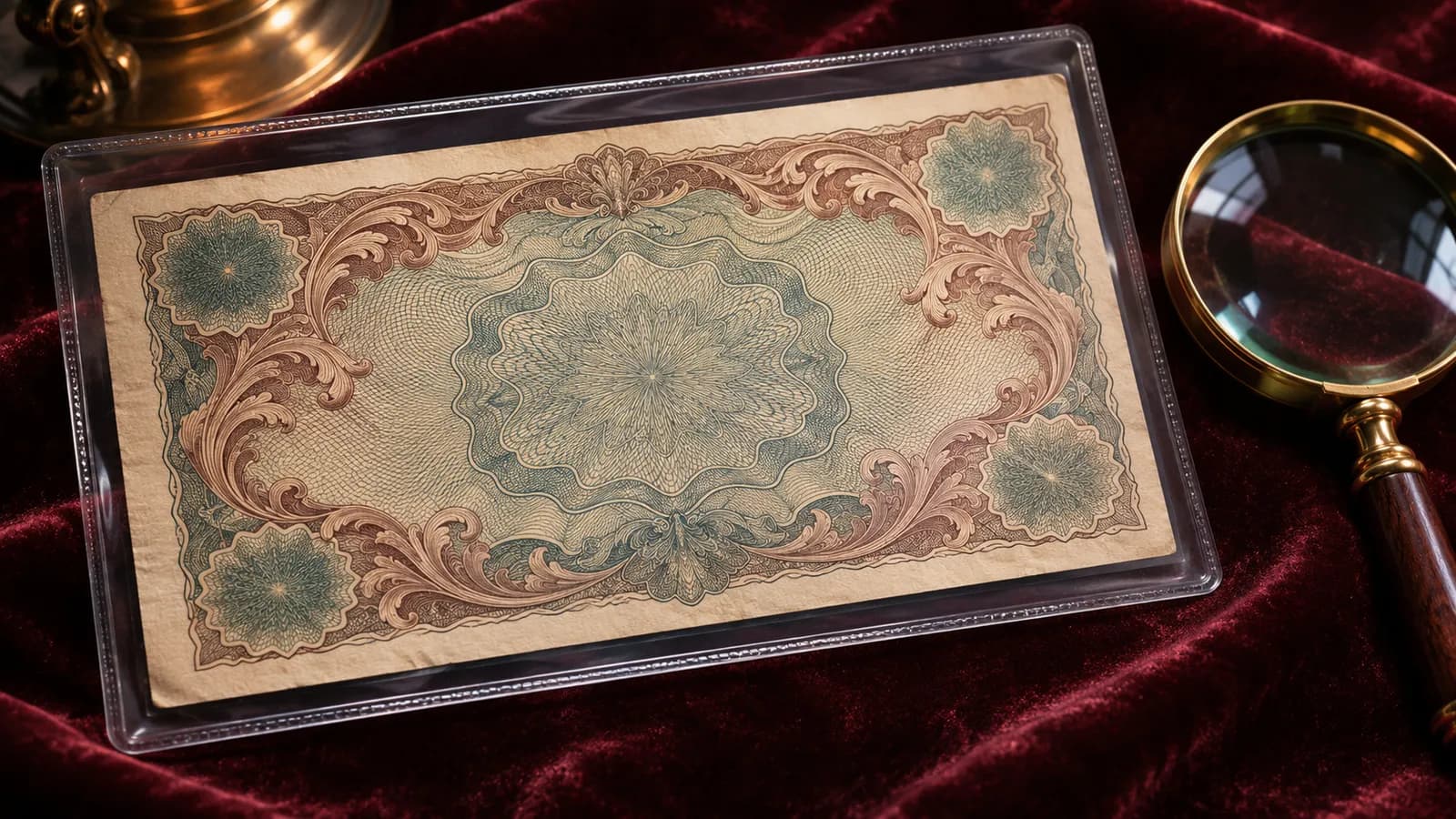
What Is the $500 Bill?
The U.S. $500 bill is a large-denomination banknote that is no longer printed. The last series was printed in 1945, and the Federal Reserve stopped issuing $500, $1,000, $5,000 and $10,000 bills in 1969. Most $500 bills show President William McKinley. They remain legal tender, but most are worth more to collectors than their face value.
The U.S. printed $500 bills in various series from the 1860s until 1945.
The Federal Reserve discontinued large-denomination bills in 1969.
Key Facts: Large-Denomination U.S. Bills
Basic facts about discontinued large U.S. bills.
Collector prices depend on condition, series and rarity, and are usually well above face value.
History of Large U.S. Bills
Large bills were mainly used for transfers between banks before electronic payments became common.
Concern about use in illegal activity was one reason given for discontinuing them.
The $100 bill is the largest U.S. note in circulation today.
The $500 Bill vs Other Large Denominations
The $1,000, $5,000 and $10,000 bills were discontinued at the same time. The $100,000 gold certificate was used only between Federal Reserve banks.
The $100 bill is the largest note in circulation.
What Determines a $500 Bill's Value
Collectors look at these features:
- Series year
- Condition and grade
- Serial number
- Federal Reserve district
- Number remaining
Things to Watch For
Buying or selling rare currency carries risks:
- Counterfeits
- Grading disputes
- Illiquid collector market
- Price swings in collectibles
How A Banknote Functions
A banknote has a face amount that specifies its denomination in dollars. That amount is part of the monetary unit, while the note itself is a physical object that can pass from one holder to another. The distinction matters when examining an old note: its stated denomination describes the obligation printed on the currency, whereas its desirability as an artifact is a separate question. A transaction involving a collectible note can therefore be understood both as an exchange of currency and as a transfer of a particular historical object.
Physical notes generally circulate without recording the identity of every successive holder. Possession allows a person to present a note in a transaction, although acceptance in a particular private transaction can depend on the circumstances and applicable rules. A note can also be deposited or exchanged through banking channels, subject to a financial institution's procedures. Large denominations present practical handling questions: a recipient may need to verify the note, have sufficient change, and follow internal controls before completing a transaction.
Legal tender is a property of the currency, not a guarantee that every merchant must accept every note in every situation. Rules governing payment of debts and choices available in a new transaction are distinct issues. A business may establish payment terms before a transaction, while a debt already owed can raise different questions. The phrase also does not determine the price two people might negotiate for a collectible example. Reading the terms of the actual transaction is therefore more informative than treating legal tender as a universal acceptance rule.
A note's physical form also affects its use. It can be lost, damaged or destroyed, and recovery is not the same as reversing a card payment or correcting an entry in an account. The federal government has a process for submitting severely damaged U.S. currency for examination, with requirements that depend on the circumstances and the evidence available. That process addresses the currency claim; it should be distinguished from the separate task of documenting any historical or collectible characteristics of the original object.
Reading The Note Itself
The inscriptions on a banknote provide clues to the authority under which it was issued and the category of currency it represents. Collectors may encounter terms such as Federal Reserve note, United States note and gold certificate. These labels describe different legal and institutional frameworks, even when the notes share a denomination. A careful identification starts with the wording actually printed on the note, followed by its design, portrait, seals and other identifying features. Treating all old large-denomination notes as one interchangeable type can obscure meaningful distinctions.
A series designation is part of a note's identification, but it should not automatically be read as the year that a particular piece of paper was printed. Currency designs and authorized signatures can be associated with a series, and the relationship between a series and production dates requires reference to the relevant issue. The signatures printed on a note are reproduced features of the design, rather than evidence that the named officials personally signed that individual piece.
Seals, serial numbers and district markings serve different purposes. A seal identifies an issuing authority or related institution, while a serial number distinguishes an individual note within its issue. District identification can reveal the Federal Reserve Bank associated with a Federal Reserve note. The position, color and form of these elements can be useful for identifying a type, but a single feature should be evaluated in the context of the entire design. A notation that looks unusual may reflect an ordinary feature of a different issue.
Some notes carry a star in the serial-number area. In U.S. currency, star notes are replacement notes produced to take the place of notes removed during manufacturing. The star is an identification feature, not a complete explanation of an individual note's history. Its significance to a collector depends on the particular issue and the available evidence. Similarly, an apparent printing irregularity needs examination: a feature caused during production differs from damage, alteration or a change that occurred after the note left the printing process.
How Collectors Assess Physical Evidence
Condition descriptions become more useful when they identify specific physical features. Folds, creases, tears, stains and missing paper can affect how a note is described. Margins and the position of the printed design also help characterize an example. These observations should be separated from assumptions about where the note has been or who handled it. A visible fold establishes that the paper has been folded; on its own, it does not establish the circumstances or date of the fold.
An uncirculated description generally concerns a note that has not entered ordinary circulation, but preservation can vary even among notes described in that broad category. Handling marks, counting bends and the quality of the paper may still matter to an assessment. Grading systems translate several observations into a standardized description, and different evaluators can reach different conclusions about borderline features. The written explanation and clear images of both sides can make a grade easier to understand than a label viewed in isolation.
Paper surfaces can retain evidence of treatment. Washing, pressing, repairs and added material may change the appearance or structure of a note, and an attractive appearance alone does not establish that the paper is original. Disclosure of known treatment helps another person interpret the object consistently. Specialized examination may involve looking at paper texture, edges and printed details together. Routine handling should also recognize that old paper can be vulnerable to abrasion, moisture and substances transferred from hands or storage materials.
A documented ownership history, often called provenance, can provide context beyond the note's printed features. Records might link an object to a collection, an exhibition or an earlier transaction. The strength of that link depends on whether the documents identify the specific note and whether the chain of evidence is coherent. A family story can be valuable historical context, but a story alone may not establish the identity of a particular note. Keeping descriptions and supporting records together preserves the distinction between evidence and recollection.
Understanding The Collectibles Market
A completed transaction, an asking price and an estimate describe different things. An asking price records what a seller seeks, while a completed transaction records terms that a buyer and seller accepted. An estimate is a judgment prepared before a transaction and may be expressed as a range. Comparing these figures without recognizing their roles can create a misleading picture of the market. Even a completed transaction needs context, including the note's identified type, physical characteristics and the conditions under which it was offered.
Auction results often contain more than a single amount. The bid accepted by the auctioneer can differ from the total paid by the buyer when a buyer's premium and other charges apply. The seller's proceeds can differ again because of commissions or other agreed expenses. Published results may report one of these figures rather than all of them. Reading the sale terms and the description together helps establish what a reported amount measures and whether two reported transactions are comparable.
A dealer transaction has a different structure from an auction. A dealer may acquire an object, authenticate and describe it, hold it in inventory and offer it to another customer. The difference between the amount paid and the amount sought reflects a range of business costs and risks as well as the dealer's desired margin. Timing, documentation, payment terms and the ability to inspect the note can differ across channels. These practical features are part of the transaction, not merely details added after a quoted figure.
Market evidence can be sparse for an unusual object because each surviving example has its own physical history and documented characteristics. A transaction involving a similar note is therefore an observation, not an automatic answer for another example. A useful comparison checks the identification, description, images, date of the transaction and fee treatment, then considers remaining differences explicitly. Records of unsuccessful offerings can also provide context, although a failure to transact may reflect the terms or presentation as well as the object itself.
Currency Production And Distribution
A banknote passes through distinct stages before it can circulate. The Bureau of Engraving and Printing produces paper currency for the Treasury, while the Federal Reserve distributes currency through the banking system. Printing a note creates a physical item; issuing it into circulation is a separate step. This distinction helps explain why a production date, a series designation and the date a note entered circulation need not represent the same event. Records about each stage answer different historical questions.
Banks obtain currency through Federal Reserve channels to meet customer demand and return surplus or unfit notes through those channels. Currency processing includes checking notes and sorting them by condition. Notes that are no longer fit for circulation can be removed and destroyed, while suitable notes can be recirculated. Consequently, the original quantity produced and the quantity still available to study are different concepts. Surviving examples reflect many individual paths through circulation, storage and institutional processing.
Payment Systems And Settlement
A large cash payment and a bank transfer move value through different arrangements. With cash, the physical note changes hands. With a transfer, financial institutions update account records and settle obligations through payment systems. Settlement is the completion of the underlying obligation between institutions, which is distinct from a customer seeing a payment instruction or account entry. These steps can involve different organizations and operating rules, so a description of a transfer should distinguish the customer-facing transaction from the settlement process.
The choice of payment method affects recordkeeping and operations. Physical cash requires secure storage, transport and counting, while account-based payments rely on communications, access controls and reconciliation of records. Reconciliation means checking that related records agree and investigating differences. Neither method eliminates operational work; it changes where that work occurs. This distinction provides context for the historical use of high-denomination notes in banking and for the broader shift toward electronic methods of moving funds.
Conclusion: Understanding the $500 Bill
The $500 bill was last printed in 1945 and withdrawn from issue in 1969, but it remains legal tender. Its collector value depends on series, condition and rarity rather than its face value.