What Is an Account Executive? Role, Responsibilities, and Career Path
Author: Shashi Prakash Agarwal
What Does an Account Executive Do?
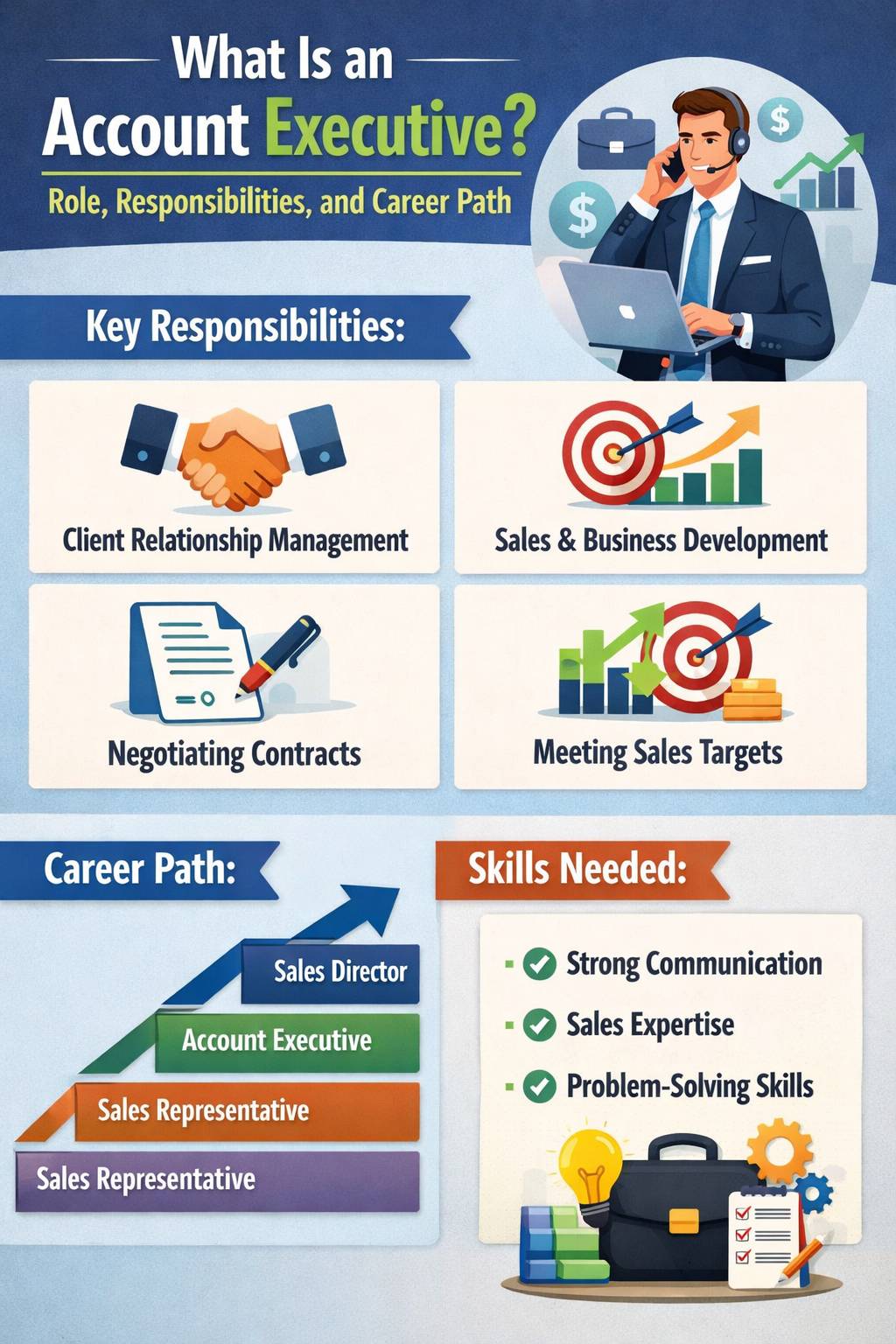
An account executive is a key professional responsible for managing client relationships and driving business growth. Although the job title can sound broad, the role itself is central to how many companies acquire, retain, and expand their customer base. Account executives act as the primary link between a business and its clients, ensuring both sides achieve their goals. This role is especially common in companies that serve business clients, where long-term relationships and repeat business are critical to success. An account executive manages customer accounts and serves as the main point of contact for clients. Their primary responsibility is to ensure clients are satisfied with the company’s products or services and that their needs are being met consistently. In addition to relationship management, account executives are often responsible for sales and business development. This includes identifying new opportunities within existing accounts, pitching products or services to potential clients, and negotiating contracts. They also coordinate internally, working with teams such as marketing, operations, and customer support to deliver on client expectations. In industries like public relations, an account executive may handle media coordination, manage campaigns, and oversee client communication. In technology or financial services, the role may focus more on solution selling, onboarding, and ongoing account growth.
Where Account Executives Work
Account executives are found across a wide range of industries, particularly in businesses that sell products or services to other businesses. Common sectors include advertising, public relations, financial services, software, logistics, consulting, and manufacturing. These companies often have large and diverse client bases, making dedicated account management essential. Because acquiring new customers is costly, businesses rely heavily on account executives to maintain strong relationships and increase the lifetime value of existing clients. Most organizations that employ account executives operate in professional or white-collar environments and serve clients with ongoing, complex needs rather than one-time transactions. Skills and Qualifications Required Strong communication skills are essential for account executives. They must be able to clearly explain products or services, understand client concerns, and build trust over time. Sales ability is equally important, as the role often involves persuading clients to expand their engagement or adopt new solutions. Account executives also need a solid understanding of the products or services they represent. While a specialized degree is not always required, most account executives hold college degrees and develop expertise through experience and on-the-job training. At its core, the role blends sales, customer service, and strategic thinking. Individuals who perform well in traditional sales roles often transition successfully into account executive positions.
Career Outlook for Account Executives
The account executive role is generally considered a mid-level position. Many professionals begin their careers in junior roles such as account coordinator, account assistant, or sales development representative before advancing to account executive. Career progression can vary depending on company size and industry. In smaller organizations, account executives may advance quickly or take on broader responsibilities. In larger firms, professionals may remain account executives long-term while managing increasingly valuable or complex accounts, or they may move into senior sales, account management, or leadership roles. Because the role directly impacts revenue, strong performers are often well-compensated and valued within their organizations.
A Typical Day as an Account Executive
A typical day for an account executive often includes a mix of client communication and sales activity. This may involve responding to emails, attending virtual or in-person meetings, addressing client issues, and following up on proposals. Account executives also spend time prospecting for new clients, whether through cold outreach, referrals, or inbound leads. As they gain experience, they learn how to manage the full sales cycle, from initial contact to closing deals and nurturing long-term relationships. Compensation usually includes a base salary along with commissions or performance-based bonuses, reflecting the revenue-focused nature of the role.
Is Account Executive a Good Career Choice?
An account executive role can be an excellent career choice for individuals who enjoy working with people, building relationships, and driving business results. It offers strong earning potential, clear performance metrics, and opportunities for advancement. Success in this role depends heavily on personality, communication style, and resilience. For those who thrive in client-facing environments and enjoy the challenge of sales and relationship management, being an account executive can be a rewarding and long-lasting career path.