Calmar Ratio: Calmar Ratio Explained and How It Measures Downside Risk
Author: Shashi Prakash Agarwal
Understanding the Calmar Ratio and Its Origins
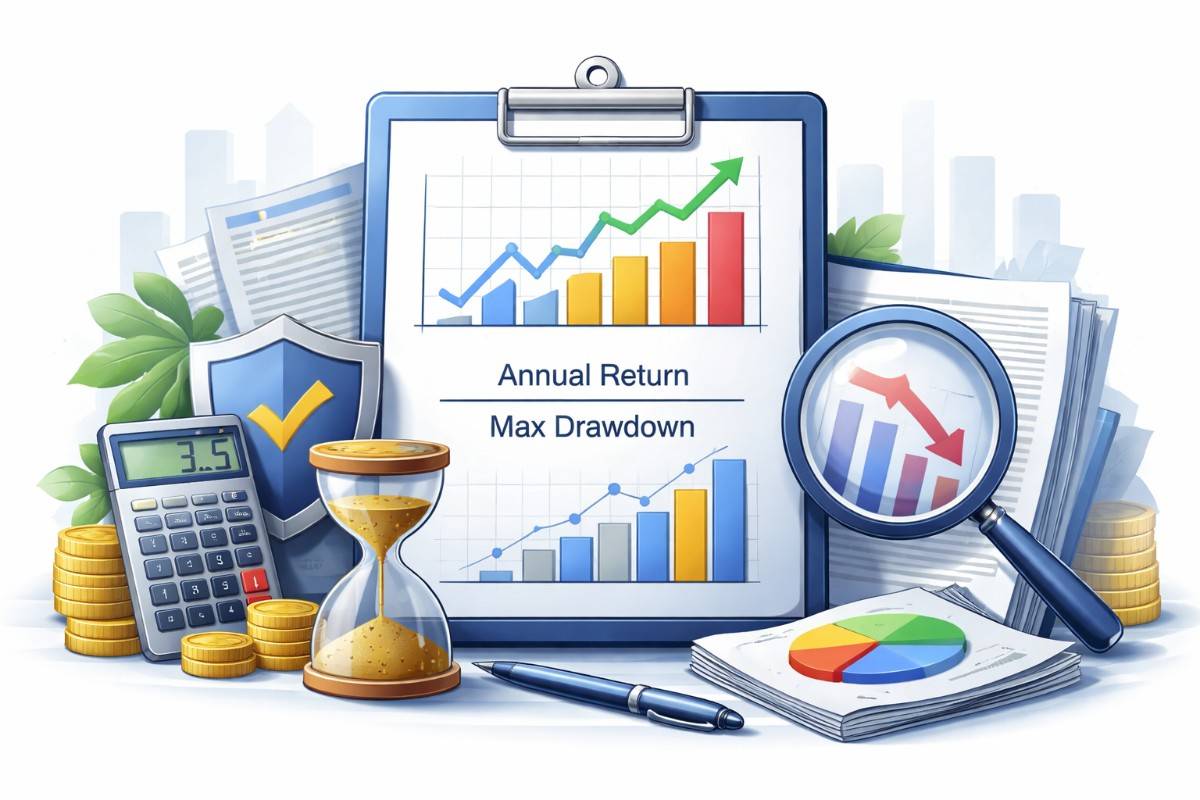
The Calmar Ratio is a performance metric used in finance to evaluate the risk-adjusted returns of an investment, particularly focusing on downside risk rather than overall volatility. It was originally developed to assess the performance of commodity trading advisors, but over time it has become widely used across hedge funds, mutual funds, and portfolio management strategies. Unlike traditional measures that rely heavily on standard deviation, the Calmar Ratio concentrates on how well an investment compensates investors for the worst losses they may experience over a defined period, typically three years. At its core, the Calmar Ratio compares an investment’s average annual return with its maximum drawdown. This makes it especially relevant for investors who prioritize capital preservation and want to understand how severe losses can be during unfavorable market phases. By emphasizing drawdowns, the ratio aligns closely with real investor behavior, since large losses often matter more psychologically and financially than short-term fluctuations. As a result, the Calmar Ratio offers a more practical lens through which long-term performance can be judged.
How the Calmar Ratio Measures Downside Risk
The distinguishing feature of the Calmar Ratio is its direct relationship with maximum drawdown, which represents the largest peak-to-trough decline in an investment’s value. By dividing the compounded annual growth rate by this drawdown, the ratio highlights how efficiently an investment generates returns relative to its worst historical loss. A higher Calmar Ratio indicates that an investment has delivered stronger returns while keeping severe losses relatively contained. This focus on downside risk makes the Calmar Ratio particularly useful during volatile or bearish market conditions. While other metrics may appear attractive during periods of steady growth, they can fail to capture how fragile a strategy becomes when markets reverse. The Calmar Ratio addresses this gap by penalizing investments that experience deep drawdowns, even if their average returns appear impressive. Consequently, it serves as a valuable tool for evaluating strategies that claim to be defensive or risk-aware.
Calmar Ratio in Portfolio and Fund Analysis
In portfolio management, the Calmar Ratio is often used to compare funds or strategies with similar objectives. For example, when evaluating two equity funds with comparable long-term returns, the Calmar Ratio can reveal which one managed downside risk more effectively. This insight is crucial for investors who rely on consistent performance and cannot afford prolonged recovery periods after major losses. Fund managers also use the Calmar Ratio internally to assess whether their risk controls are functioning as intended. A declining Calmar Ratio over time may signal that drawdowns are increasing faster than returns, prompting a reassessment of asset allocation or risk management techniques. In this way, the ratio not only helps investors select better-performing funds but also encourages disciplined decision-making within investment teams.
Limitations and Practical Interpretation of the Calmar Ratio
Despite its strengths, the Calmar Ratio is not without limitations. Since it relies on historical maximum drawdown, it may not fully capture future risks, especially in rapidly changing market environments. Additionally, the ratio is sensitive to the chosen time frame, meaning that results can vary depending on whether markets experienced extreme events during the period analyzed. Therefore, the Calmar Ratio should be interpreted alongside other performance measures rather than used in isolation. When combined with metrics such as the Sharpe Ratio or Sortino Ratio, it contributes to a more balanced understanding of both return potential and risk exposure. Used thoughtfully, the Calmar Ratio remains a powerful tool for investors seeking a clearer picture of how investments perform when markets turn adverse, reinforcing its importance in modern financial analysis.