Bank Stress Tests and Financial System Stability
Author: Shashi Prakash Agarwal
What Is a Bank Stress Test
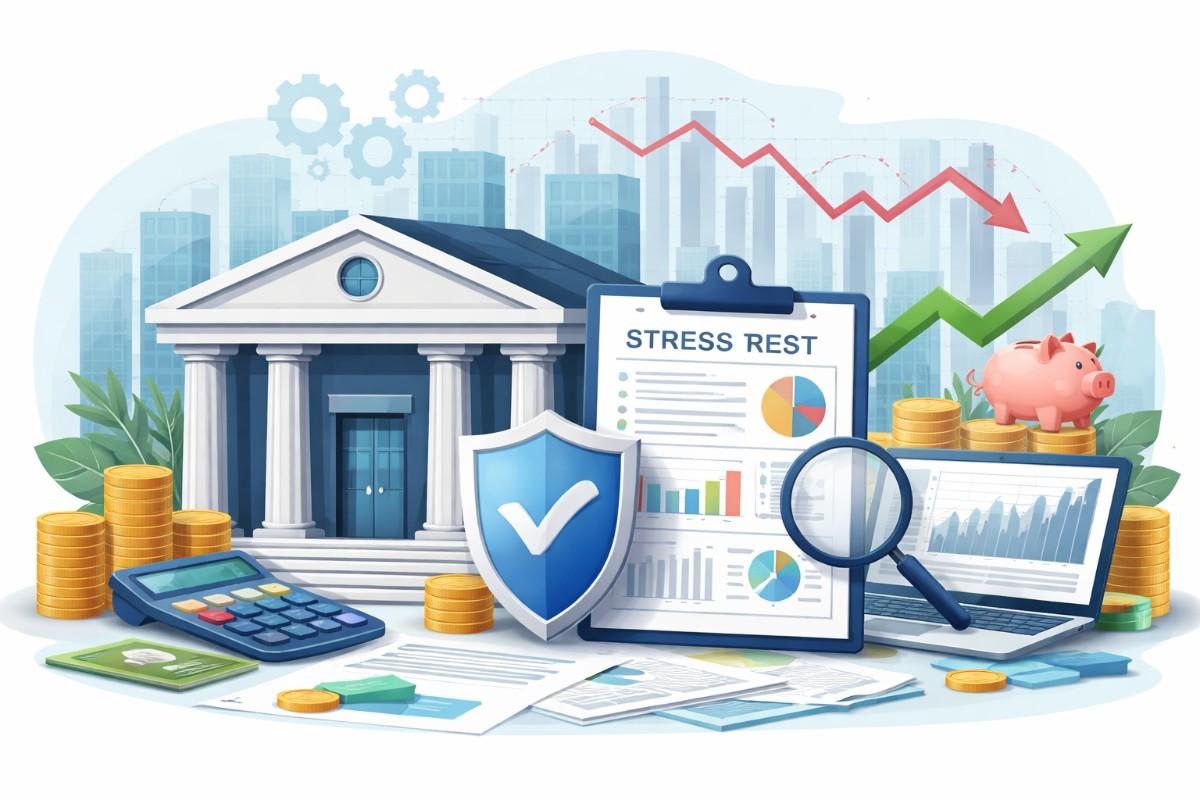
A bank stress test is a regulatory exercise designed to assess how well financial institutions can withstand severe but plausible economic shocks. Regulators simulate adverse conditions such as sharp recessions, market crashes, or sudden spikes in unemployment to evaluate whether banks have enough capital and liquidity to continue operating without threatening the broader financial system. These tests became especially prominent after the global financial crisis, when weaknesses in bank balance sheets exposed systemic risks that affected economies worldwide. From a financial stability perspective, stress tests act as a preventive tool rather than a reactive one. By identifying vulnerabilities early, regulators can require banks to strengthen capital buffers, improve risk management practices, or adjust lending behavior. This forward-looking approach helps ensure that banks remain resilient during economic downturns and continue supporting households and businesses when credit conditions tighten.
Key Economic Scenarios Tested
Stress tests typically model a range of adverse macroeconomic scenarios that reflect potential real-world risks. These may include deep recessions, prolonged periods of high inflation, sharp interest rate movements, or disruptions in global trade and financial markets. Each scenario examines how these conditions would impact loan losses, market valuations, and funding costs across a bank’s portfolio. The value of these scenarios lies in their realism and severity. Regulators aim to strike a balance between unlikely disasters and plausible economic stress, ensuring banks are tested against conditions tough enough to reveal weaknesses. Over time, scenarios evolve to reflect emerging risks such as climate-related shocks, cyber threats, or sudden geopolitical events, making stress tests a dynamic tool for safeguarding the financial system.
New SeImpact on Bank Capitalction
One of the most critical outcomes of a bank stress test is its effect on capital requirements. If projected losses under stress scenarios significantly erode a bank’s capital base, regulators may restrict dividend payments, limit share buybacks, or require the bank to raise additional capital. These measures are intended to preserve financial strength and protect depositors and taxpayers from potential failures. Strong stress test results, on the other hand, signal that a bank can absorb losses while continuing normal operations. This resilience enhances confidence among depositors, counterparties, and regulators. Over the long term, consistently healthy capital positions across the banking sector contribute to overall financial stability and reduce the likelihood of systemic crises.
Why Investors Watch Stress Tests
Investors closely follow bank stress test results because they offer valuable insights into a bank’s financial health and risk profile. A favorable outcome suggests robust capital management and prudent risk controls, which can support stable earnings and shareholder returns. Conversely, weak results may indicate higher exposure to economic downturns or structural vulnerabilities that could affect future profitability. Beyond individual banks, stress tests provide investors with a broader view of the banking sector and the economy. Positive sector-wide results often reinforce confidence in the financial system during uncertain times, while negative surprises can influence market sentiment and asset prices. As a result, stress tests have become a key reference point for investors assessing both short-term market reactions and long-term financial stability.