Baby Bonds Explained: Small Denominations, Big Impact
Author: Shashi Prakash Agarwal
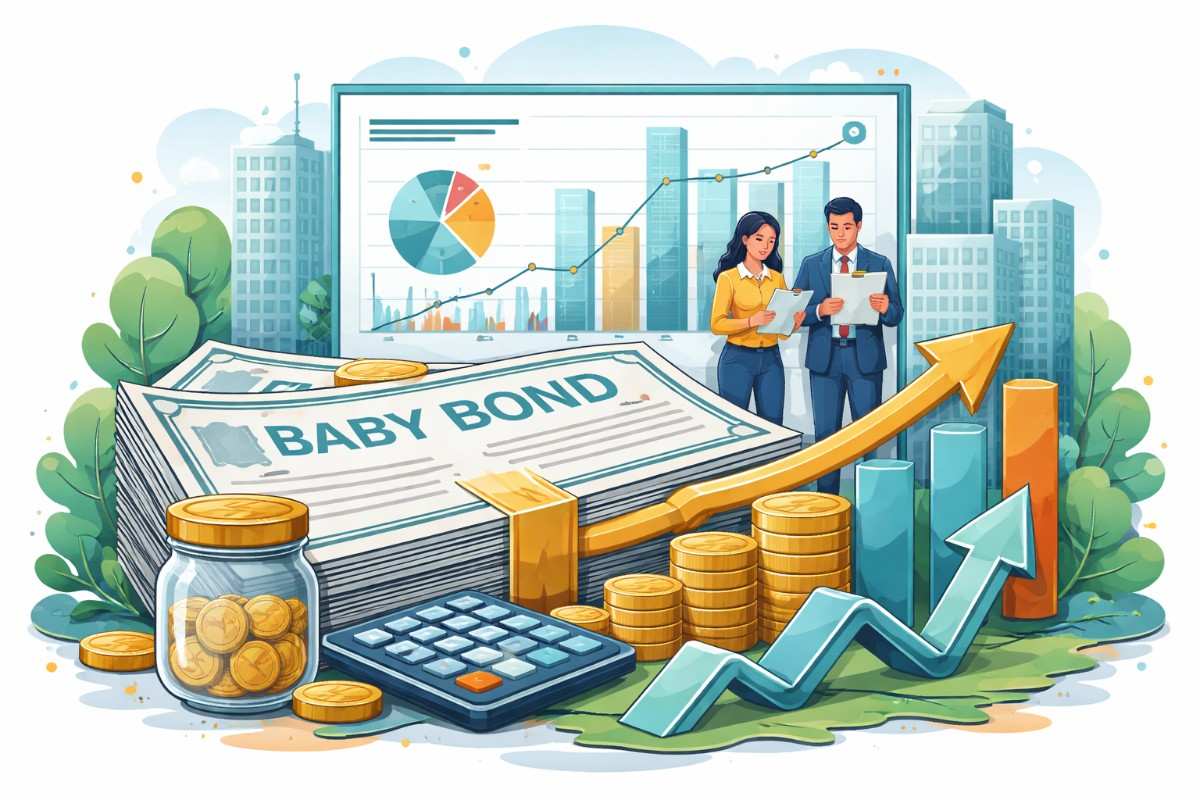
What Are Baby Bonds
Baby bonds are fixed-income securities that resemble traditional corporate bonds but are issued in much smaller denominations, typically around a few hundred to a few thousand currency units per bond. This lower face value makes them accessible to a wider range of investors who may not want or be able to commit large sums of capital to standard bond issues. Structurally, baby bonds often trade on stock exchanges rather than over-the-counter bond markets, which adds an element of transparency and ease of access for retail participants. From a financial perspective, baby bonds usually carry defined maturity dates, stated coupon rates, and predictable interest payments, making them easier to understand compared with more complex debt instruments. Many issuers use them as a way to tap retail capital markets, diversify funding sources, and broaden their investor base. For investors, the appeal lies in the familiar bond-like characteristics combined with stock-like tradability, creating a hybrid instrument that fits neatly between equities and traditional bonds.
Why Investors Use Baby Bonds
Investors often turn to baby bonds to generate steady income without the higher volatility typically associated with equities. Because interest payments are contractually defined, these instruments can provide a predictable cash flow stream, which is especially attractive during periods of market uncertainty or when interest rates are relatively stable. For income-focused investors, baby bonds can serve as a middle ground between dividend-paying stocks and larger-denomination corporate bonds. Another reason investors use baby bonds is accessibility. The smaller denomination lowers the barrier to entry, allowing portfolios to be built gradually and diversified across issuers and sectors. This flexibility enables investors to manage exposure more precisely, adjusting positions without committing large amounts of capital at once. As a result, baby bonds are often used by retail investors seeking disciplined income strategies and by portfolio managers aiming to fine-tune fixed-income allocations.
Risk and Yield Considerations
Like all debt instruments, baby bonds carry credit risk, meaning their value and income depend heavily on the financial health of the issuer. While yields may appear attractive compared with government bonds, they often reflect higher risk, particularly when issued by smaller companies or firms with leveraged balance sheets. Investors must assess factors such as credit ratings, interest coverage ratios, and broader economic conditions before committing capital. Yield dynamics also depend on interest rate movements. Because baby bonds typically have longer maturities than short-term instruments, their market prices can fluctuate when rates change. Rising interest rates may reduce market value, while falling rates can enhance it. Understanding duration, call features, and repayment structures is therefore essential, as these elements directly influence both potential returns and downside risk.
Role of Baby Bonds in Portfolios
Within a diversified portfolio, baby bonds can play a stabilizing role by contributing regular income and reducing reliance on equity-driven returns. They are often used as a supplement to traditional bonds, particularly when investors seek higher yields without significantly increasing portfolio complexity. By blending baby bonds with equities and other fixed-income assets, investors can create more balanced risk-return profiles across market cycles. Additionally, baby bonds can serve as tactical instruments during specific market phases. In lower-growth environments, they may help preserve capital and maintain income, while in more dynamic markets, they can act as a defensive counterweight to equity exposure. When selected carefully and aligned with overall investment objectives, baby bonds offer a practical way to enhance income strategies while maintaining disciplined risk management.