Asset: What It Means, Why It Matters, and How Assets Drive Financial Strength
Author: Shashi Prakash Agarwal
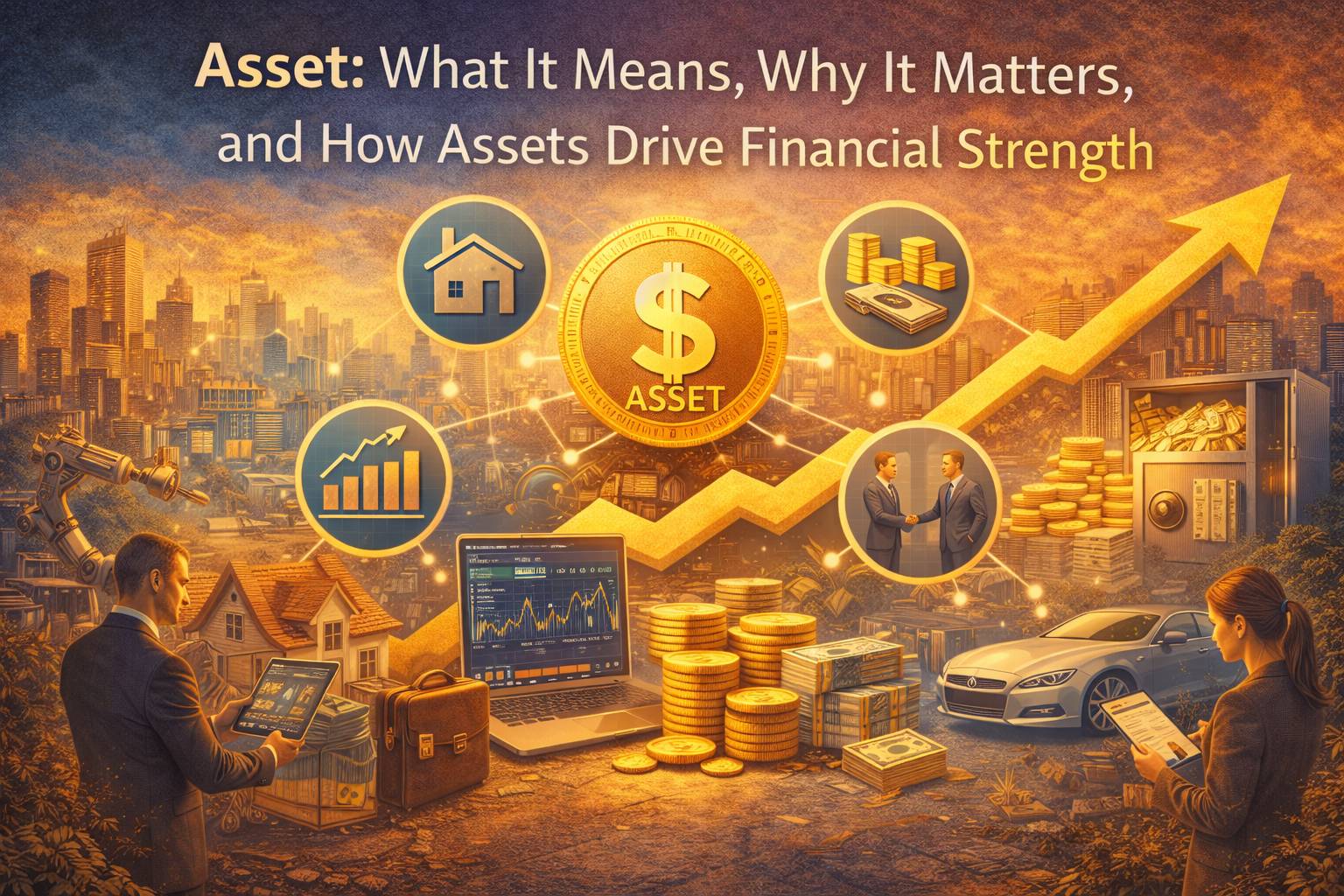
What an Asset Is and How It’s Defined in Finance
An asset is any resource owned or controlled by an individual, business, or institution that is expected to provide economic value in the future. In finance and accounting, this value may come from generating income, supporting operations, appreciating over time, or reducing costs. Assets can be tangible, such as cash, property, machinery, and inventory, or intangible, such as patents, trademarks, software, and brand value. What makes something an asset is not its physical form, but its ability to deliver future benefit that can be reasonably measured or expected. For individuals, assets often represent savings, investments, or property that support long-term financial security. For businesses, assets are the building blocks that allow operations to function, products to be produced, and services to be delivered. In accounting terms, assets appear on the balance sheet and are typically listed in order of liquidity, reflecting how easily they can be converted into cash. Understanding what qualifies as an asset is fundamental because it shapes how wealth, solvency, and financial health are evaluated.
Major Categories of Assets and How They Differ
Assets are commonly grouped based on their characteristics and how they are used. Current assets are those expected to be converted into cash or used within a short period, usually one year. These include cash, accounts receivable, and inventory, and they are critical for day-to-day liquidity. Non-current or long-term assets are held for longer periods and support ongoing operations or long-term goals. Examples include property, equipment, long-term investments, and intangible assets. Another way to classify assets is by their role in value creation. Operating assets directly support core business activities, while non-operating assets, such as excess cash or investments not tied to operations, may sit on the balance sheet without contributing directly to revenue. Financial assets, including stocks, bonds, and other securities, represent claims on future cash flows rather than physical resources. Each category carries different risks, returns, and management requirements. Liquid assets provide flexibility but may earn lower returns, while illiquid assets can generate higher long-term value but reduce the ability to respond quickly to shocks.
How Assets Create Value and Affect Financial Decisions
Assets matter because they influence earning power, resilience, and strategic options. A company with strong productive assets can generate consistent cash flows, invest in growth, and withstand economic downturns more effectively than a company with weak or outdated assets. For individuals, a well-structured asset base can support income, fund major life goals, and provide a buffer against uncertainty. The quality of assets often matters more than their quantity. For example, a business may own many assets, but if they are obsolete, poorly maintained, or unable to generate adequate returns, they can become a drag rather than a strength. Asset allocation is another critical concept, especially in investing. How assets are distributed across categories such as equities, fixed income, real estate, and cash affects risk and return over time. Strategic asset allocation aims to balance growth potential with stability, while tactical adjustments may respond to market conditions or personal circumstances. In corporate finance, decisions about acquiring, maintaining, or disposing of assets shape capital expenditure plans, depreciation, and long-term competitiveness.
Risks, Valuation, and Long-Term Perspective on Assets
Assets are not static, and their value can change due to market conditions, technological shifts, regulation, and management decisions. Valuation is therefore a central challenge. Some assets, like cash and publicly traded securities, have clear market values, while others, such as real estate, private businesses, or intellectual property, require estimates and assumptions. Impairment occurs when an asset’s carrying value exceeds its recoverable value, forcing a write-down that can affect earnings and investor confidence. Another risk is overinvestment, where capital is tied up in assets that do not generate sufficient returns, reducing overall efficiency. Long-term success with assets comes from active management: maintaining productive capacity, upgrading when necessary, and divesting assets that no longer fit strategic goals. Whether at the personal or corporate level, assets should be viewed as tools rather than trophies. Their purpose is to support objectives, generate sustainable value, and provide flexibility across different economic cycles.