Annuities: Turning Savings Into Lifetime Income Without Overlooking Costs
Author: Shashi Prakash Agarwal
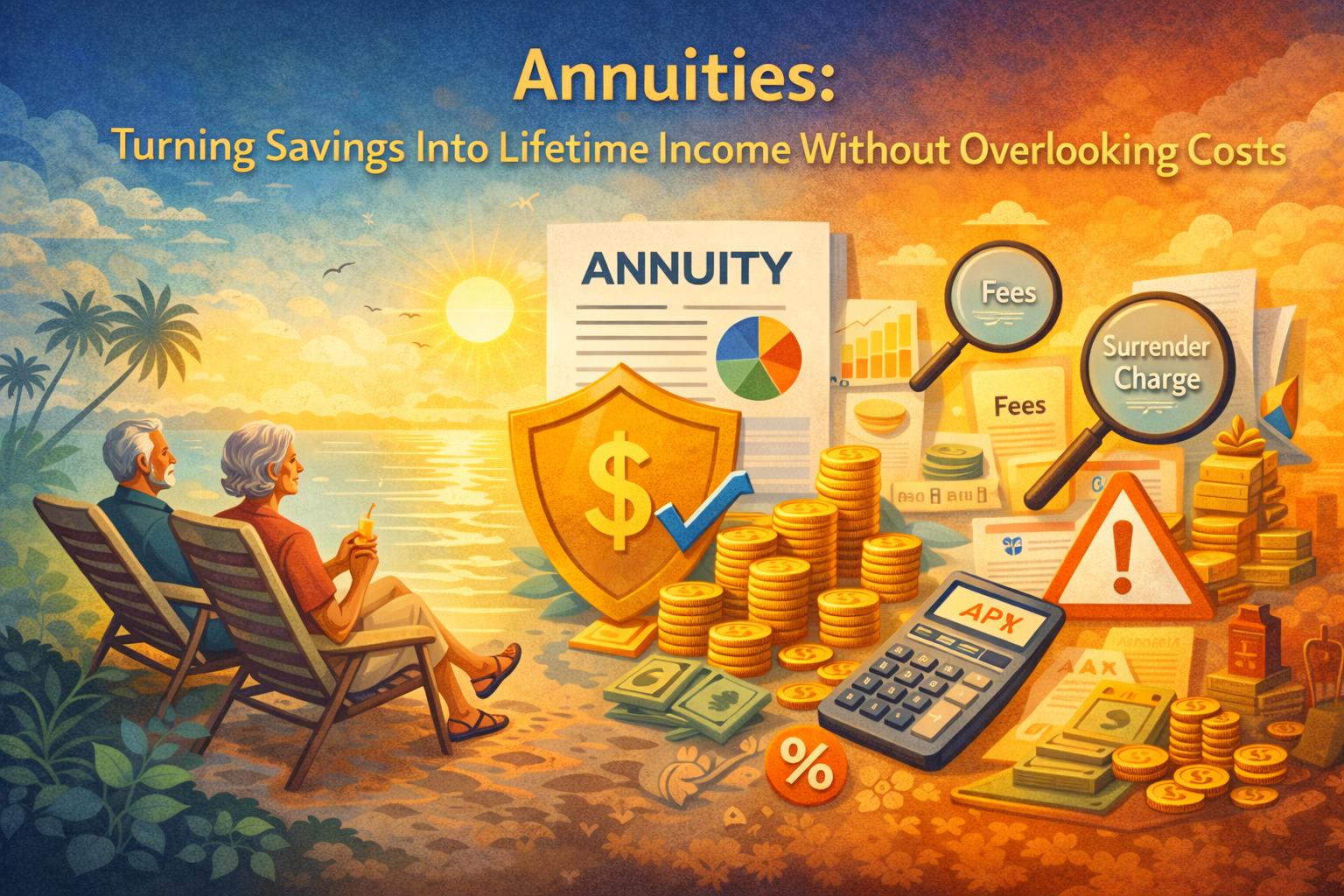
Understanding Annuities: Contracts for Guaranteed Income
An annuity is a financial contract designed to convert a lump sum or a series of contributions into a steady stream of payments over a specified period or, in some cases, for the rest of a person’s life. Under this arrangement, you deposit money with an insurer or through a financial intermediary, and in return, you receive regular disbursements that begin either immediately or at a future date. Three roles typically exist within an annuity structure: the owner, who funds the contract; the annuitant, whose age and life expectancy help determine the payout schedule; and the beneficiary, who may receive benefits after the annuitant’s death, depending on the contract. Annuities are often used in retirement planning because they can create a predictable income when traditional pensions are unavailable. Their value is not only the promise of payments, but also the psychological stability that comes from knowing a portion of your future cash flow is defined rather than uncertain.
How Annuities Work: Payments, Investments, and Payout Phases
Annuities generally have two phases: an accumulation phase, when you pay in and the value may grow, and a distribution phase, when you receive payouts. During accumulation, your contributions may earn interest at a fixed rate, track a market-linked formula, or fluctuate based on the performance of underlying investment options, depending on the annuity type. During distribution, payments are typically composed of a return of your principal plus earnings, reduced by fees and any applicable charges. An immediate annuity starts payments soon after you fund it, while a deferred annuity begins payments later, allowing time for growth before income starts. A crucial practical point is liquidity: many annuities restrict access to the full balance before payouts begin, and early withdrawals can trigger surrender charges and tax penalties depending on jurisdiction and age. This is why annuities work best when they are funded with money you can truly commit for the intended timeline.
Types of Annuities: Immediate vs Deferred, Fixed vs Variable, and Hybrid Options
Annuities can be grouped by when they pay out and how they earn returns. Immediate annuities convert a premium into income that starts quickly, which can suit retirees who want to replace a paycheque right away. Deferred annuities postpone income to a later date, which can fit people still building retirement reserves. Fixed annuities offer contractually defined growth and predictable payments, placing most investment risk on the insurer. Indexed annuities usually provide a floor or minimum guarantee while offering upside linked to a market index formula, which can appeal to those who want some growth potential with downside protection. Variable annuities invest in market-based subaccounts, so the value and payouts can rise or fall with markets; these contracts may offer optional guarantees but usually add layers of fees. Selecting the right type is less about chasing the highest headline return and more about matching the product to your needs for certainty, flexibility, inflation protection, and tolerance for market volatility.
Benefits, Risks, and Smart Use in a Retirement Strategy
The biggest advantage of an annuity is longevity protection: it can provide income you cannot outlive, which helps manage the risk of living longer than expected. Many annuities also allow earnings to grow tax-deferred until distributions begin, which can support compounding if the fee structure is reasonable. However, annuities can be expensive and complex. Fees may include administration charges, insurance-related expenses, investment management costs, and charges for optional riders that add features like guaranteed income levels or death benefits. Liquidity limits and surrender charges can make annuities a poor fit for emergency funds or short-term goals. In addition, variable and some indexed structures carry market-related risks or limits that may disappoint investors who expect full market participation. The most effective way to use annuities is as a foundational income layer within a diversified plan: cover essential living expenses with reliable income sources, then invest remaining assets for growth and flexibility. When chosen carefully and integrated thoughtfully, an annuity can reduce financial stress, stabilise retirement cash flow, and help you stay disciplined through market cycles without making reactive decisions.