Absolute Income
Author: Shashi Prakash Agarwal
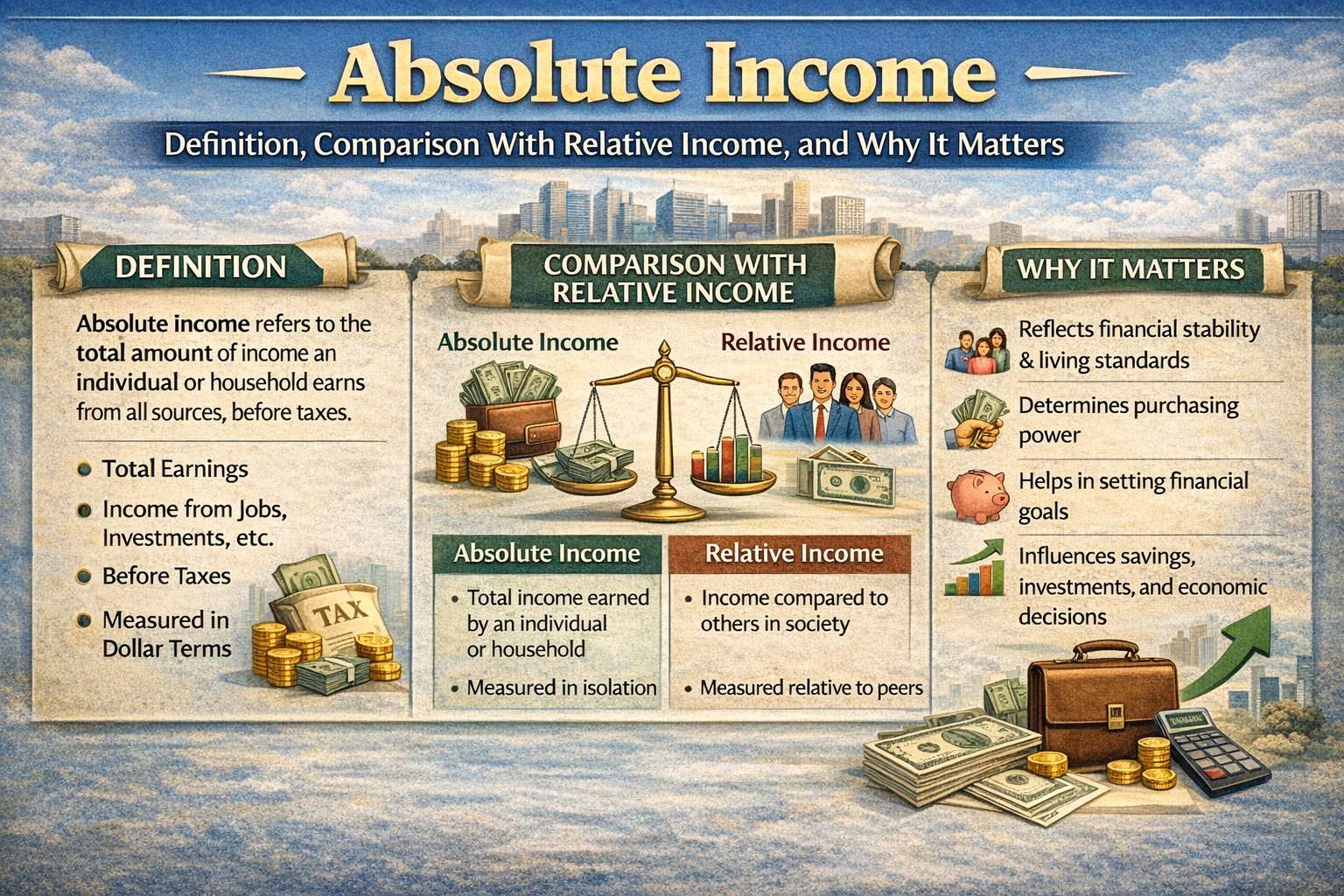
Definition, Comparison With Relative Income, and Why It Matters
Absolute income refers to the total amount of money an individual earns from all sources over a given period. While the term may sound technical, it is one of the most straightforward and important concepts in personal finance and economics. Absolute income is often discussed alongside relative income, which adds context by comparing earnings to others, but absolute income on its own remains a core measure of financial capacity. Understanding absolute income helps individuals evaluate their earning power, saving potential, and long-term wealth-building ability.
Understanding Absolute Income
Absolute income is the total compensation a person receives, usually measured annually. This includes wages or salary earned from employment, but it can also include other income streams depending on the individual’s situation. For salaried employees, absolute income is typically their annual salary before taxes. For freelancers, consultants, or business owners, absolute income comes from business profits and may vary from year to year. Some people also include investment income such as dividends, interest, or rental income when calculating absolute income, especially when those sources make up a meaningful portion of their earnings. At its core, absolute income answers a simple question: how much money do you earn in total, without comparing yourself to anyone else.
Absolute Income vs. Relative Income
While absolute income measures total earnings, relative income measures earnings in comparison to a reference group. That reference point is often peers in a similar profession, location, or age group, but it can also be an average income level within a city, industry, or country. For example, earning $80,000 per year means your absolute income is $80,000 regardless of where you live or who you compare yourself to. However, if most of your peers earn $60,000, your relative income is high. If most earn $120,000, your relative income is low. Your absolute income remains unchanged, but your relative position shifts. Relative income plays a strong role in how people perceive their financial well-being. It can influence lifestyle expectations, spending habits, and satisfaction, even when absolute income is sufficient. This is particularly relevant when considering job changes or relocation. A higher-paying job in a high-cost area may increase absolute income while reducing relative income and purchasing power.
Why Absolute Income Is Important
Absolute income is a key driver of financial flexibility. The more you earn, the more options you typically have when it comes to saving, investing, and managing unexpected expenses. While spending habits matter, income level sets the ceiling for how much wealth you can build over time. Higher absolute income makes it easier to save consistently and invest larger amounts. Even modest differences in annual investment contributions can lead to substantial gaps in long-term wealth due to compound growth. Increasing income while keeping expenses stable can dramatically accelerate progress toward financial goals. Absolute income also affects relative income indirectly. When your earnings increase, your standing compared to others often improves as well, though not always. Still, raising absolute income tends to strengthen overall financial resilience, regardless of external comparisons. For individuals early in their careers, focusing on skill development and income growth can have an outsized impact on long-term financial outcomes. Higher income not only improves day-to-day stability but also expands the ability to take advantage of investment opportunities.
The Absolute Income Hypothesis
The idea of absolute income plays an important role in economic theory. Economist John Maynard Keynes introduced the absolute income hypothesis in 1936. According to this theory, a person’s consumption is primarily driven by their absolute income, but spending does not rise at the same pace as income. In simple terms, as people earn more, they spend more overall, but they spend a smaller percentage of their income. This leaves higher earners with more money available for saving and investing. The theory helps explain why wealth accumulation becomes easier as income rises, even without dramatic lifestyle changes. Later, economist James Duesenberry expanded on this idea with the relative income hypothesis. He argued that consumption is influenced heavily by social comparisons and previous spending habits. Once people become accustomed to a certain lifestyle, reducing spending becomes psychologically difficult, even if income declines. Together, these theories highlight why both absolute and relative income matter, but they also underscore the central role of absolute income in enabling long-term saving and investment.
Final Thoughts
Absolute income is one of the most fundamental measures in personal finance. It represents your total earning power and directly affects your ability to save, invest, and build wealth over time. While relative income shapes perception and lifestyle expectations, absolute income determines what is financially possible. By understanding how absolute income works and how it differs from relative income, individuals can make more informed decisions about careers, spending, and long-term financial planning. Increasing absolute income, when paired with disciplined spending, remains one of the most effective ways to improve financial outcomes over the long run.